Zi Collection, Page Position: Lower
Radical: Knife (dao)
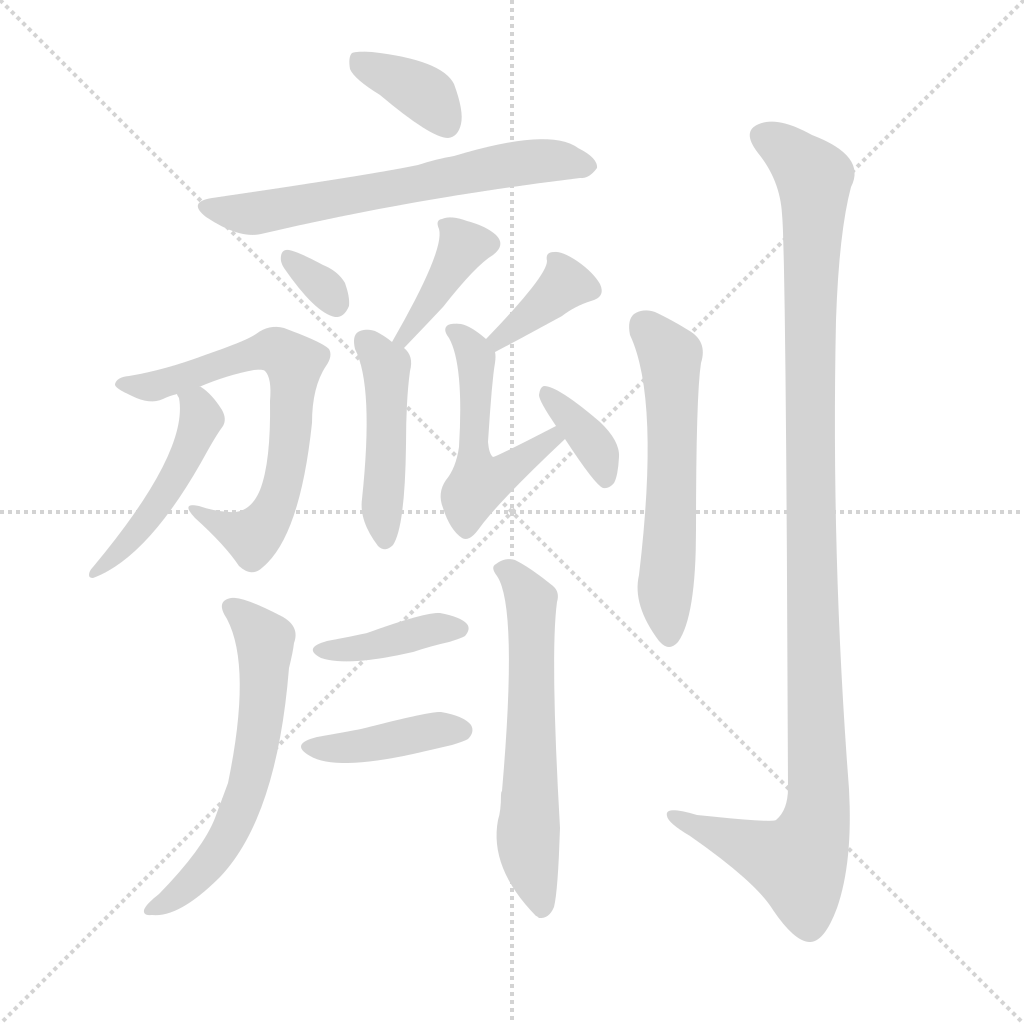
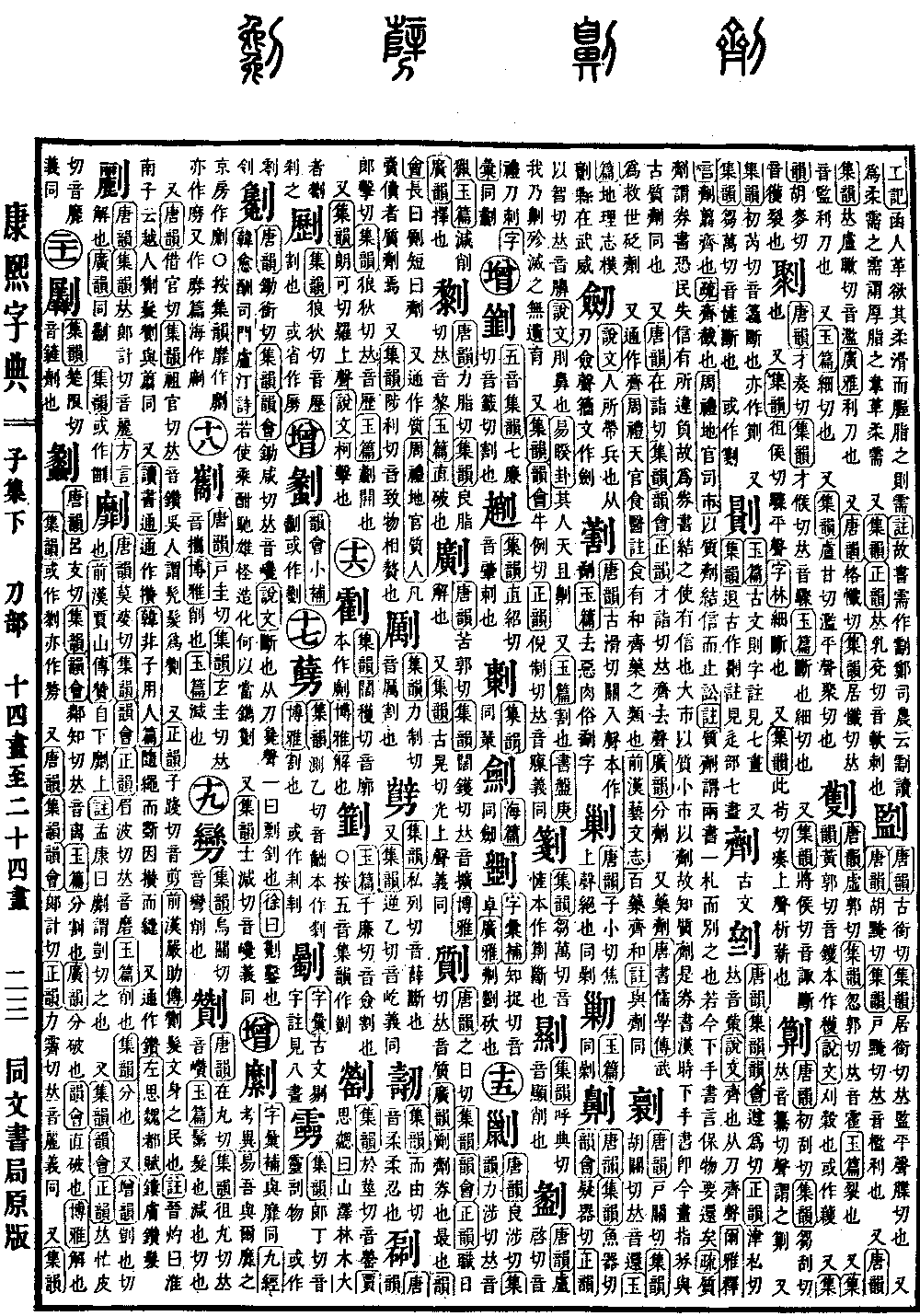
Ji; Kangxi stroke count: 16; Page 145, number 06
Ancient form. According to the Tang Rhymes (Tangyun), Collected Rhymes (Jiyun), and Collected Rhymes (Yunhui), the pronunciation follows the fanqie zun and wei. According to the Correct Rhymes (Zhengyun), it follows the fanqie jin and si. It is pronounced like the character qi.
Explaining Graphs and Analyzing Characters (Shuowen Jiezi) states it means even or level. It is composed of the radical for Knife (dao), with the character qi providing the sound.
Approaching the Correct (Erya) states ji means to clip or trim evenly. The Commentary (Shu) explains this as trimming or cutting levelly.
The Rites of Zhou (Zhouli) states that one uses contracts (zhiji) to establish trust and put an end to litigation. The Note explains that a contract (zhiji) refers to writing two copies on one tablet and then dividing them. It is like the modern signed documents where one guarantees the return of property. The Commentary explains that zhiji refer to written vouchers. Fearing that the people might lose faith or violate agreements, written vouchers were created to bind them and ensure trust. Large markets used long contracts (zhi), and small markets used short contracts (ji); thus, it is known that zhiji are written vouchers. The signed documents of the Han Dynasty, which are the same as modern signed vouchers with fingerprints, are identical to the ancient zhiji.
Also, according to the Tang Rhymes (Tangyun), Collected Rhymes (Jiyun), Collected Rhymes (Yunhui), and Correct Rhymes (Zhengyun), it is pronounced with the fanqie zai and yi or cai and yi, which is the sound of the character qi in the departing tone (qusheng).
Broad Rhymes (Guangyun) defines it as a portion or dosage.
It also refers to medicinal preparations. The History of the Tang (Tangshu) states in the Biographies of Confucian Scholars that martial arts serve as a medicinal remedy and stone acupuncture (bianji) for saving the world.
It is also used interchangeably with the character qi. The Rites of Zhou (Zhouli), in the Notes of the Food Physician, says that food includes things like harmonious medicinal preparations. The Book of Han (Hanshu), in the Treatise on Arts and Letters, mentions that a hundred medicines are prepared and harmonized. The Note states this is the same as the character ji.