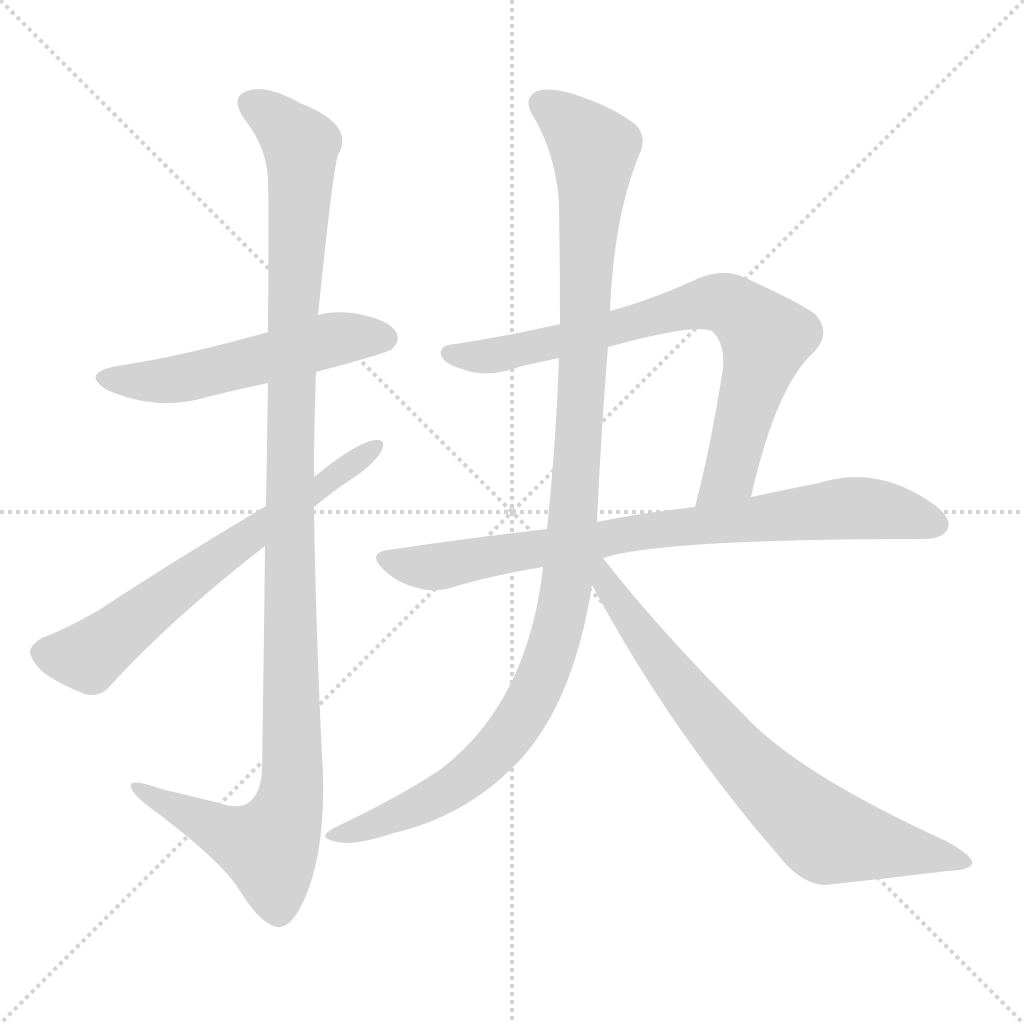
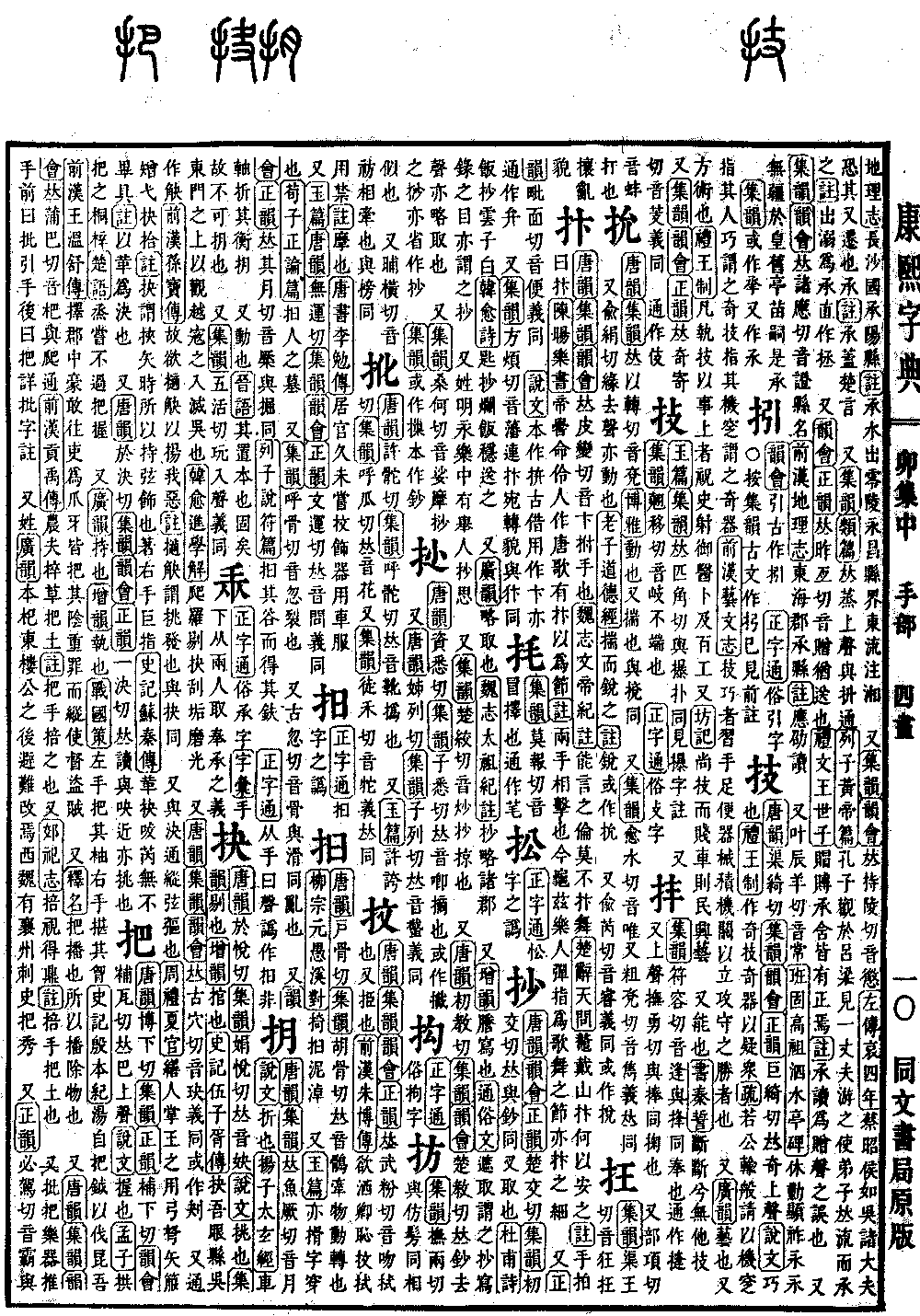
Mao Collection, Middle Volume. Radical: Hand (shǒu). Kangxi strokes: 8. Page 420, Entry 20.
Pronounced yue (falling tone).
According to the Explaining Graphs and Analyzing Characters (Shuowen Jiezi), it means to pick or gouge. According to the Collected Rhymes (Jiyun), it means to pluck or scrape. According to the Augmented Rhymes (Zengyun), it means to pull.
As seen in the Biography of Wu Zixu from the Records of the Grand Historian (Shiji): Gouge out my eyes and hang them upon the east gate of Wu, so that I may watch the Yue state enter and destroy Wu. As seen in Han Yu's Explication of Advance in Studies: To sift, collect, scrape, and gouge, to polish away the filth and reveal the brilliance.
Also pronounced jue (entering tone). The meaning is the same. Sometimes written in a variant form (li). Also commonly written as (jue). As seen in the Biography of Sun Bao from the History of the Former Han (Qian Hanshu): Therefore, one desires to expose and pick at [faults] in order to publicize my evils. The commentary explains that to pick at means to uncover or provoke. It is the same as the character for gouge.
It is also used interchangeably with the character for decide or sever. It refers to the thumb ring used to pull the bowstring. As seen in the Rites of Zhou (Zhouli), Summer Officials: The bow-maker oversees the king’s use of bows, crossbows, arrows, quivers, and thumb rings. The commentary explains that the thumb ring is the ornament worn on the right thumb to hold the string when nocking an arrow. As seen in the Biography of Su Qin from the Records of the Grand Historian (Shiji): Leather thumb rings and waist straps, nothing was not fully prepared. The commentary explains that it is a thumb ring made of leather.
Also pronounced que (entering tone), read closely to the sound of xue (entering tone). Also means to pick or gouge.