Chou Collection, Lower Volume
Radical: Big (dà)
Kangxi stroke count: 4
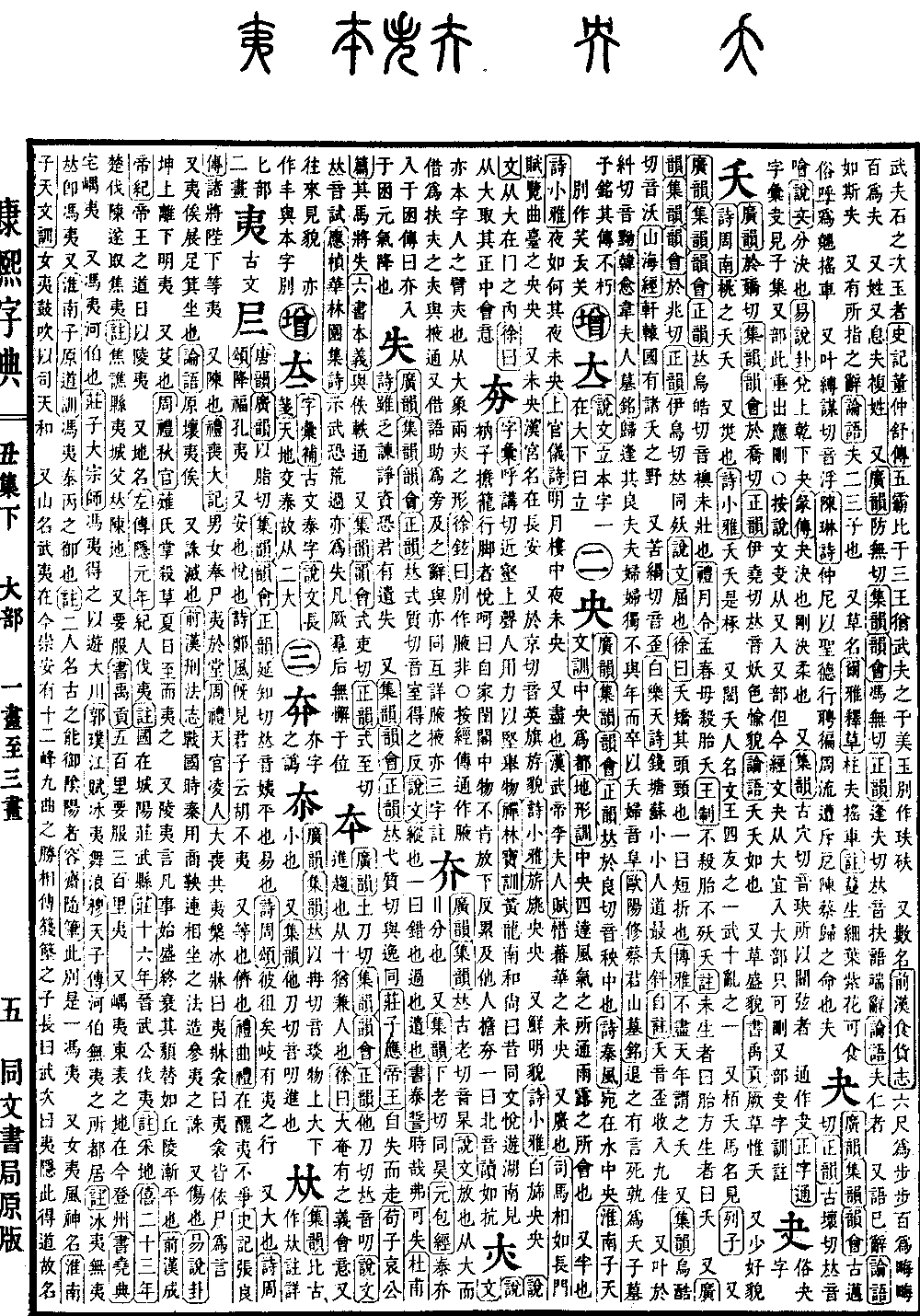
Page 249, Entry 01
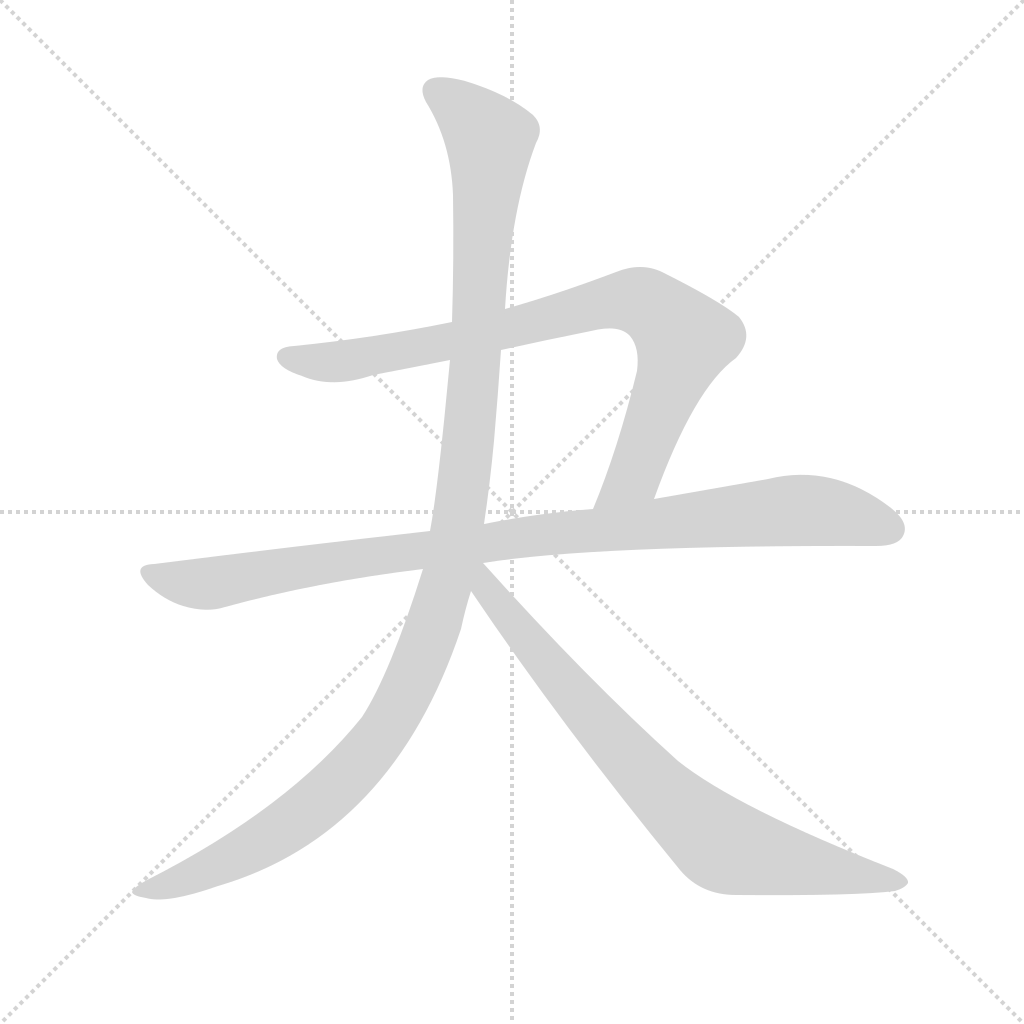
Guangyun (Book of Rhymes), Jiyun (Collected Rhymes), Yunhui (Collection of Rhymes): Pronounced kuài; Zhengyun (Orthogonal Rhymes): Pronounced kuài. According to the Shuowen Jiezi (Explanation of Graphs and Analysis of Characters), it means to divide or decide. In the Book of Changes (Yijing), within the section Explanation of the Trigrams (Shuogua), it states that with the Joyous trigram above and the Creative trigram below, it forms the Gua hexagram. The Judgment (Tuanzhuan) states that Gua signifies decision, specifically the strong deciding over the weak. Also, according to Jiyun (Collected Rhymes), it is pronounced jué. It refers to the object used to release a bowstring. It is interchangeably written as guài. According to the Zhengzitong (Correction of Character Meaning), in the Zihui (Collection of Characters), the character guài appears in the Zi Collection under the Again (yòu) radical; this is a duplication and should be deleted. Note: In the Shuowen Jiezi (Explanation of Graphs and Analysis of Characters), the character guài is categorized under the Again (yòu) radical. However, in modern canonical texts, the character guài is formed with the Big (dà) radical and should be categorized under the Big (dà) radical; one should only delete the gloss for the character guài under the Again (yòu) radical.