Wu Collection, Middle Volume
Radical: Eye (mù)
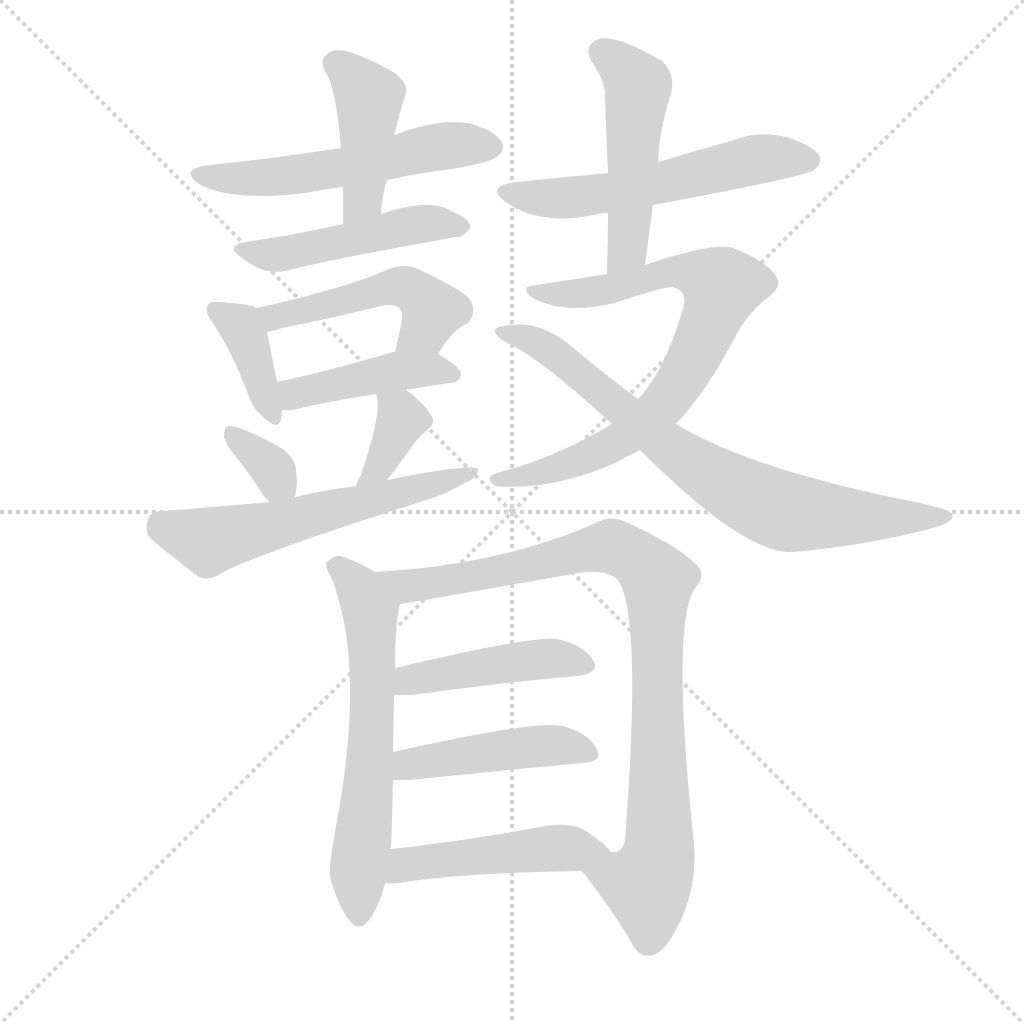
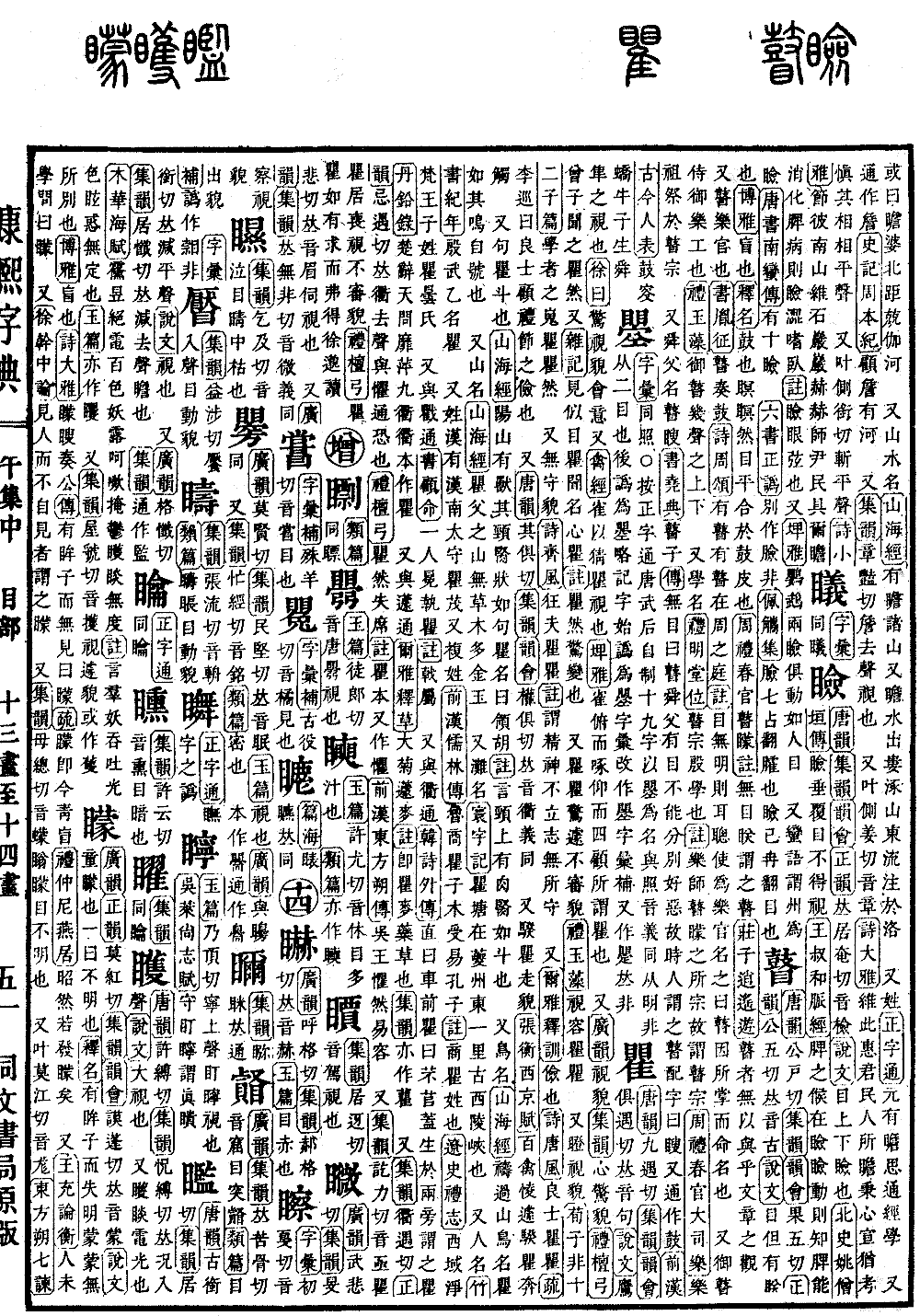
瞽
Kangxi strokes: 18
Page 819, Entry 03
Pronounced gu (rising tone).
Shuowen Jiezi (Shuowen): Eyes with only a narrow slit.
Guangya (Boya): A blind person.
Shiming: Meaning drum. Because the eyes are closed and flat like the skin of a drum.
Rites of Zhou (Zhouli), Spring Offices, Gu-meng commentary: Those without pupils are called gu.
Zhuangzi, Free and Easy Wandering: A blind person cannot participate in appreciating patterns and colors.
Also, gu is a title for a music official.
Book of Documents (Shangshu), Yin Zheng: The blind official beats the drum.
Book of Odes (Shijing), Zhou Odes (Zhousong): There are blind musicians, there are blind musicians, in the temple courtyard of the Zhou dynasty.
Commentary: Those who cannot see have acute hearing, so they are appointed as music officials and named gu, based on the duties they perform. There is also the attendant music official, who serves the ruler.
Book of Rites (Liji), Jade Pattern (Yuzao): The attendant music official adjusts the pitch according to the sounds.
Also the name of a school.
Book of Rites (Liji), Hall of Distinction (Mingtangwei): Gu Zong was a school during the Shang dynasty.
Commentary: The music master, who is revered by the blind music officials, is why it is called Gu Zong.
Rites of Zhou (Zhouli), Spring Offices, Great Master of Music: The music ancestor is worshipped at Gu Zong.
In addition, the father of Emperor Shun was named Guso.
Book of Documents (Shangshu), Canon of Yao: The son of Guso.
Commentary: To lack pupils is called gu. Shun's father had eyes but could not distinguish good from evil, so the people of that time called him gu, with the added character sou, and it is also interchangeably used with the character for drum.
History of the Former Han (Qianhan), Ancient and Modern Biographical Tables: Guso was the son of Jiaoniu, and he fathered Shun.