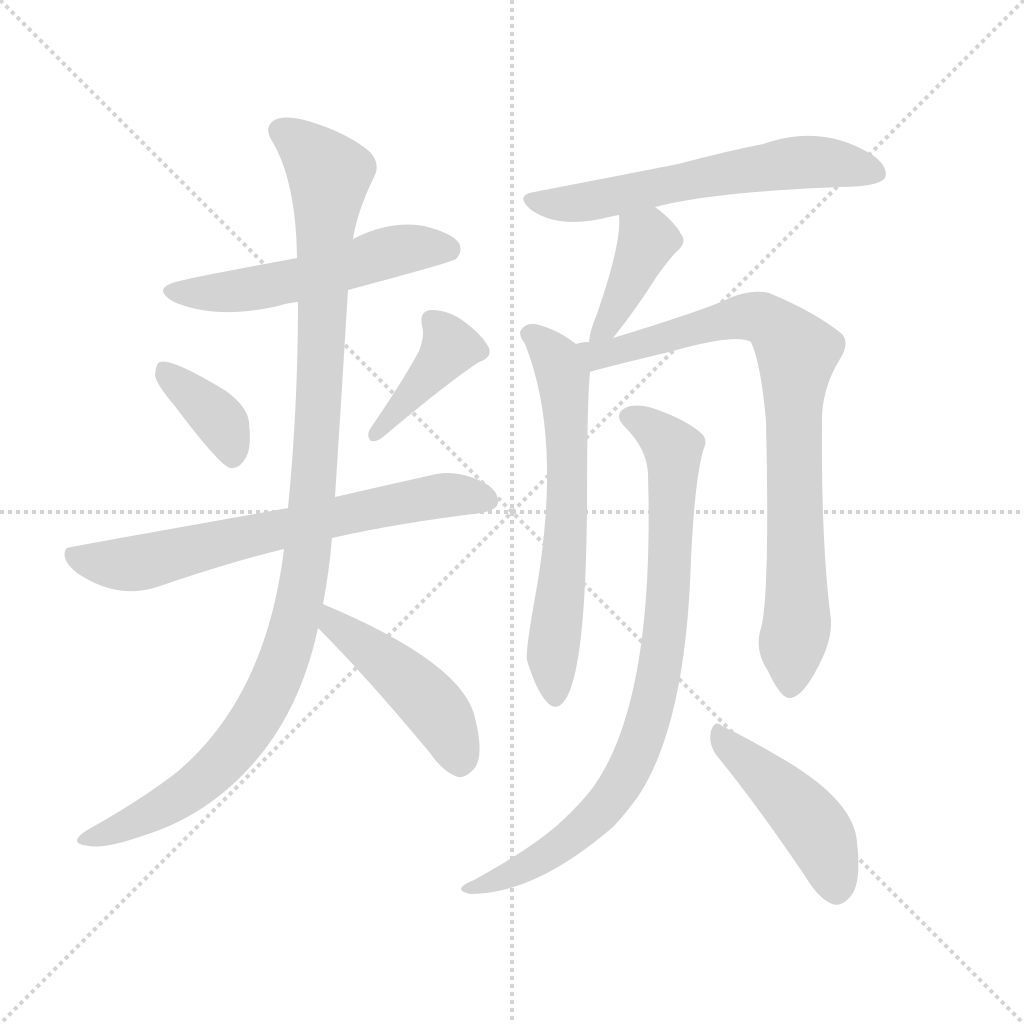
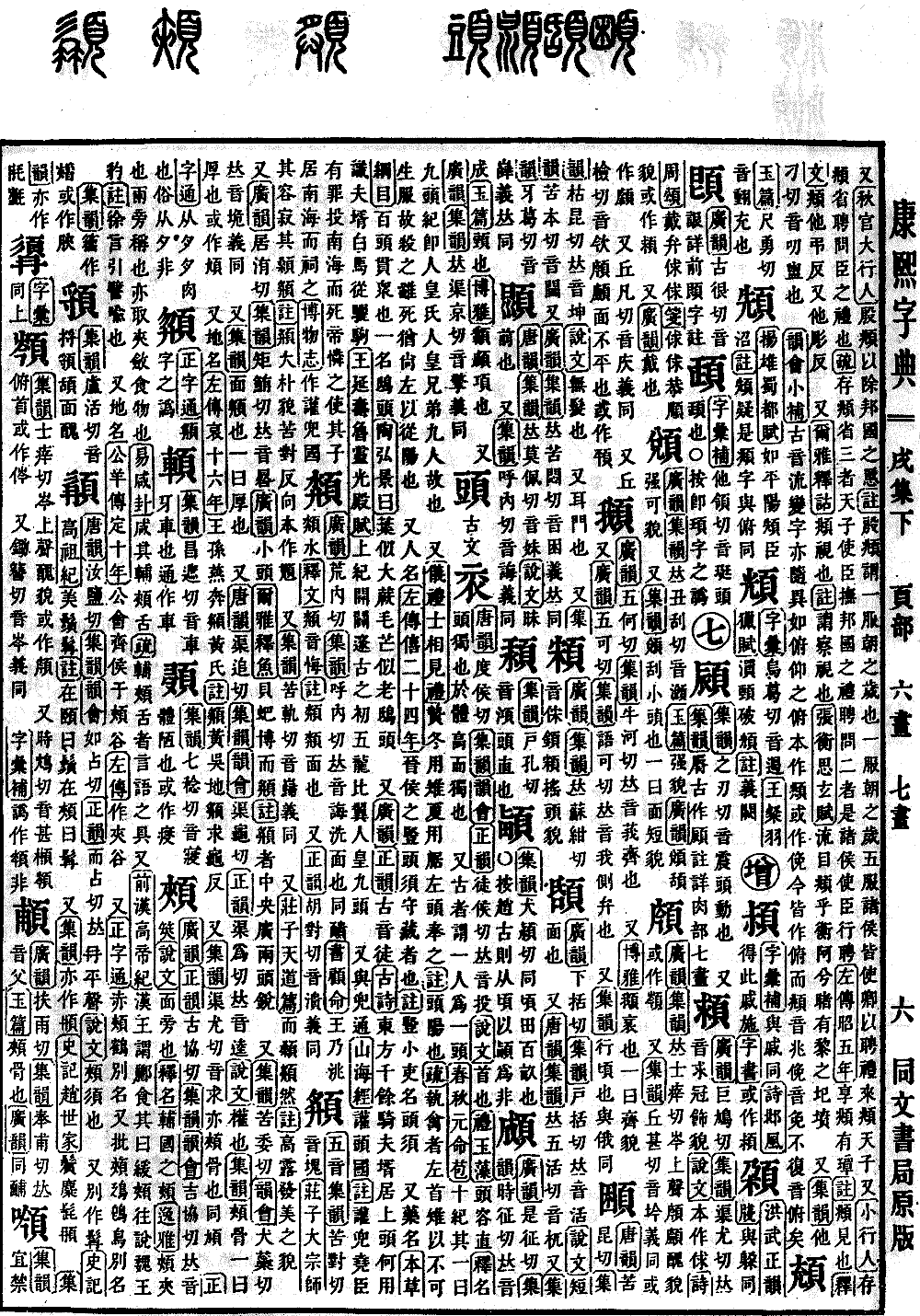
Xu Collection, Lower Volume
Radical: Page (yè)
Kangxi stroke count: 16
Page 1404, Entry 01
Pronounced jia (rising tone).
According to the Analytical Dictionary of Characters (Shuowen Jiezi), it refers to the side of the face.
According to the Broad Compendium of Refined Words (Boya), the side of the face is called the cheek (jia).
According to the Explanation of Names (Shiming), the word for cheek (jia) is related to the word for clamping (jia); it refers to the two sides. It also implies the function of clamping and holding food.
In the Book of Changes (Yijing), regarding the Hexagram of Influence (Xian): Influence comes to the jaws, cheeks, and tongue. The commentary states that the jaws, cheeks, and tongue are the instruments of speech.
Furthermore, in the History of the Former Han (Qianhan Shu), the Biography of Emperor Gaozu: The King of Han said to Li Yiji: Use gentle words (huan jia) to go and persuade the King of Wei, Bao. The annotation explains this as speaking slowly and using metaphors.
Also, a place name. In the Gongyang Commentary (Gongyang Zhuan), tenth year of Duke Ding: The Duke met with the Marquis of Qi at Jiagu. The Zuo Commentary (Zuo Zhuan) records this as Jiagu.
Furthermore, according to the Mastery of Characters (Zhengzitong), red-cheek (chi jia) is another name for the crane.
Also, strike-cheek (pi jia) is another name for the hoopoe bird.
In the Collected Rhymes (Jiyun), the ancient variant form is recorded. It is also sometimes written as the character for flank (xie).
Textual Research:
According to the Explanation of Names (Shiming): The cheek (jia) supports the state.
Correction: The word state (guo) should be changed to the word called (wei). This phrase originates from the Broad Compendium of Refined Words (Boya). It has been corrected here according to the original text.
According to the Broad Compendium of Refined Words (Boya): The side of the face is called the cheek (jia).
According to the Elegant Lexicon (Yiya): The cheek (jia) is to clamp (jia).
Correction: This phrase originates from the Explanation of Names (Shiming). The reference to the Elegant Lexicon (Yiya) has been corrected to the Explanation of Names (Shiming).