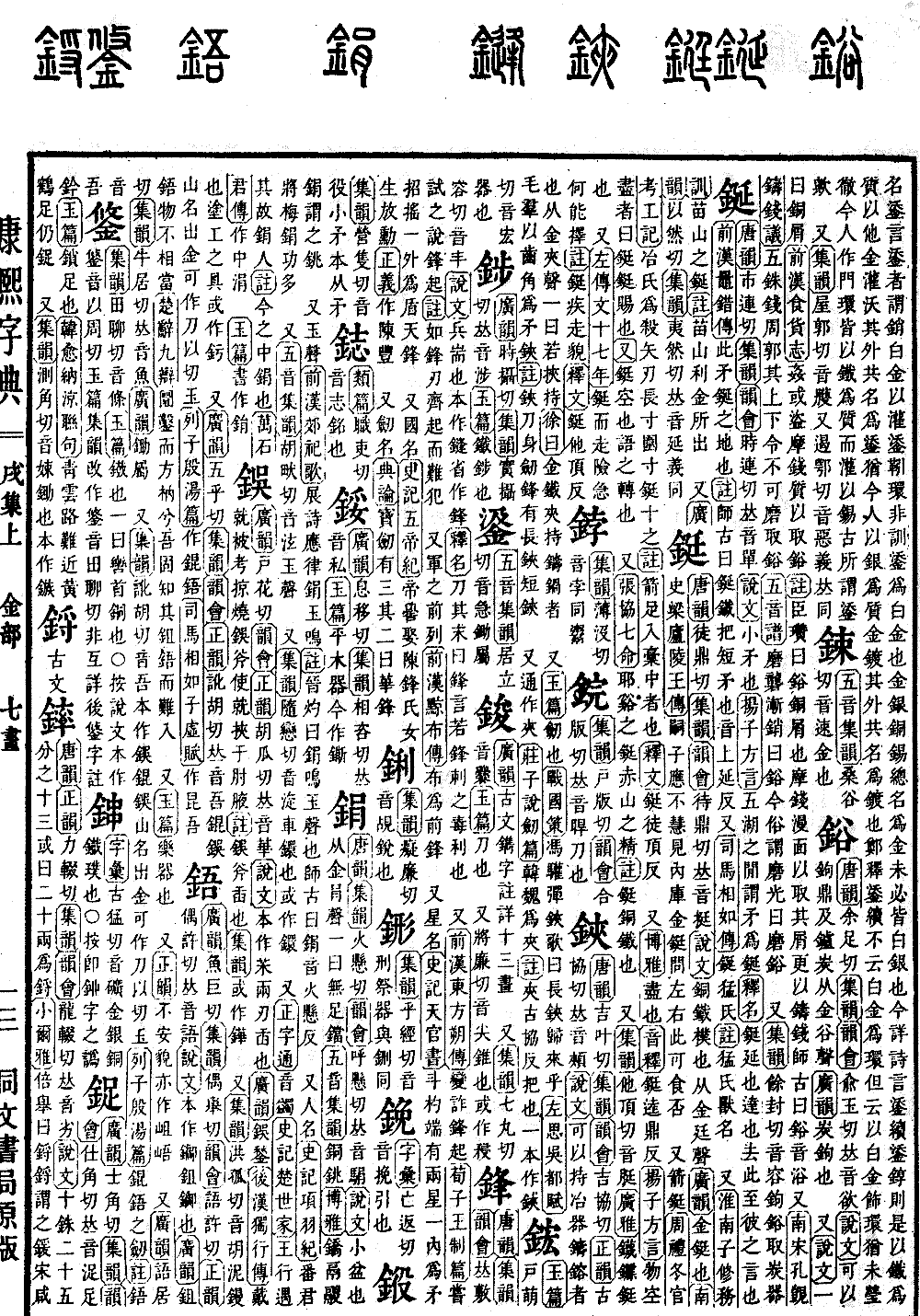
Xu Collection, Upper Volume
Radical: Metal (jīn)
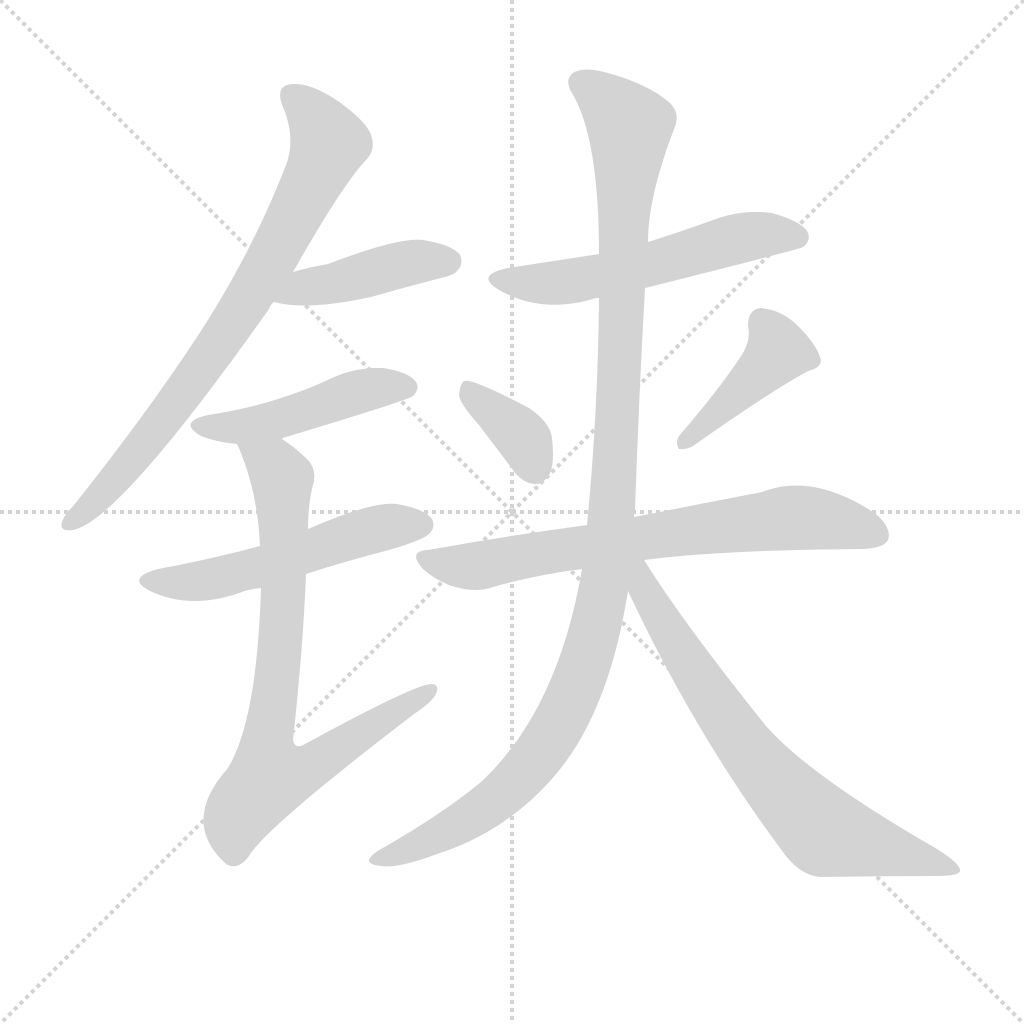
鋏
Kangxi stroke count: 15
Page 1307, Entry 01
Pronounced jiá.
According to the Explaining Graphs and Analyzing Characters (Shuowen jiezi), it refers to an implement used to hold items during the casting and smelting of metal. Derived from the radical for metal with the phonetic component jia. Another interpretation is that it is like holding or gripping something. Xu Xuan stated that it is an iron implement used to grip or hold objects during the casting of cauldrons.
According to the Jade Chapters (Yupian), it also refers to a sword. In the Strategies of the Warring States (Zhanguo ce), Feng Xuan plucked his sword and sang: May the long sword return. In Zuo Si’s Rhapsody on the Capital of Wu (Wudu fu), it is written that animals use their teeth and horns as spears and swords. The commentary explains that this refers to a sword with a blade body and a sharp tip, consisting of long and short varieties.
It is also used interchangeably with the character meaning to hold or grip (jia). In the Zhuangzi, within the Discourse on Swords (Shuojian pian), it appears in the phrase concerning the states of Han and Wei acting as a grip. The commentary notes that this is a variant form meaning to hold. One manuscript version uses the character for sword instead.