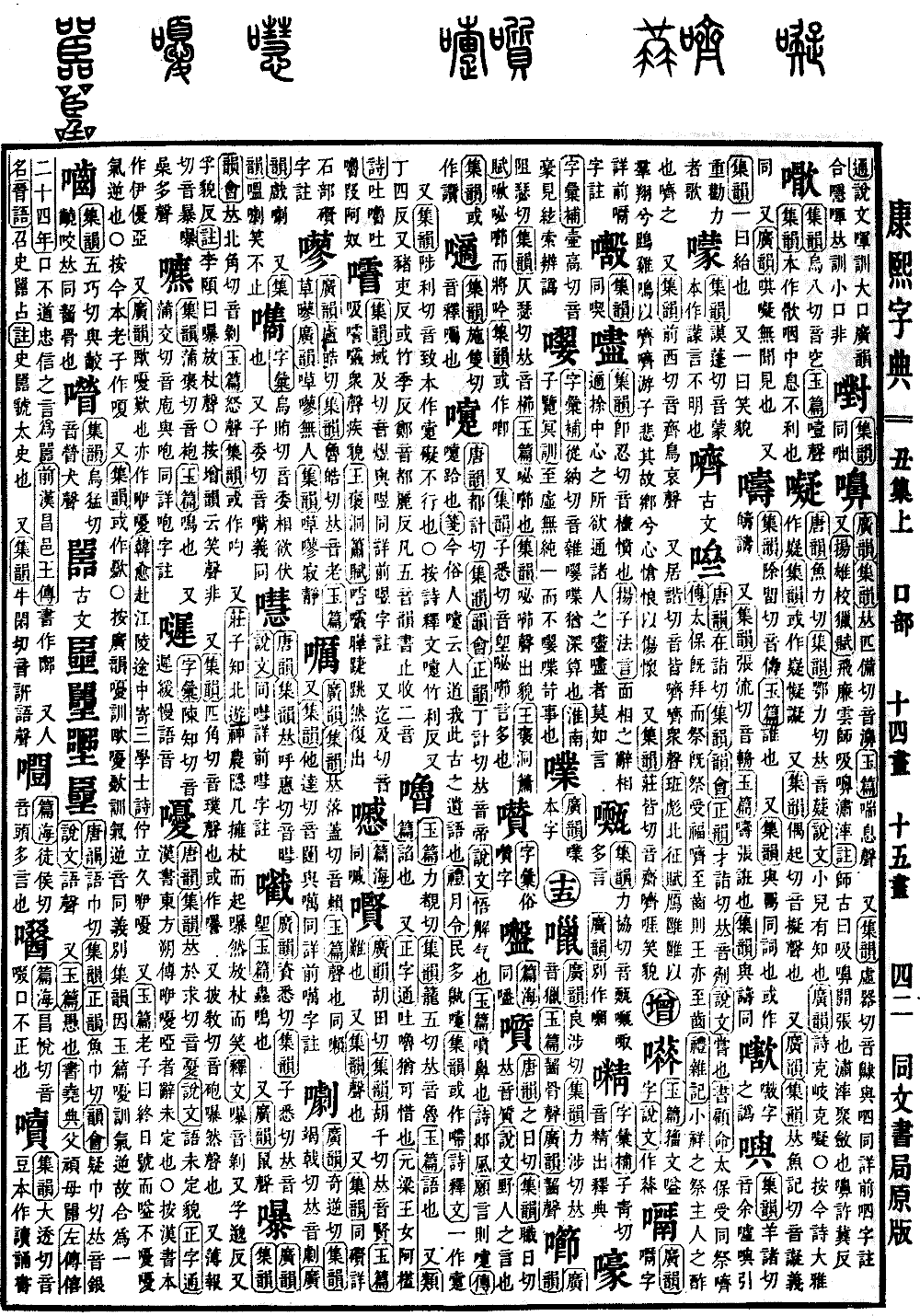
Chou Collection, Upper Volume
Radical: Mouth (kǒu)
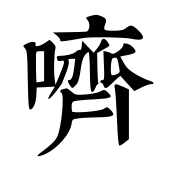
Character: jì
Kangxi strokes: 17
Page 212, Entry 09
Ancient form. According to Tang Rhymes (Tangyun), pronounced jì. According to Collected Rhymes (Jiyun), Rhyme Meetings (Yunhui), and Orthodox Rhymes (Zhengyun), pronounced jì. According to Explaining Graphs and Analyzing Characters (Shuowen), to taste. In the Book of Documents (Shujing), specifically the chapter Testament of King Cheng (Gu Ming): The Grand Guardian received the ritual vessel, offered the sacrifice, and tasted it. The commentary states: After the Grand Guardian bowed and offered the sacrifice, he received the blessing and tasted it to his teeth, as did the King. In the Book of Rites (Liji), specifically the Miscellaneous Records (Zaji): During the sacrifice for the small anniversary of mourning, the host offers a return toast and tastes it.
Also, according to Collected Rhymes (Jiyun), pronounced qí. The sorrowful sound of a bird.
Also, pronounced jiē. The sound of a crowd. In the Northern Expedition Rhapsody (Beizheng Fu) by Ban Biao: The wild geese soar in harmony, the cranes cry out in unison. The traveler grieves for his hometown, his heart pained and wounded with sorrow.
Also, according to Collected Rhymes (Jiyun), pronounced zhāi. Appearing to smile.