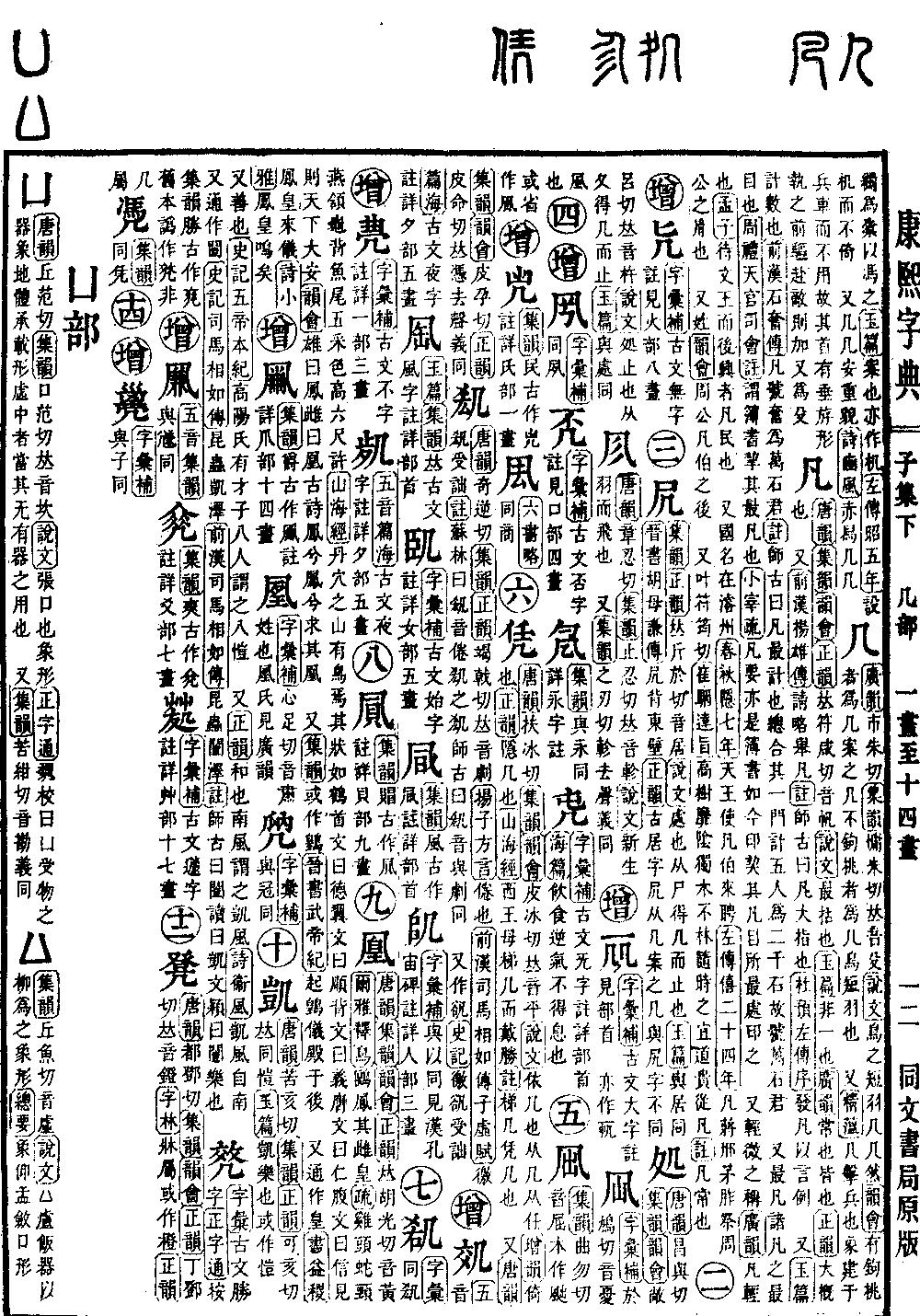
Zi Collection, Page Position: Lower
Radical: Table (jī)
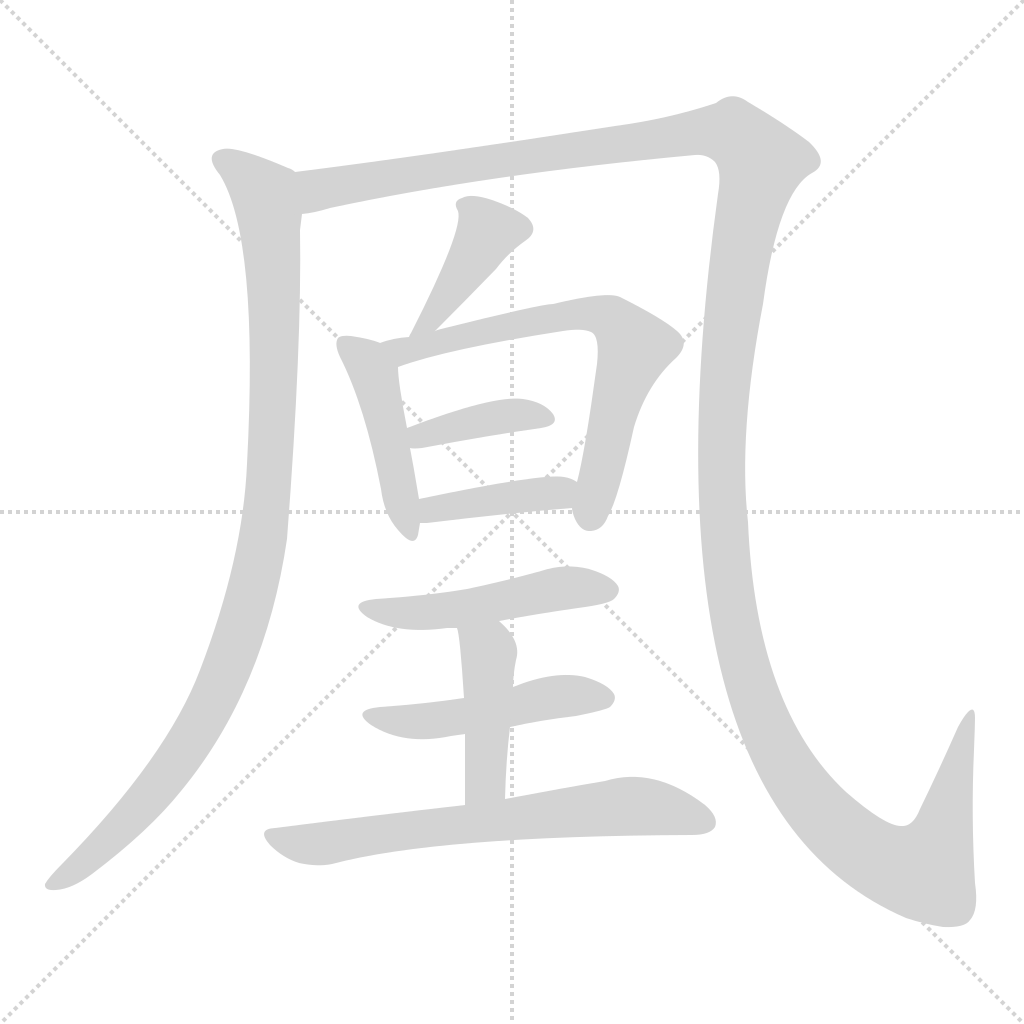
huáng; Kangxi stroke count: 11; Page number: 134, line 27
In Tangyun, Jiyun, Yunhui, and Zhengyun, pronounced huáng (hú guāng qiè). In Erya (Éryǎ) - Explanation of Birds: The yànfèng (male phoenix), its female is huáng. Commentary: It has a chicken head, snake neck, swallow jaw, turtle back, and fish tail, with five colors, about six feet tall. In Classic of Mountains and Seas (Shānhǎi Jīng): On Mount Danxu there is a bird, its form is like a crane, its head pattern says 'Virtue', its wing pattern says 'Obedience', its back pattern says 'Righteousness', its breast pattern says 'Benevolence', and its belly pattern says 'Trust'. When it appears, the world will be in great peace. In Yunhui: The male is called Fèng, the female is called Huáng. Ancient poem: O Fèng, O Fèng, seek your Huáng.
Also, in Jiyun, it is sometimes also written in a variant form. In the Book of Jin (Jìnshū) - Annals of Emperor Wu: He built the Hall of Rites at the rear. Also commonly used as Huáng (huáng). In the Book of Documents (Shūjīng) - Yì Jì: The phoenix (fènghuáng) comes to display itself. In the Book of Odes (Shījīng) - Minor Odes: The phoenix (fènghuáng) sings.
Verification: Erya - Explanation of Birds: 'The yànfèng (male phoenix), its female is huáng.' Commentary: 'chicken head, snake neck, swallow jaw, turtle back, fish tail.' This note has been corrected according to the original commentary.