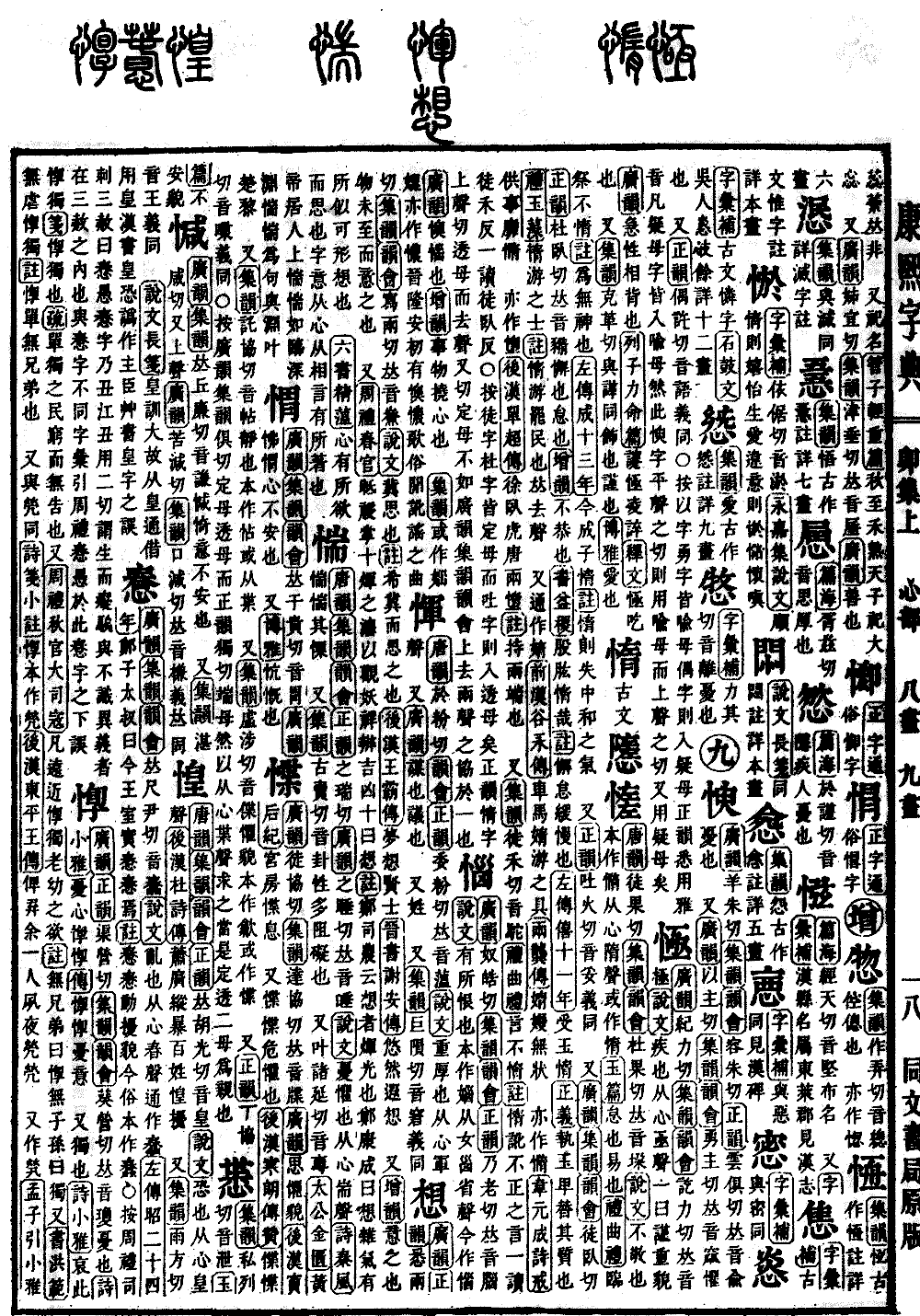
Mao Collection, Upper Volume
Radical: Heart (xīn)
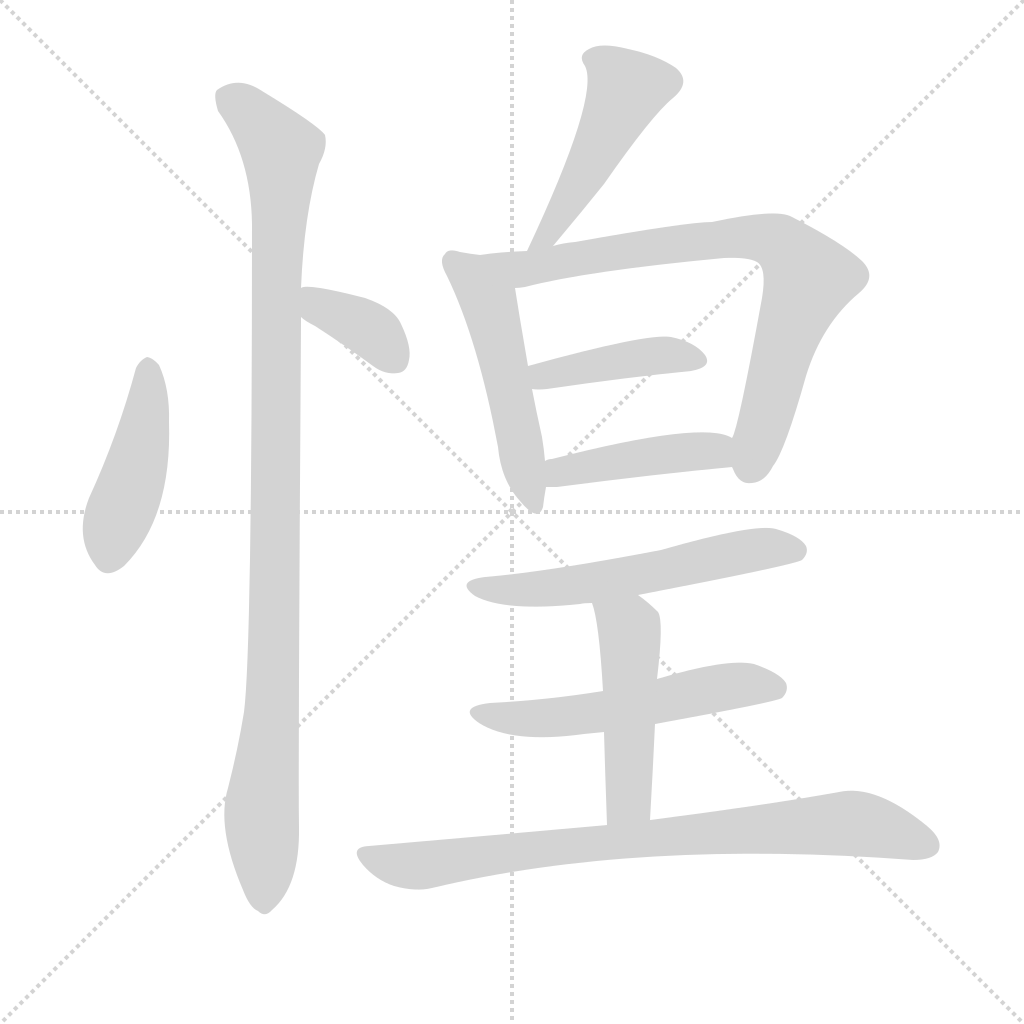
惶
Kangxi stroke count: 13
Page 392, Entry 32
Tang Rhymes (Tangyun), Collected Rhymes (Jiyun), Dictionary of Rhymes (Yunhui), and Correct Rhymes (Zhengyun) all state the pronunciation is huáng (rising tone), which is the same as the character for emperor.
The Explaining Graphs and Analyzing Characters (Shuowen Jiezi) defines it as fear. The character is composed of Heart and Emperor; Heart indicates the meaning relates to the mind, while Emperor provides the pronunciation.
Book of the Later Han (Hou Hanshu), Biography of Du Shi, records: Xiao Guang was indulgent and tyrannical, and the common people were fearful and restless.
Additionally, the Collected Rhymes (Jiyun) provides the pronunciation as huáng (rising tone), which is the same as the character for king. The meaning is the same.
Extended Notes on Explaining Graphs and Analyzing Characters (Shuowen Jiezi Changjian) explains: The original meaning of the character for emperor is great, therefore the character for fearful is derived from it. Sometimes the character for emperor is borrowed to represent it. In the Book of Han (Hanshu), the phrase for fearful was mistakenly written as the characters for lord and subject; this was caused by a clerical error in the cursive script writing of the character for emperor.