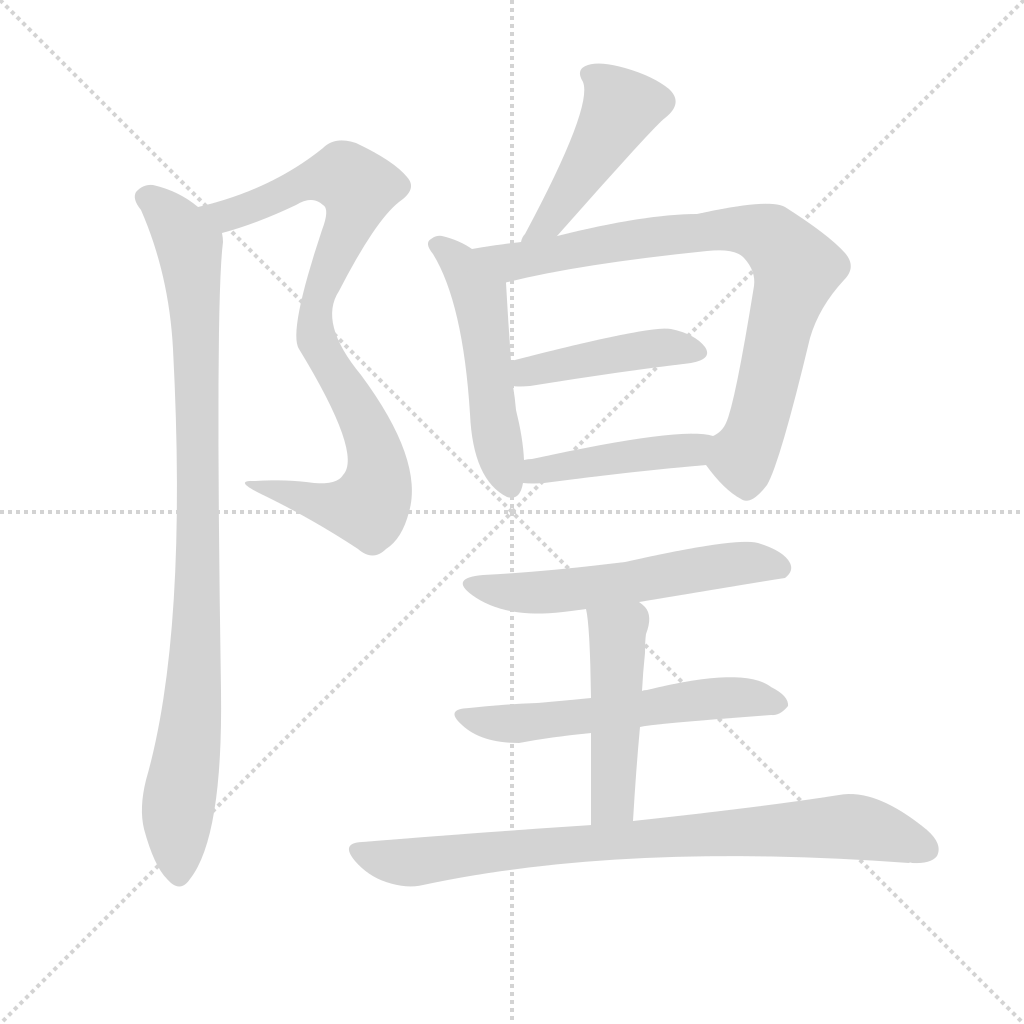
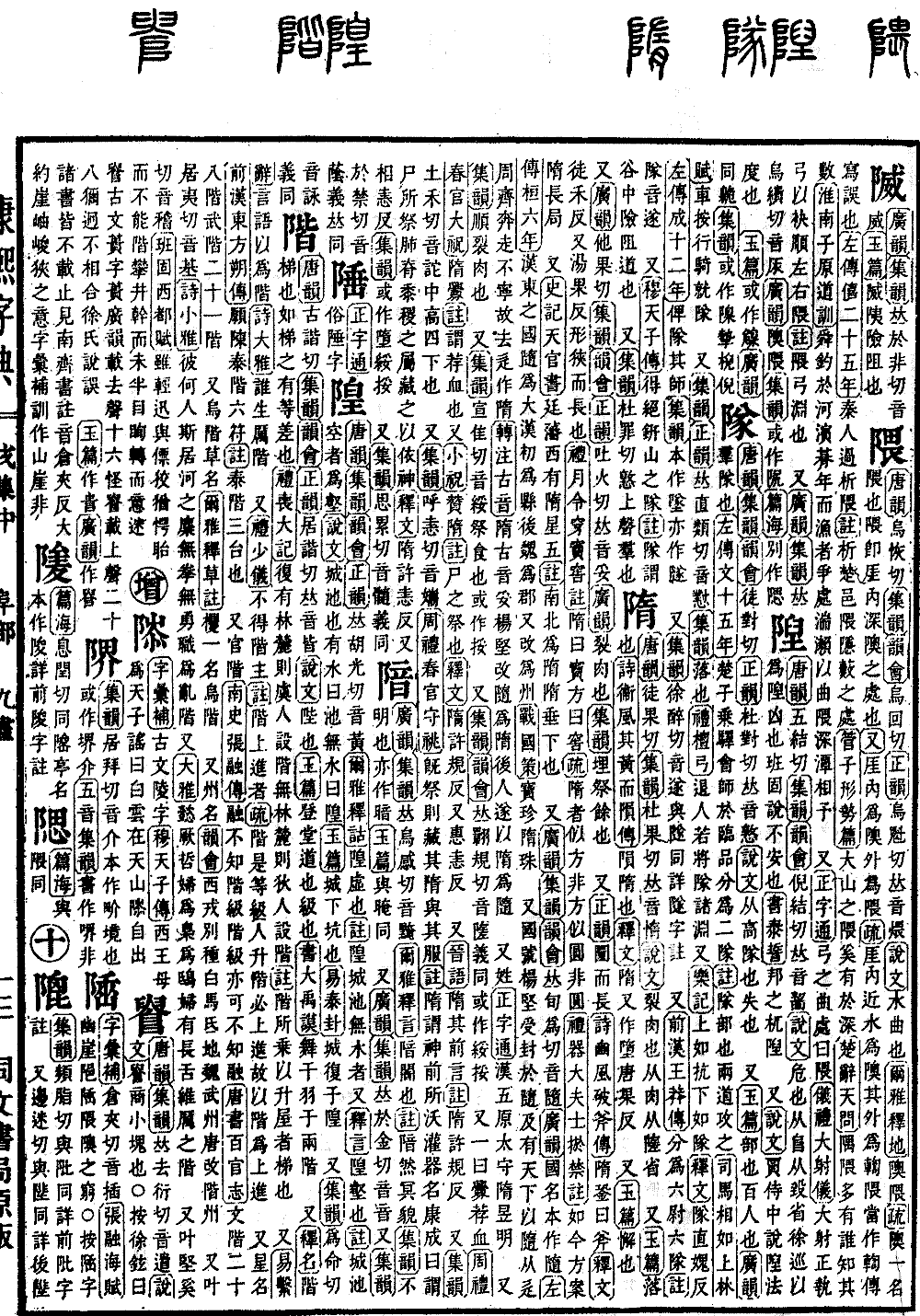
Xu Collection, Middle Volume
Radical: Mound (fù)
Kangxi strokes: 17
Page number: 1357, entry 08
In Tang Rhyme (Tangyun), Collected Rhymes (Jiyun), Rhyme Compendium (Yunhui), and Correct Rhyme (Zhengyun), the pronunciation is given as 'hú guāng qiè', rhyming with 'huáng'.
In Erya (Erya), Explanation of Ancient Words (Shigu), huáng is explained as meaning 'empty' or 'void'. The commentary explains that huáng refers to a moat without water.
Also, in Erya, Explanation of Words (Shiyan), huáng is explained as 'gully' or 'ravine'. The commentary explains that the part of a city's defenses that is empty of water is called a gully (hè).
In Shuowen Jiezi (Shuowen Jiezi), it is explained as a city moat. With water, it is called chí; without water, it is called huáng.
The Yupian (Yupian) explains it as a deep pit beneath a city wall.
The Yijing (Yijing), Tai Hexagram, records: 'The city wall collapses into the moat (huáng).'
Also, in Collected Rhymes (Jiyun), the pronunciation is given as 'wéi mìng qiè', rhyming with 'yǒng'. The meaning is the same as above.