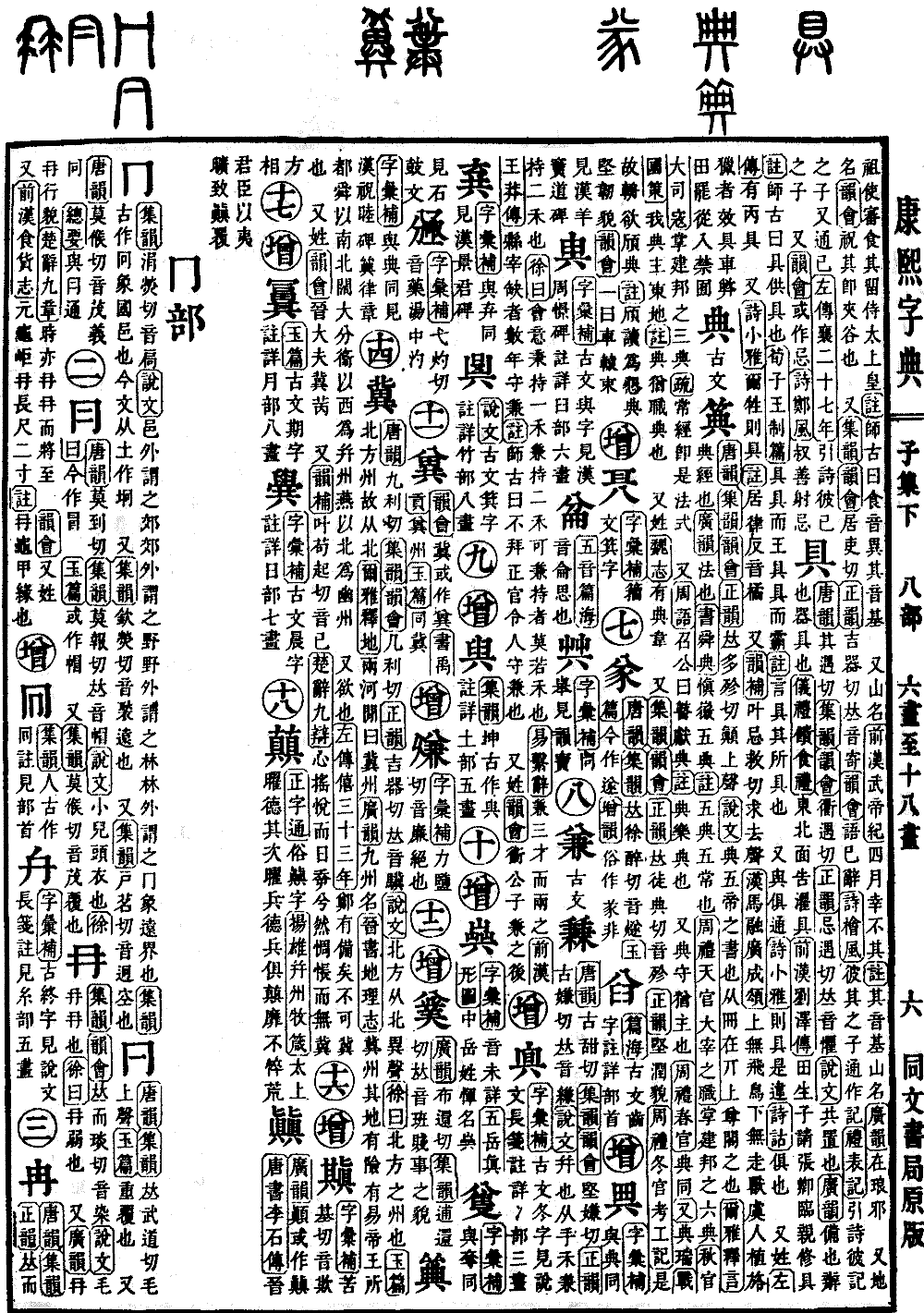
Zi Collection, Page Position: Lower. Radical: Eight (bā). Character: Ju. Kangxi Dictionary Strokes: 8. Page: 128, Number: 01.
According to the Tang Rhymes (Tangyun), the pronunciation is the fanqie of qi and yu. According to the Collected Rhymes (Jiyun) and the Rhyme Assembly (Yunhui), the pronunciation is the fanqie of qu and yu. According to the Standard Rhymes (Zhengyun), the pronunciation is the fanqie of ji and yu. All have the same sound as ju.
The Explaining Graphs and Analyzing Characters (Shuowen Jiezi) defines the character as providing or preparing things together. The Expanded Rhymes (Guangyun) defines it as complete, to manage, or tools and utensils.
Etiquette and Ceremonial (Yili), in the section on the Rite of Food Offerings, records: Facing northeast, announcing that the washing preparations are complete.
The History of the Former Han (Qian Han Shu), in the Biography of Liu Ze, records: Tiansheng invited Zhang Qing to visit and personally prepared wine and food. The commentary by Yan Shigu states that ju refers to the provided wine and food.
Xunzi (Xunzi), in the chapter on the Regulations of a King (Wangzhi), records: With the necessary conditions, one can be called a king; with the necessary conditions, one can be called a hegemon. The commentary states this means possessing the required conditions.
The character is also interchangeable with ju. The Book of Odes (Shijing), in the Minor Odes (Xiaoya), records: Then all is in violation. The Explanations of the Odes (Shigu) interprets this as ju.
It is also used as a surname. The Zuo Tradition (Zuo Zhuan) mentions a person named Ju Bing.
Also in the Book of Odes, Minor Odes records: Your sacrificial animals are then complete. The commentary gives the pronunciation as the fanqie of ju and lv, sounding the same as ju.
According to the Rhyme Supplement (Yunbu), there is also a rhyming pronunciation as the fanqie of ji and jiu, similar to the departing tone of qiu.
Ma Rong of the Han Dynasty in the Ode to Guangcheng (Guangcheng Song) records: There are no flying birds in the sky, and no walking beasts on the ground. The foresters set up banners, and the hunters present their equipment. The carriages are damaged and the hunt ceases, as the attendants enter the forbidden park.
Research shows it is also a surname. In the Zuo Tradition, there is the name Bing Ju. Note: The name Ju Bing appears in the 18th year of Duke Xiang in the Zuo Tradition. The text is hereby corrected from Bing Ju to Ju Bing.