Chou Collection, Upper Volume
Radical: Mouth (kǒu)
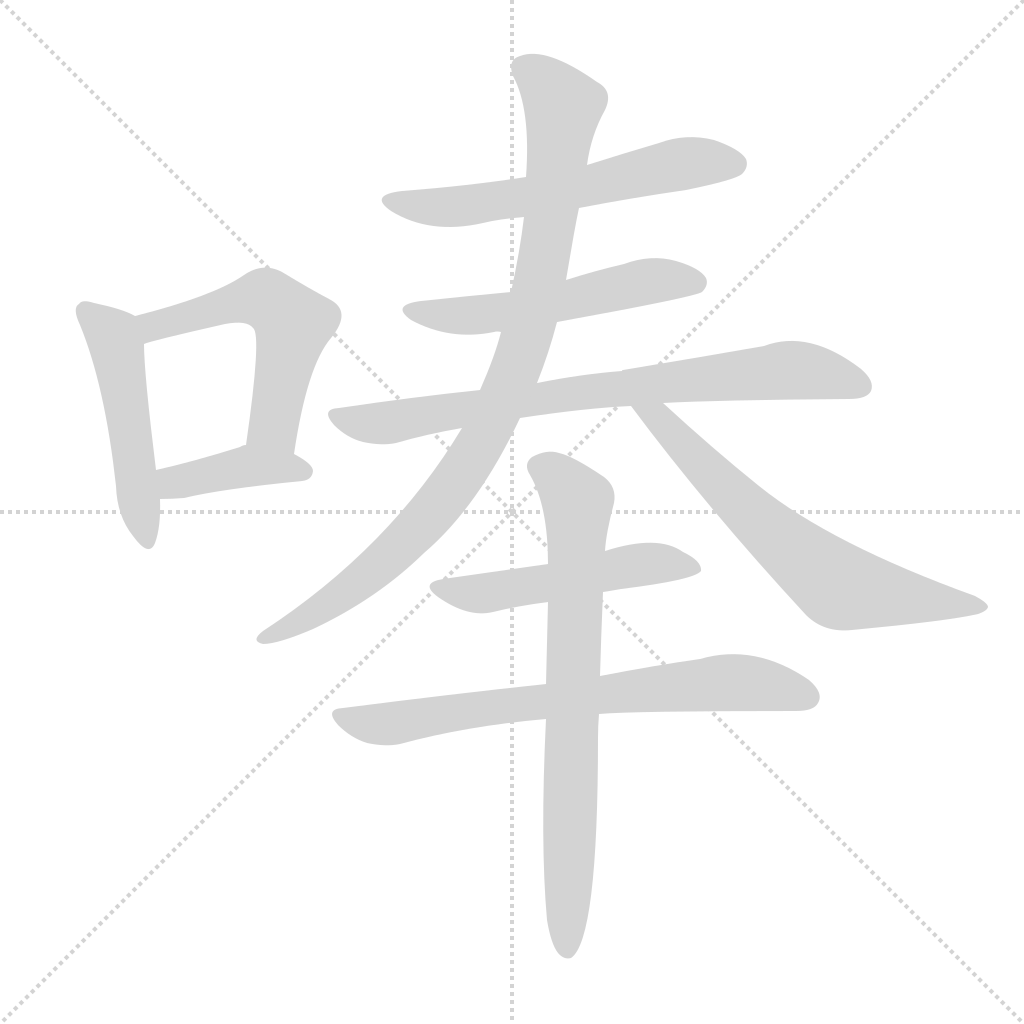
Feng
Kangxi stroke count: 11
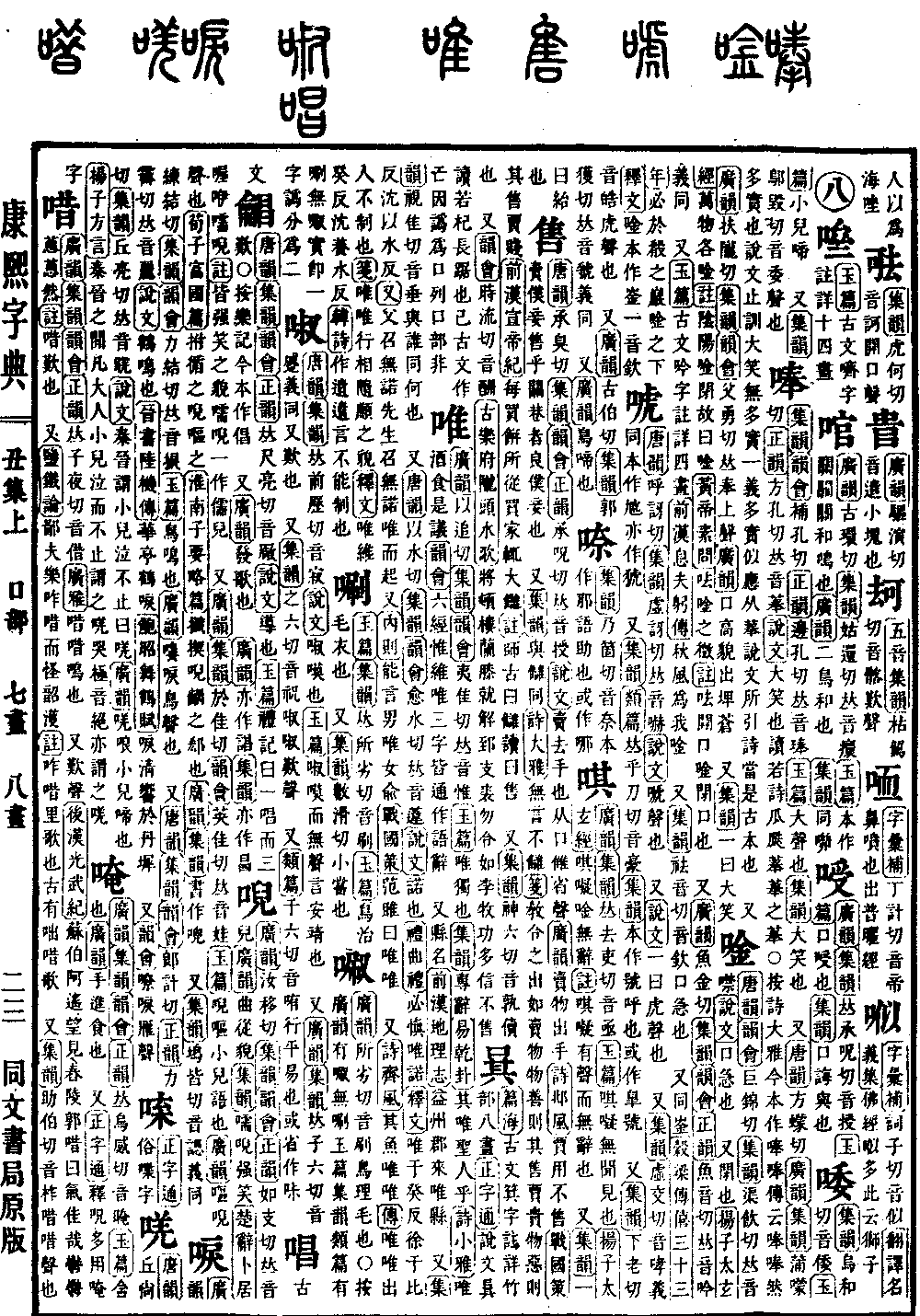
Page 193, Entry 10
Collection of Rhymes (Jiyun) and Rhyme Collection (Yunhui) define it as pronounced beng (rising tone). Correct Rhymes (Zhengyun) defines it as pronounced beng (rising tone).
Jade Chapters (Yupian) states it means a loud sound.
Collection of Rhymes (Jiyun) states it means laughing loudly.
Also, according to Tang Rhymes (Tangyun), it is pronounced beng (rising tone); according to Extensive Rhymes (Guangyun) and Collection of Rhymes (Jiyun), it is pronounced beng (rising tone); according to Correct Rhymes (Zhengyun), it is pronounced beng (rising tone).
Explaining Characters (Shuowen) states it means laughing loudly. Pronounced like the word beng in the Book of Odes (Shijing) passage describing melons and gourds as beng-beng.
Note: In the current edition of the Greater Odes (Daya) of the Book of Odes (Shijing), the character is written as beng-beng. The commentary states that beng-beng describes an abundance of fruit. Explaining Characters (Shuowen) only defines it as laughing loudly and does not include the meaning of abundance of fruit. The meaning of abundance of fruit seems to correspond to the character beng. The passage from the Book of Odes (Shijing) cited by Explaining Characters (Shuowen) must be from an ancient edition.
Also, according to Extensive Rhymes (Guangyun), it is pronounced fu (rising tone); according to Collection of Rhymes (Jiyun) and Rhyme Collection (Yunhui), it is pronounced fu (rising tone).
Extensive Rhymes (Guangyun) states it describes a mouth held high; this appears in the Cang.
Also, according to Collection of Rhymes (Jiyun), one source defines it as laughing loudly.