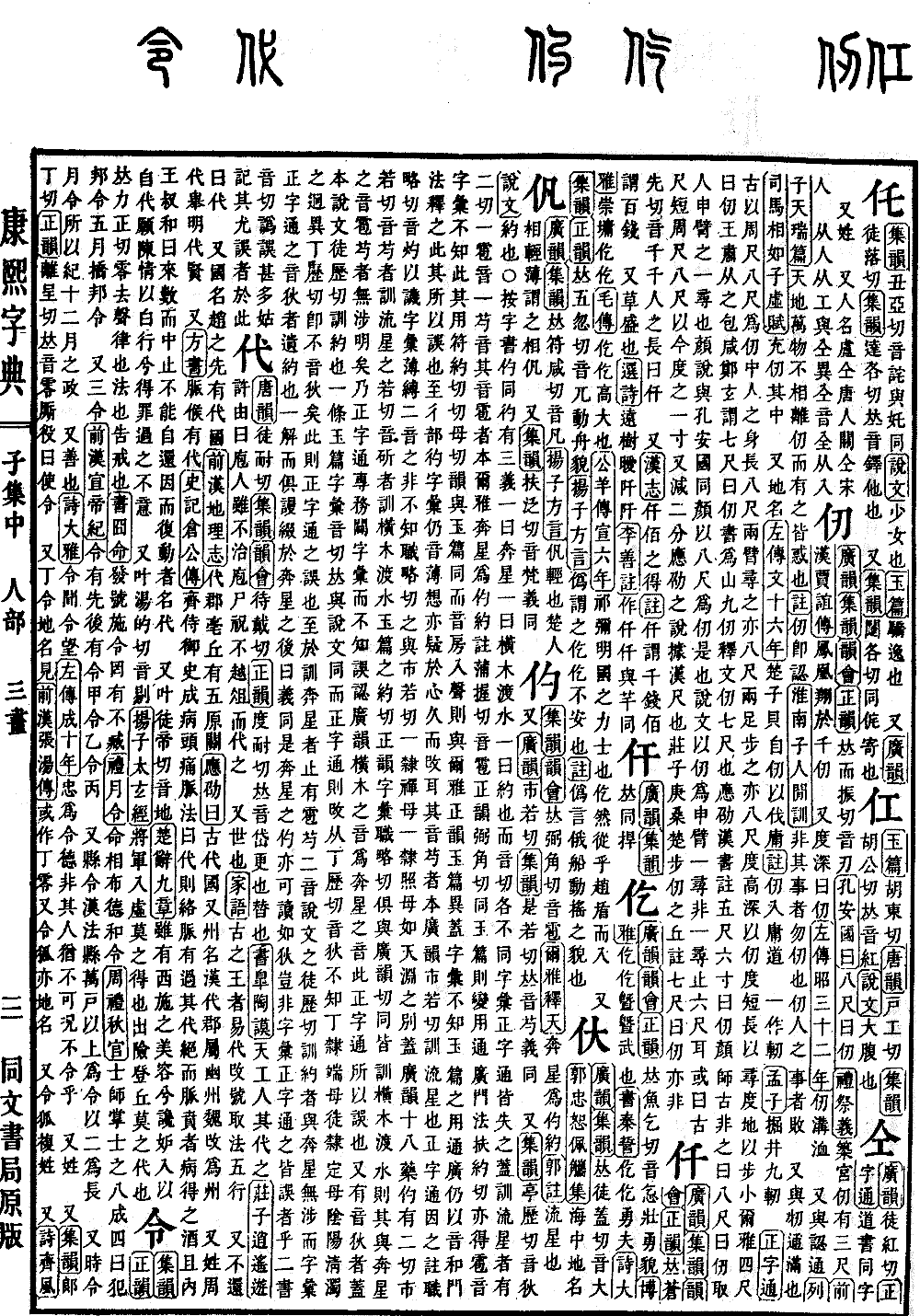
Zi Collection, Middle Volume
Radical: Person (rén)
仡
Kangxi Stroke Count: 5
Page Number: Page 93, Entry 07
Guangyun (Guǎngyùn), Yunhui (Yùnhuì), and Zhengyun (Zhèngyùn) record the pronunciation as yi (rising tone). It denotes a strong and valiant appearance.
Boyan (Bóyǎ) defines it as follows: Gege and jiji both describe a mighty and awe-inspiring state.
Book of Documents (Shàngshū), Qin Oath (Qínshì) records: Valorous men who are strong and mighty.
Book of Odes (Shījīng), Greater Odes (Dàyǎ) describes: The high walls are tall and imposing.
Mao Commentary (Máozhuàn) notes: Gege means tall and grand.
Gongyang Commentary (Gōngyángzhuàn), Year 6 of Duke Xuan (Xuān liù nián) records: Qi Miming was a strong warrior of the state. He followed Zhao Dun resolutely as he entered.
Also, Jiyun (Jíyùn) and Zhengyun (Zhèngyùn) record the pronunciation as wu (rising tone), which is the same as the pronunciation for the character meaning a boat rocking.
Yang Xiong's Dialects (Fāngyán) defines: It is falsely called gege, indicating instability.
Note: The word false is pronounced e. It describes the swaying motion of a ship.