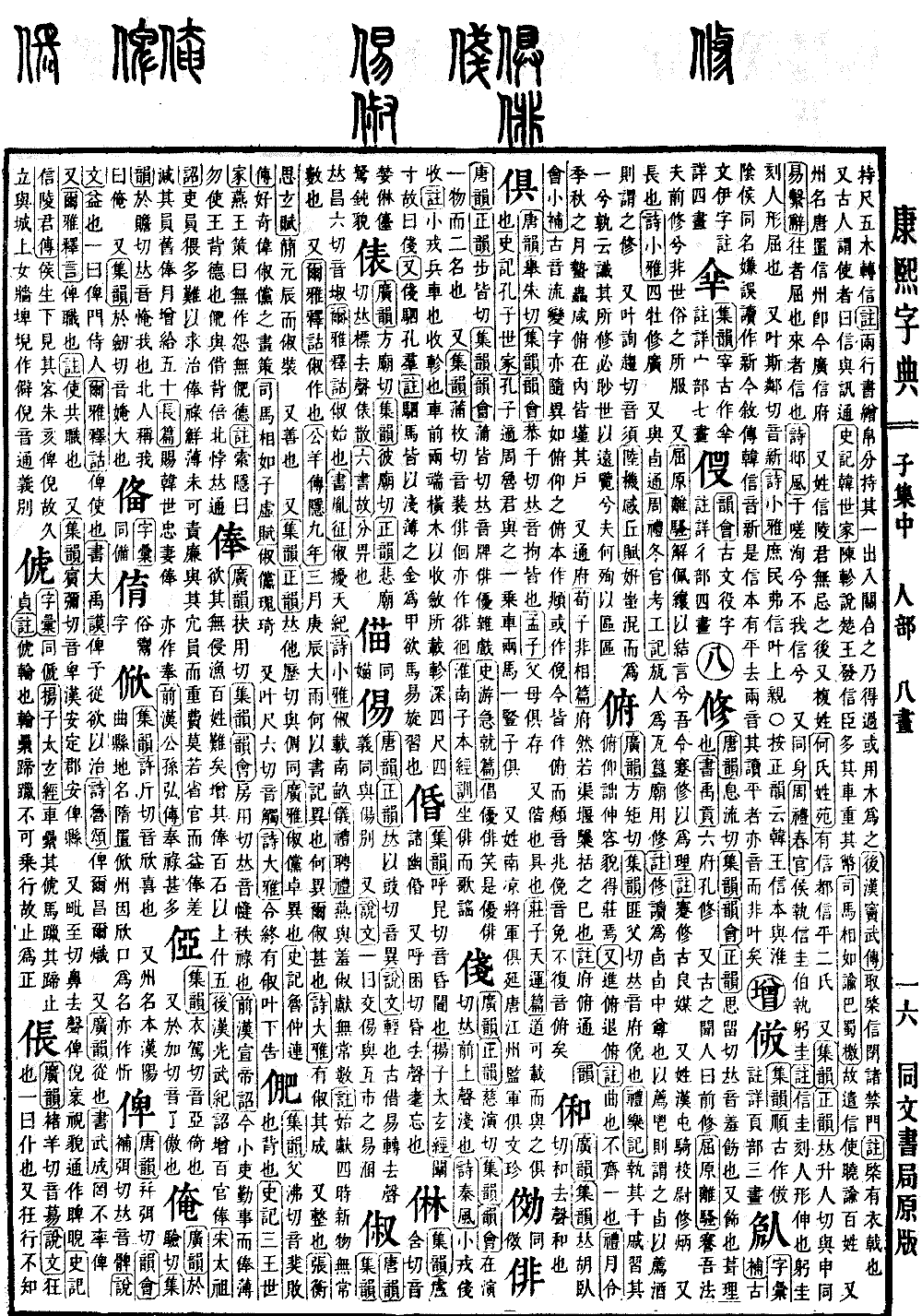
Zi Collection, Middle Volume. Radical: Person (rén). Character: chang. Kangxi stroke count: 10. Page 106.
According to the Extensive Dictionary of Sounds and Meanings (Guangyun), pronounced chang. According to the Explaining Graphs and Analyzing Characters (Shuowen), it means madness. Another interpretation defines it as a servant. It also describes walking in a crazed manner without knowing where one is going. In the Book of Rites (Liji), specifically the Zhongni Yanju chapter: The blind have no one to assist them, wandering lost and confused, where are they going?
It also refers to the chang ghost; when a tiger bites a person and the person dies, the soul dare not go elsewhere and immediately becomes a servant to the tiger; this is called a chang. According to the Record of Rainy Conversations (Tingyu Jitan), when a person encounters a tiger, their clothing and belts will unfasten themselves and be placed on the ground; the tiger sees the person is naked before it eats them, and this is all caused by the chang. The chang can be described as the most foolish of ghosts.
Additionally, according to the Collected Rhymes (Jiyun), pronounced chang. The meaning is the same. It is also pronounced cheng, describing the appearance of standing alone. Furthermore, according to the Extensive Dictionary of Sounds and Meanings (Guangyun) and the Collected Rhymes (Jiyun), pronounced tang. According to the Extensive Dictionary of Sounds and Meanings (Guangyun), meng-chang denotes losing one's way. According to the Collected Rhymes (Jiyun), chang-heng denotes being coarse and reckless.