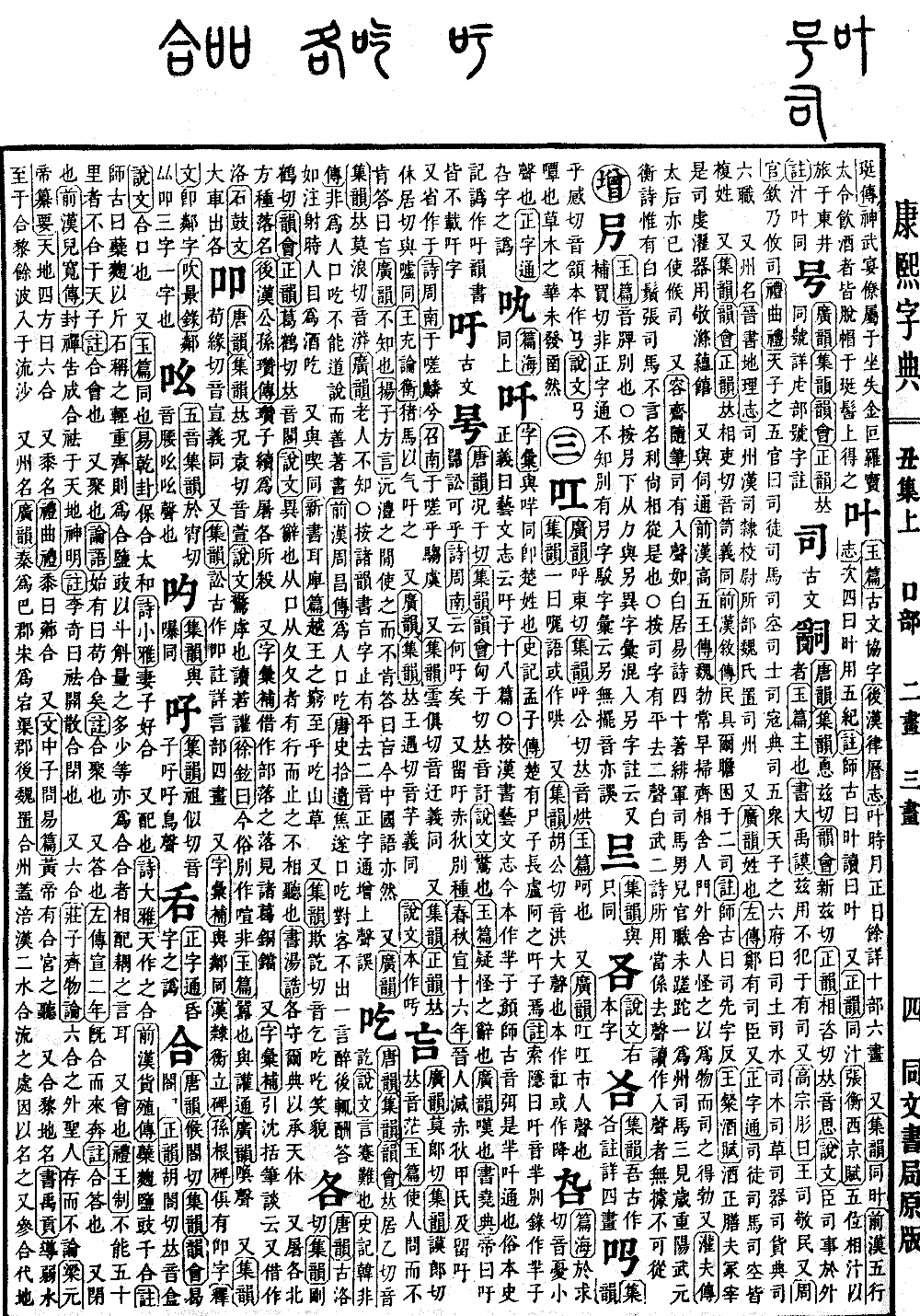
Chou Collection, Upper Volume
Radical: Mouth (kǒu)
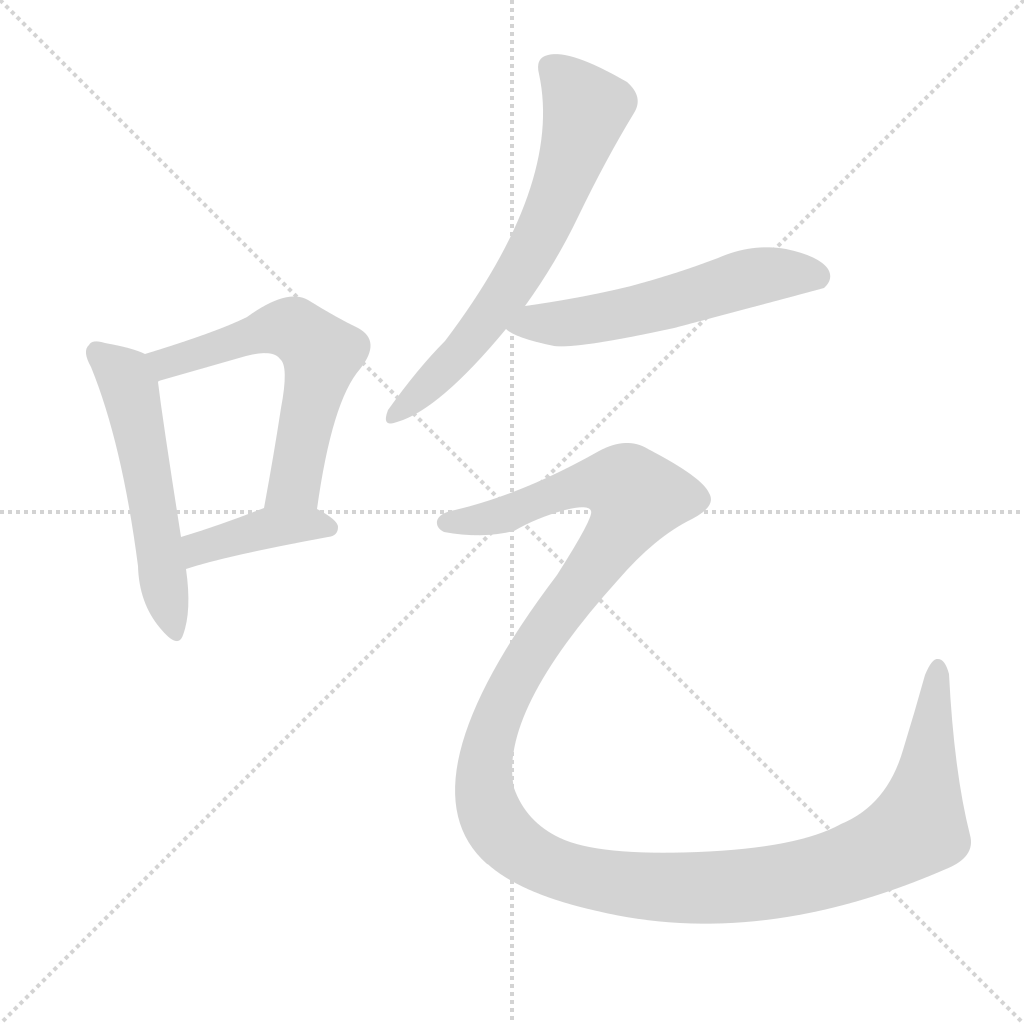
Character: chi
Kangxi stroke count: 6
Page 174, Entry 17
Tang Rhymes (Tangyun), Collected Rhymes (Jiyun), and Rhyme Meeting (Yunhui) define the pronunciation as ji (falling-rising tone), same as the pronunciation of the character meaning to stop or finish.
Explaining Characters and Phrases (Shuowen Jiezi) defines it as a stutter or difficulty in speech.
Records of the Grand Historian (Shiji), Biography of Han Fei, records that Han Fei stuttered and was not skilled in speech, but was excellent at writing books.
History of the Former Han (Qian Hanshu), Biography of Zhou Chang, states that Zhou Chang also stuttered.
Supplementary History of the Tang (Tangshi Shiyi) records that Jiao Sui stuttered and could not say a word during normal conversation, but after becoming intoxicated, he could answer questions fluently; people of the time called him the wine stutterer.
Also the same as the character for eat.
New Book (Xinshu), Ear and Nose chapter, records that the King of Yue was once in such dire straits that he had to eat wild mountain grasses.
Collected Rhymes (Jiyun) also defines the pronunciation as qi (entering tone), same as the pronunciation of the character for beg.
Chi-chi describes the appearance of laughing.