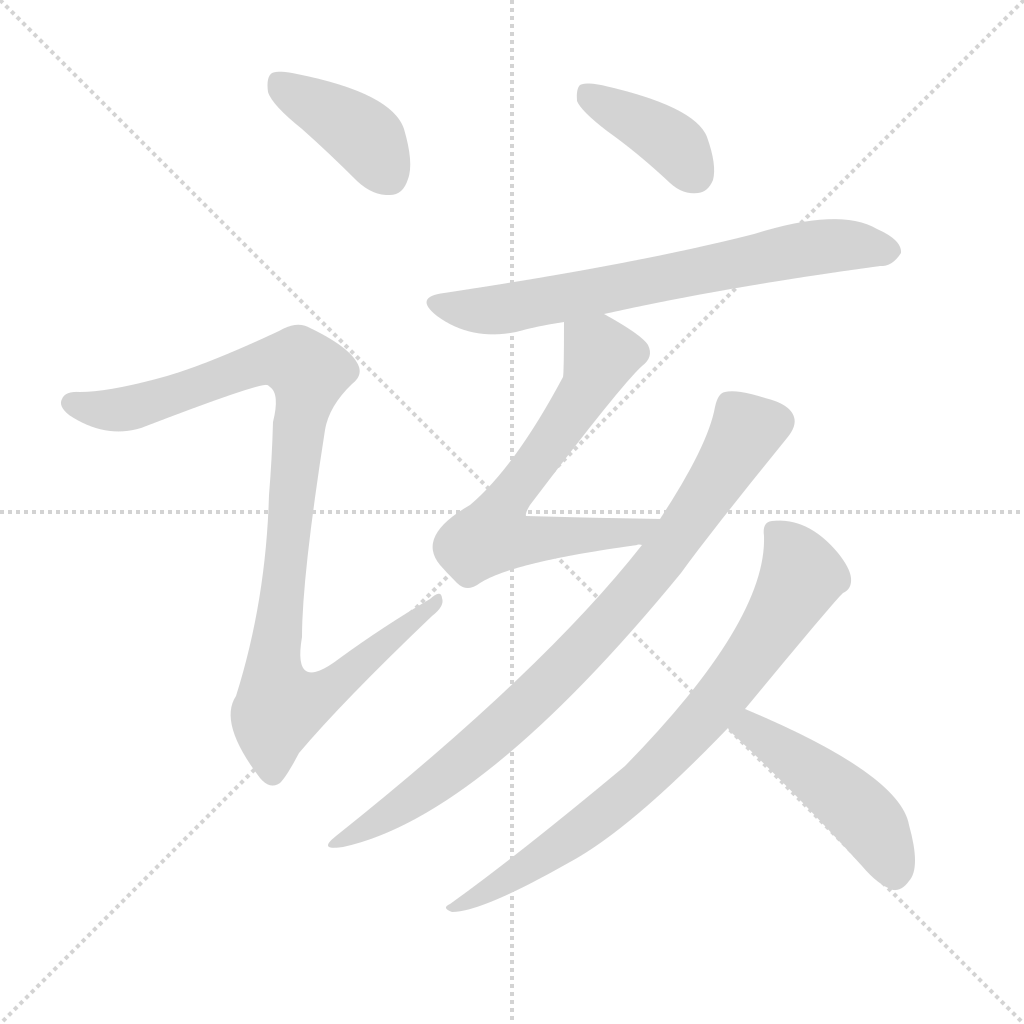
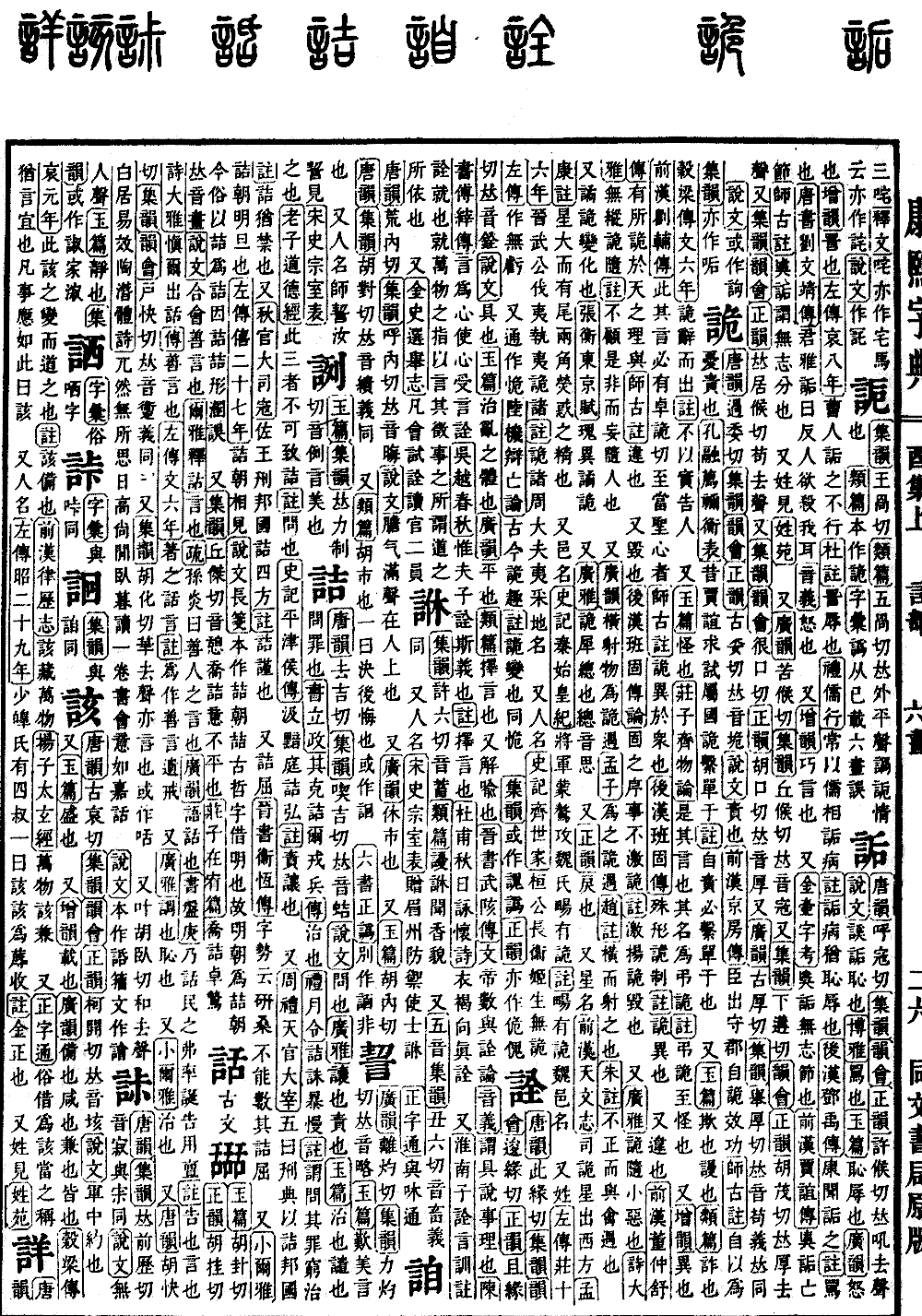
You Collection, Upper Volume
Radical: Speech (yán)
Kangxi stroke count: 13
Page 1158, Entry 03
Tang Rhymes (Tangyun): Pronounced gai. Collected Rhymes (Jiyun), Rhyme Meetings (Yunhui), and Orthodox Rhymes (Zhengyun): Pronounced gai. Explanations in the Analytical Dictionary of Characters (Shuowen): Military conventions. Jade Compendium (Yupian): Grand or magnificent. Extended Rhymes (Zengyun): To bear or sustain. Broad Rhymes (Guangyun): Complete, total, containing all, or to include all.
Guliang Commentary (Guliang Zhuan), first year of Duke Ai: This summarizes the changes to explain the principles. Commentary: Gai means complete.
History of the Former Han (Qianhan Shu), Treatise on Pitch Pipes and Calendars: To contain all things. Yangzi, Great Mystery (Taixuan Jing): All things are fully provided for.
Orthodox Character Mastery (Zhengzitong): Commonly used as a term for what is proper, as in saying something is suitable. When something ought to be a certain way, it is called gai.
Personal names: Zuo Tradition (Zuo Zhuan), 29th year of Duke Zhao: The sovereign Shaohao had four uncles, one of whom was named Gai. Gai served as the official in charge of autumn metal. Commentary: This was the official position of the Minister of Metals.
Surnames: Found in the Dictionary of Surnames (Xingyuan).