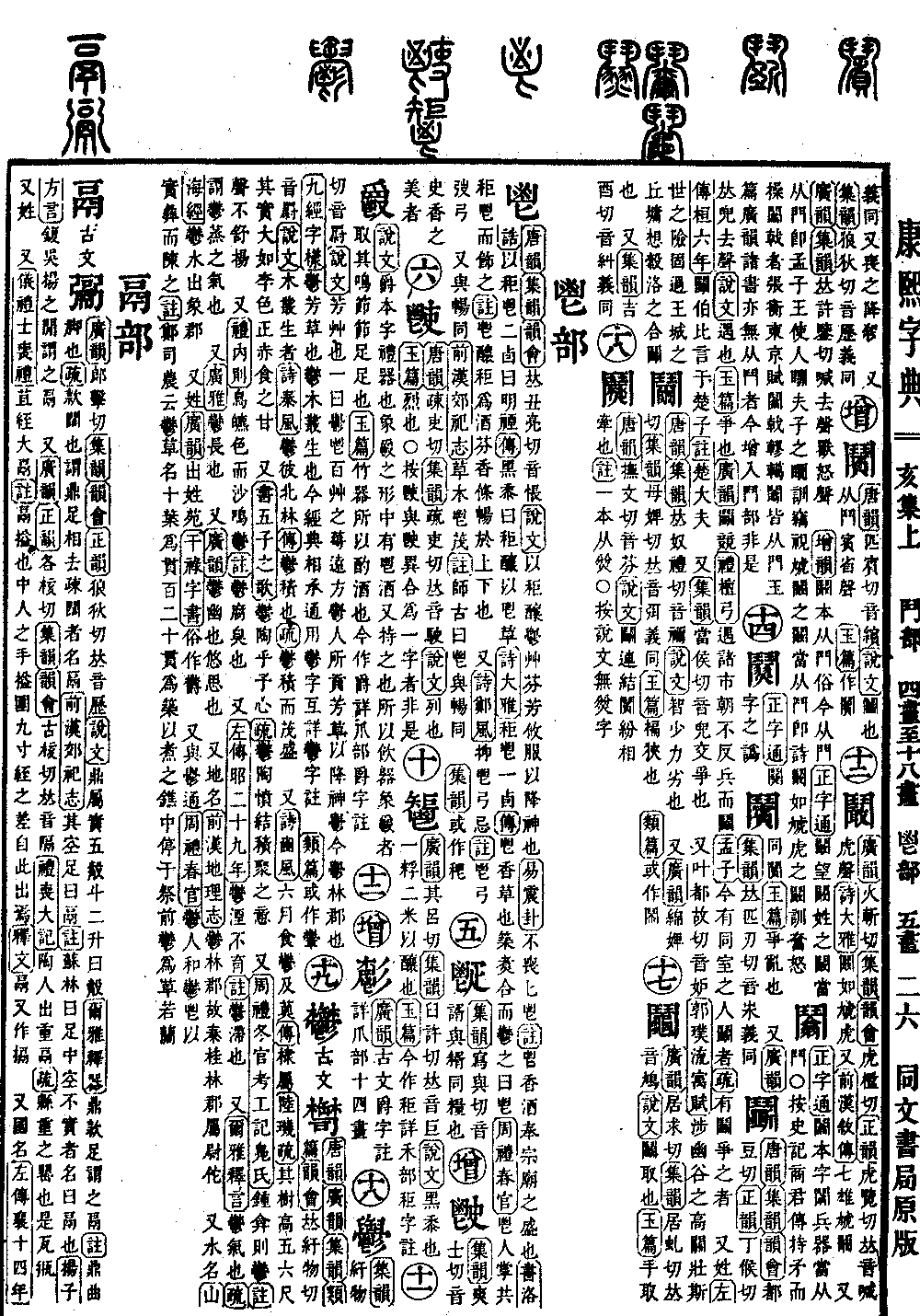
Hai Collection, Upper Volume
Radical: Cauldron (lì)
Kangxi stroke count: 10
Page 1458, Entry 20
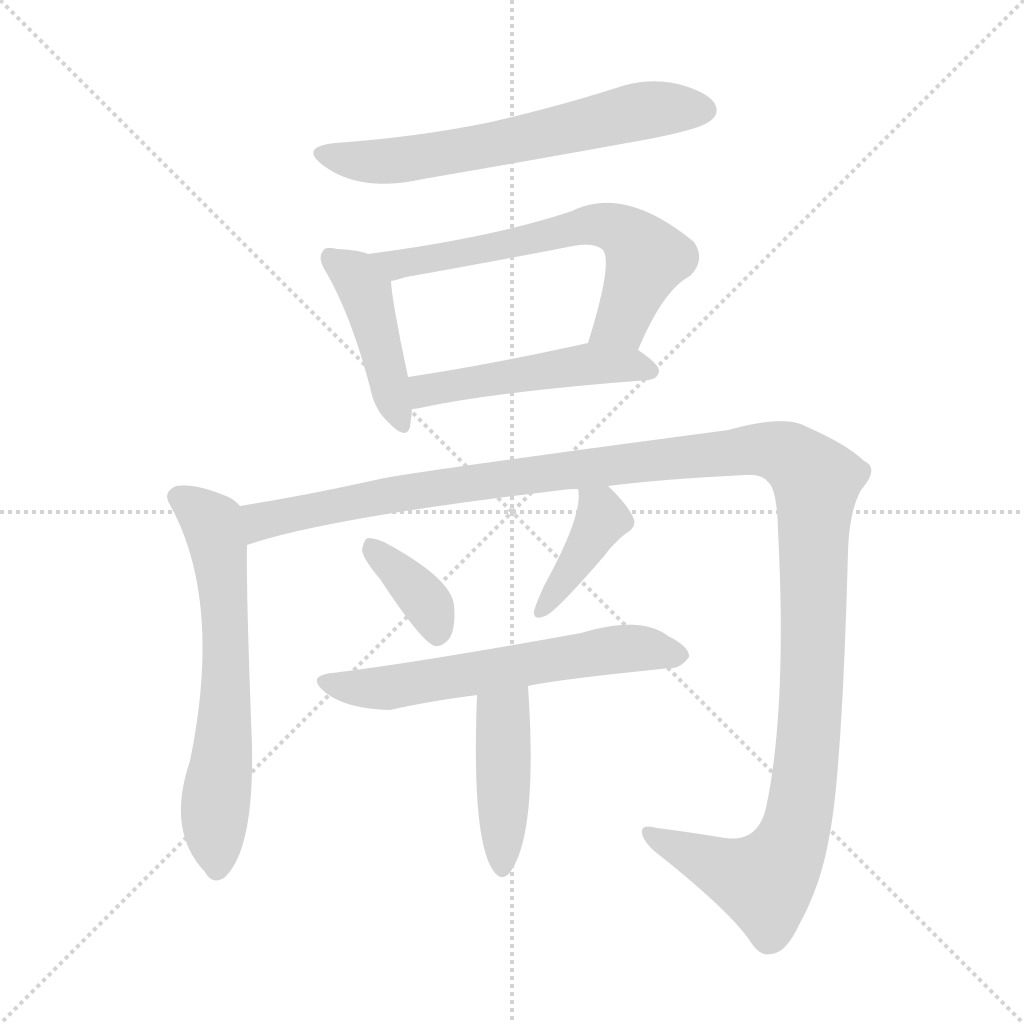
Ancient form. Pronounced li. According to the Expanded Rhymes (Guangyun), the Collected Rhymes (Jiyun), the Rhyme Collection (Yunhui), and the Correct Rhymes (Zhengyun), it is pronounced li (rising tone). According to the Explaining Graphs and Analyzing Characters (Shuowen), it is a vessel of the cauldron type, with a capacity of five hu (one dou and two sheng equals one hu). According to the Er Ya (Er Ya, Explaining Vessels), a vessel with hollow, curved feet is called a ge. Commentary: Refers to the curved feet of the tripod. Sub-commentary: Refers to the wide space between the tripod feet. According to the History of the Former Han (Qianhan, Annals of the Suburban Sacrifices), a vessel with hollow feet is called a ge. Commentary: Su Lin says: a vessel with hollow, non-solid feet is called a ge. According to the Dialect (Fangyan) by Yang Xiong, a pot is called a ge in the Wu and Yangzhou regions.
Also pronounced ge. According to the Expanded Rhymes and Correct Rhymes, and the Collected Rhymes and Rhyme Collection, it is pronounced ge (entering tone). According to the Book of Rites (Liji, Records of Mourning), a potter makes a ge for hanging heavy objects. Sub-commentary: This refers to an earthen vessel for hanging heavy objects.
Also a surname.
Also, according to the Book of Etiquette and Ceremonial (Yili, Mourning Rites for Officers), the width of the hemp mourning belt is equal to a large ge. Commentary: Ge is the same as e, referring to the hand of an average person, which measures about nine inches around; the distinctions in mourning garments are determined by this. Commentary on the text: Ge is sometimes also written in a variant form (e).
Also a state name. According to the Zuo Commentary (Zuozhuan, Fourteenth Year of Duke Xiang), Mi fled to the Youge clan. Commentary: Ge is a state name, located in the present-day Pingyuan County area.
Also, according to the Er Ya (Er Ya, Explaining Waterways), Gejin is one of the Nine Rivers. Commentary: The water flow is narrow and obstructed, and obstacles can be set up to serve as a ferry.
Also the same as ge (to separate/obstruct). According to the History of the Former Han (Qianhan, Five Elements Records), to cut off and close doors. Commentary: Yan Shigu says: ge and ge (to separate) are the same.
Also, according to the Collected Rhymes, it is pronounced e. The same as e (yoke). According to the Rites of Zhou (Zhouli, Winter Office, Artificers' Record), for all carriage shafts produced, the ge is six feet long. Commentary: Ge refers to the part at the front of the carriage shaft that presses against the ox's neck. According to the Five Classics Characters (Wujing Wenzi), the Explaining Graphs and Analyzing Characters writes it as ge, and in classical texts, it is written as ge. The original character form of ge derives from the ge structure.