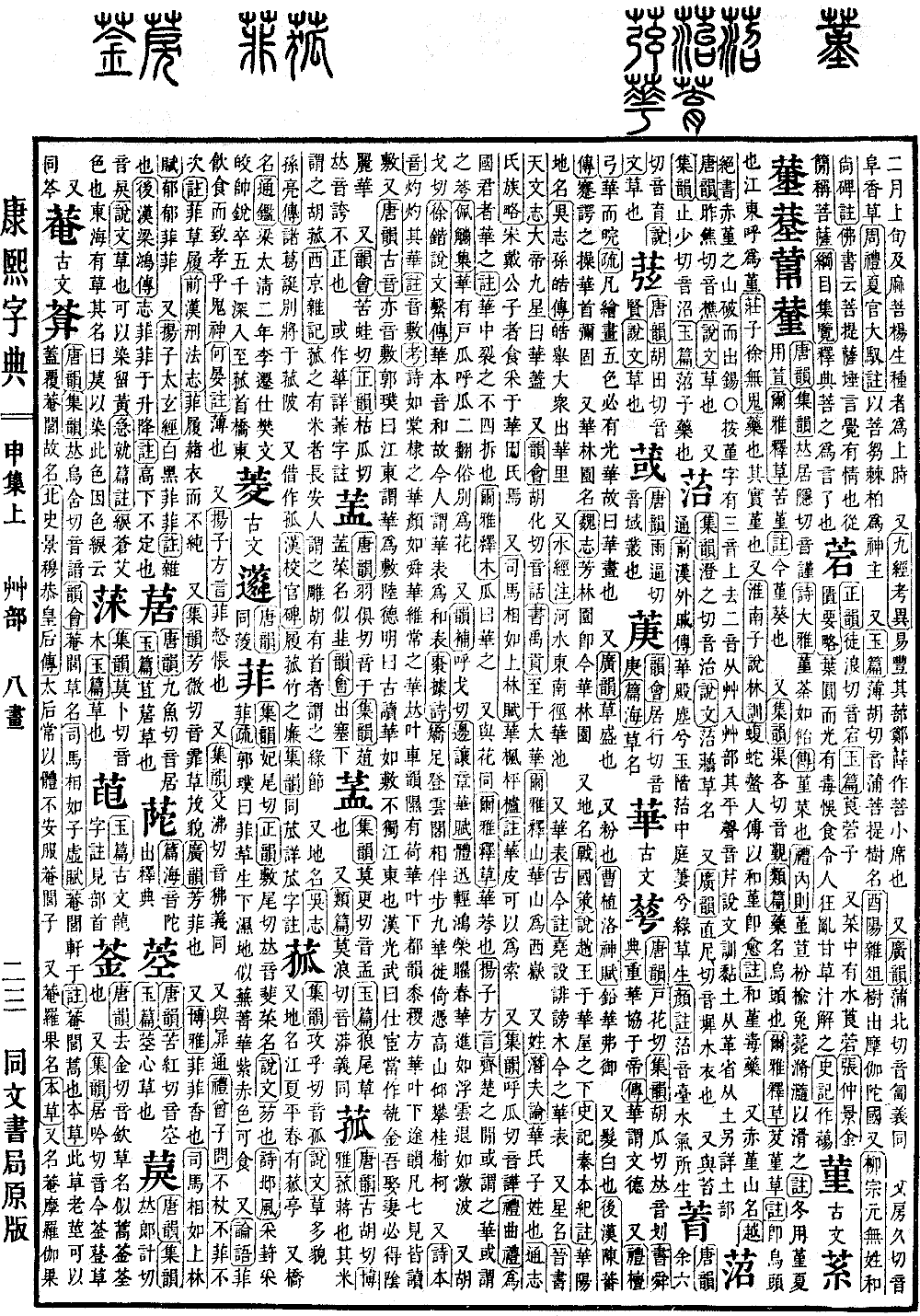
Shen Collection, Upper Volume
Radical: Grass (cǎo)
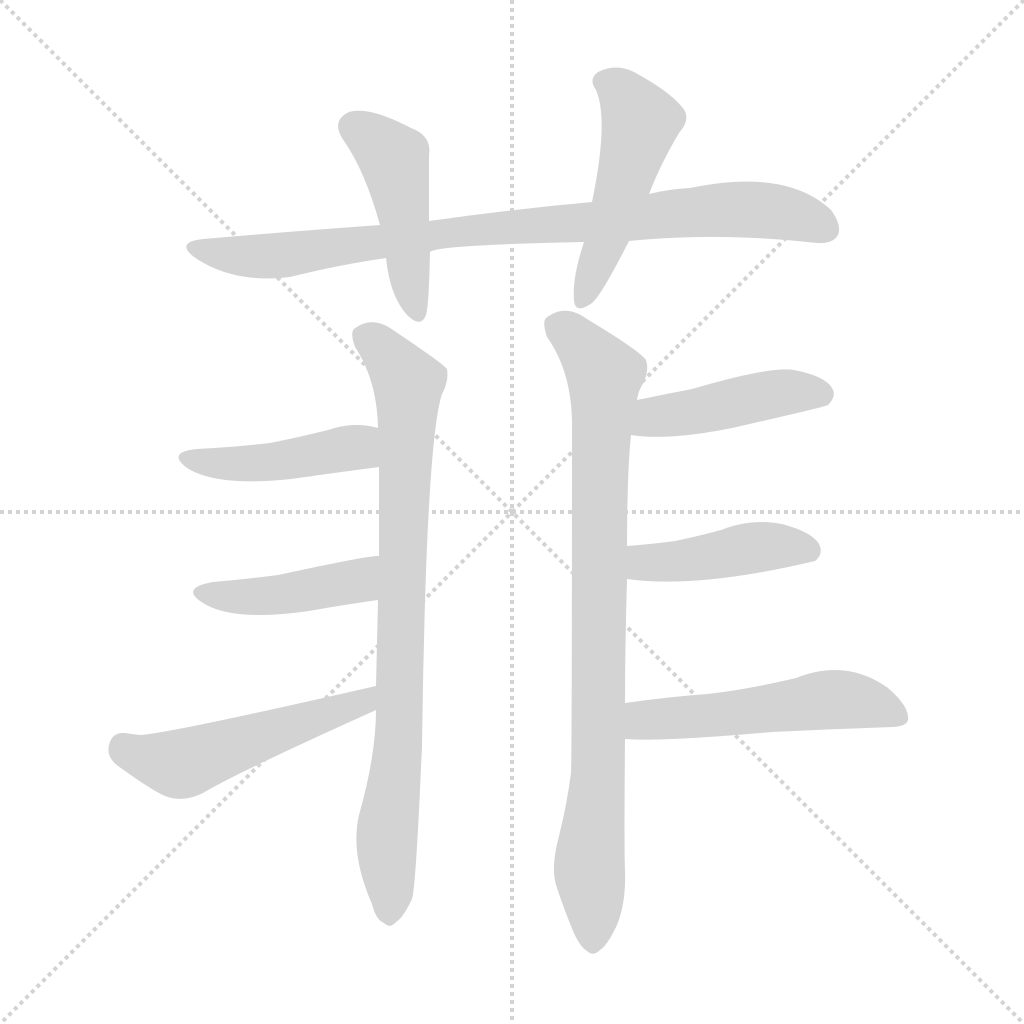
菲
Kangxi stroke count: 14
Page 1039, Entry 22
Phonetic Sound Dictionary (Jiyun) and Orthography Dictionary (Zhengyun) state the pronunciation is fei (third tone). It is the name of a vegetable.
Explaining Characters (Shuowen) identifies it as the wu plant.
Book of Odes (Shijing), Odes of Bei: To gather turnip, to gather wild radish. Commentary: Guo Pu states that the wild radish plant grows in damp places, resembles a turnip, has purple-red flowers, and is edible.
Analects (Lunyu): How could one have meager food and drink yet demonstrate complete filial piety to the spirits? He Yan commentary: Fei refers to that which is meager or slight.
Yangzi Dialect (Fangyan): Fei refers to the feeling of being dejected or lost.
Phonetic Sound Dictionary (Jiyun) states the pronunciation is fei (fourth tone). The meaning is the same.
It is also used interchangeably with the character for straw sandals.
Book of Rites (Liji), Zengzi Questions: One does not carry a staff, does not wear straw sandals, and does not carry a mat. Commentary: Fei refers to straw sandals.
History of the Former Han (Qianhan Shu), Treatise on Penal Law: Wearing straw sandals and reddish-brown clothing without borders.
Phonetic Sound Dictionary (Jiyun) states the pronunciation is fei (first tone). It describes lush grass.
Broad Rhymes (Guangyun): Describes the fragrant appearance of flowers and grass.
Extensive Refinements (Boya): Fei-fei describes a rich and heavy fragrance.
Sima Xiangru, Rhapsody on the Shanglin Park (Shanglin Fu): Lush and fragrant.
Yangzi, Supreme Mystery (Taixuan Jing): White and black, mixed and indistinct. Commentary: Describes a state of being mingled or muddled.
History of the Later Han (Houhan Shu), Biography of Liang Hong: My aspirations fluctuate uncertainly. Commentary: Describes an aim or ambition that is indecisive or wavering.