Mao Collection, Upper Volume
Radical: Heart (xīn)
Kangxi stroke count: 12
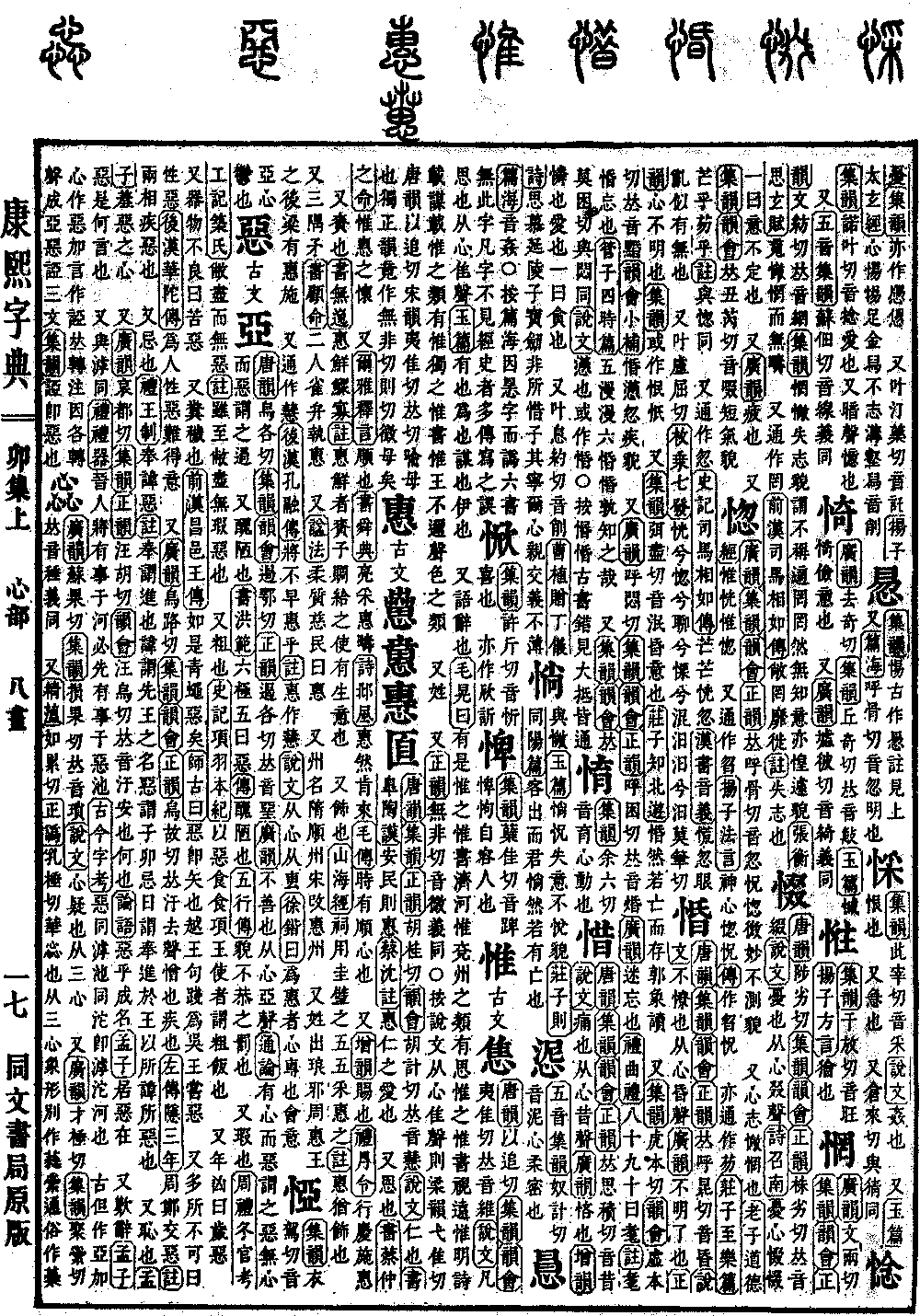
Page 391, Entry 02
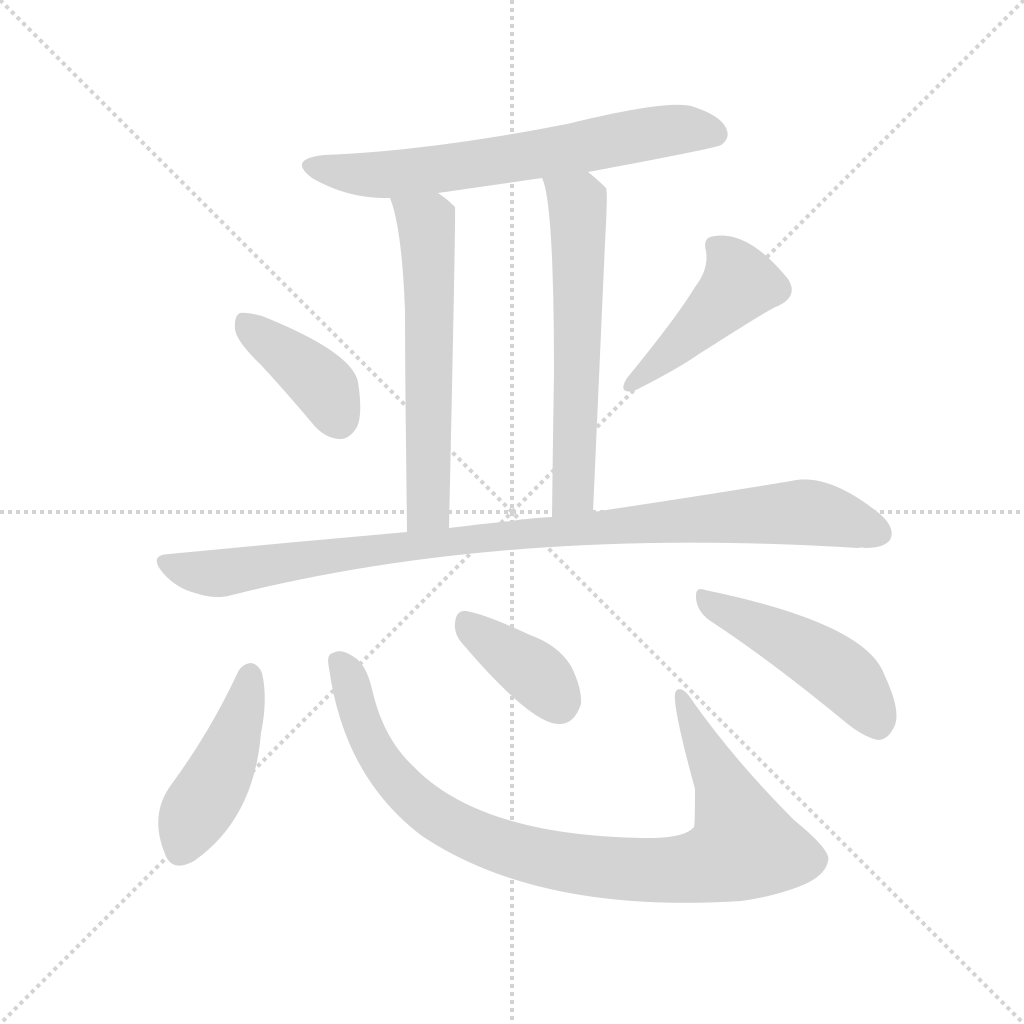
Ancient form: Ya. Pronounced e. Pronounced e. Not good. Composed of Heart and phonetic Ya. General theory states that when there is intent to do bad, it is called evil; when there is no intent, it is called a mistake. It also refers to ugliness. Classic of History (Shujing): The six extremities, the fifth is called bad. Commentary: It refers to ugliness. The Five Phases Commentary states: It is the punishment for not being respectful in appearance. It also refers to flaws. Rites of Zhou (Zhouli): When worn out completely and without flaws. Commentary: Even when completely worn out, there is no flaw. It also refers to coarse quality. Records of the Grand Historian (Shiji): Feeding the envoy of King Xiang with coarse food. This refers to coarse rice. It also refers to a poor harvest year. It also refers to coarse or inferior goods. It also refers to excrement or filth. Book of Han (Hanshu): Such is the evil of blue flies. Commentary: Evil means excrement. King Goujian of Yue tasted the excrement of the King of Wu. It also refers to a temperament that is displeasing. Book of the Later Han (Hou Hanshu): The person had an evil temperament and was difficult to satisfy. Pronounced wu (falling tone). To hate or loathe. Zuo Commentary (Zuo Zhuan): Zhou and Zheng turned hostile toward each other. Commentary: Both mutually detested each other. It also refers to taboos. Book of Rites (Liji): To present the name of the deceased and the days of taboo. Commentary: To present means to offer; the taboo refers to the names of ancestors; the evil refers to the restricted days of Zi and Mao, meaning to present to the king that which is taboo and restricted. It also refers to shame. Mencius: The heart of shame and dislike. Pronounced wu (level tone). How or where. Analects (Lunyu): Where (how) can one achieve fame. Mencius: Where does one reside. It is also an exclamation. Mencius: Ah, what are these words. It is the same as Hu. Book of Rites (Liji): When the people of Jin are about to perform rites at the river, they must first perform rites at the E Pool. Examination of Ancient and Modern Characters: E is the same as Hu, and Chi is the same as Tu, which is the Hutu River. Originally, it was only written as Ya; adding Heart makes it E. Adding Speech makes it E. This is a derivative character. Because each changes its sound, Ya, E, and E became three distinct forms. Collected Rhymes (Jiyun): It is simply E.