Zi Collection, Page Position: Lower
Radical: Strength (lì)
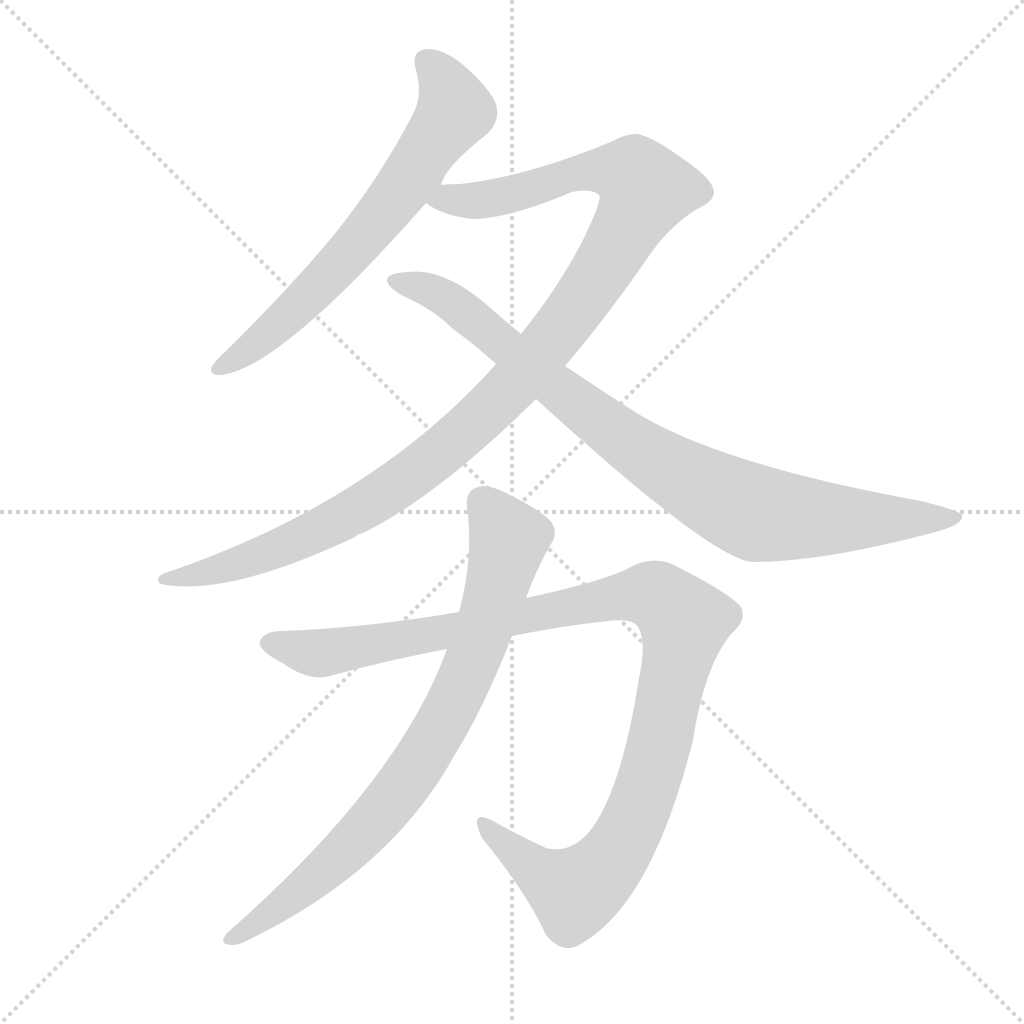
wù; Kangxi strokes: 11; Page 148
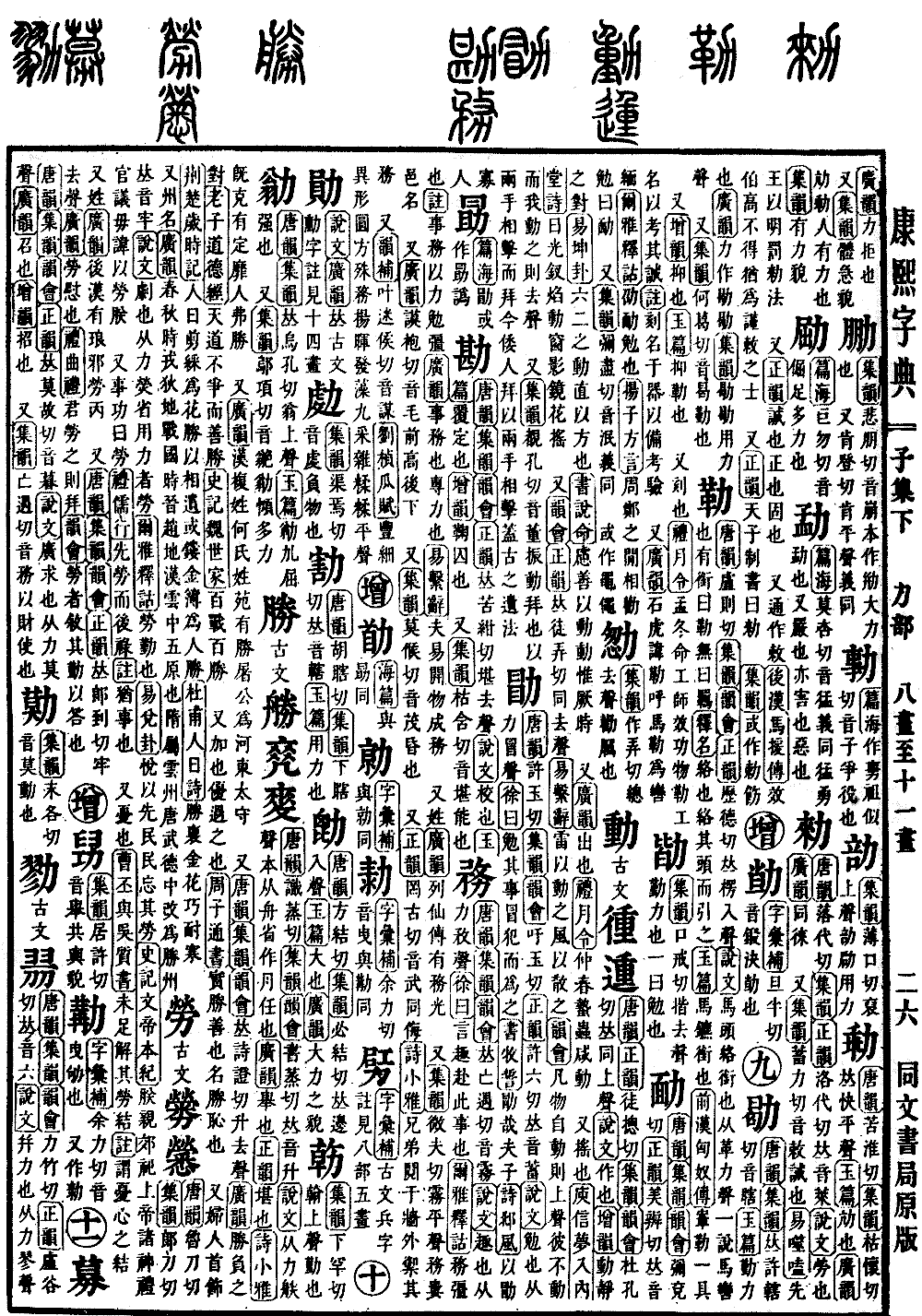
According to the Tang Rhyme (Tángyùn), Jiyun (Jíyùn), and Yunhui (Yùnhuì), the pronunciation is wù. The Shuowen Jiezi (Shuōwén Jiězì) defines it as "to hasten." It is formed from Radical Strength (lì), with mèi as the phonetic component. Xu Xuan (Xú Xuān) explains: "It means to hasten to this matter." The Erya (Ěryǎ) states that wù means "to strive." The commentary explains: "To engage in affairs with strength and effort." The Guangyun (Guǎngyùn) defines it as "to manage affairs" and "to concentrate one's strength." The I Ching (Yìjīng) says: "The Yi opens things and accomplishes tasks." Also a surname. The Guangyun (Guǎngyùn) notes that the Biographies of Immortals (Lièxiān Zhuàn) features Wu Guang (Wù Guāng). Another entry in Jiyun (Jíyùn) gives the pronunciation as sounding like wù in the level tone. Wùlóu is a place name. Another entry in Guangyun (Guǎngyùn) gives the pronunciation as sounding like máo. It describes something "high in front, low in back." Another entry in Jiyun (Jíyùn) gives the pronunciation as sounding like mào. It means "dusk." Another entry in Zhengyun (Zhèngyùn) gives the pronunciation as sounding like wǔ. It is equivalent to wǔ (侮), meaning "to insult." The Book of Odes (Shijing) states: "Brothers quarrel within the wall, but ward off insults from without." Another entry in Yunbu (Yùnbǔ) notes a rhyming pronunciation sounding like móu. Liu Zhen (Liú Zhēn)'s Rhapsody on Melons (Guā Fù) includes the lines: "Their plumpness and slenderness are of different forms, their roundness and squareness have special distinctions. They radiate brilliance and elaborate patterns, with nine colors intermingled."