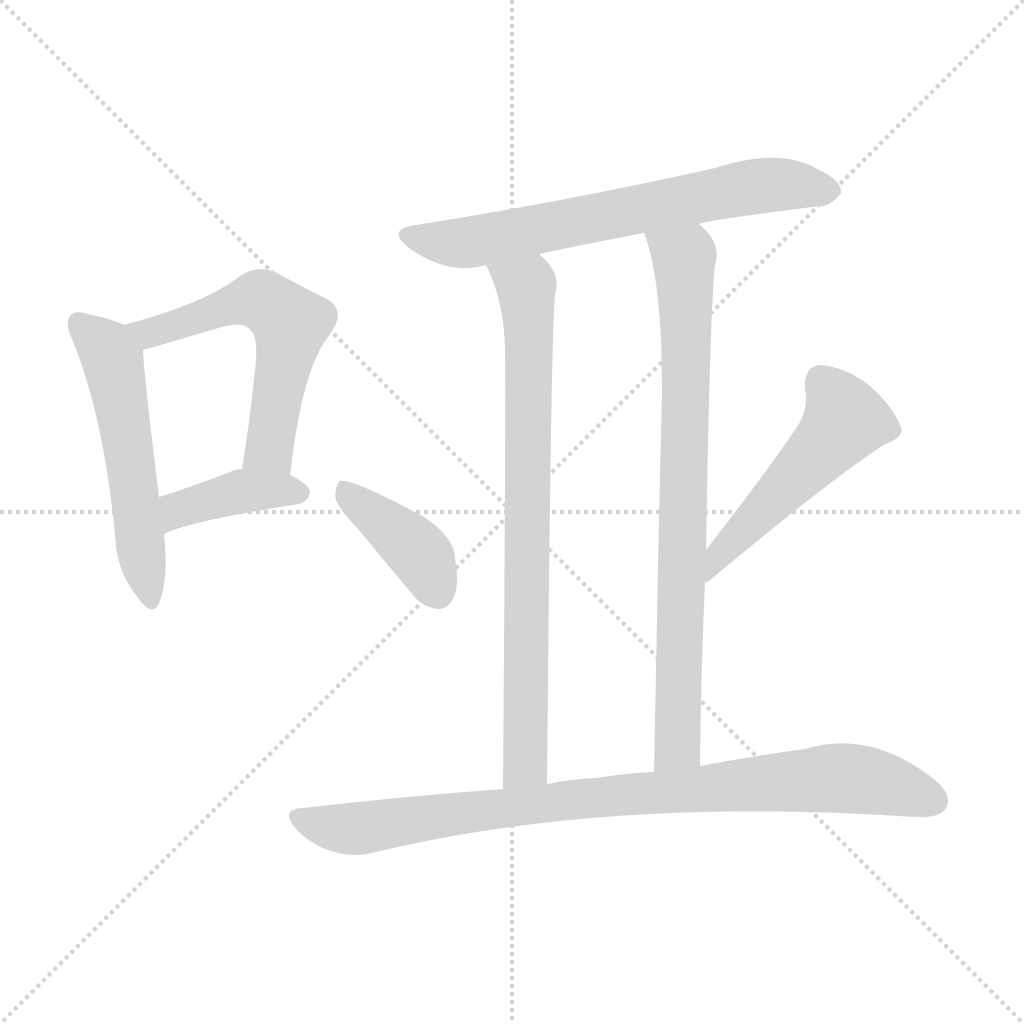
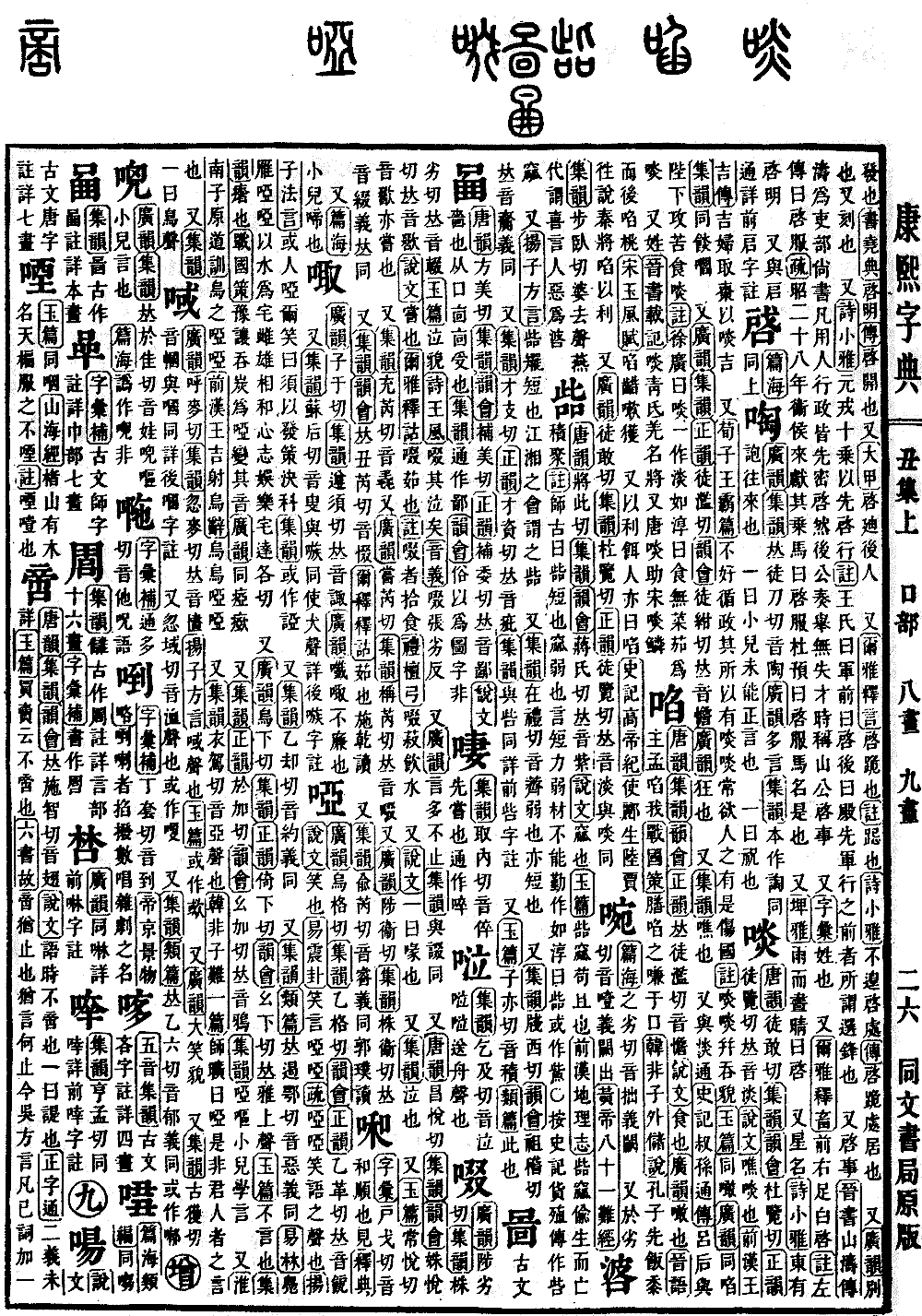
Chou Collection, Upper Volume
Radical: Mouth (kǒu)
Character: Ya
Kangxi strokes: 11
Page 196, Entry 01
Guangyun (Dictionary of Rhymes) defines it as pronounced e. Jiyun (Compilation of Rhymes) defines it as pronounced e. Yunhui (Collection of Rhymes) and Zhengyun (Correct Rhymes) define it as pronounced e.
Shuowen (Explaining Graphs) states it means to laugh. Book of Changes (Yijing), Hexagram Zhen: Laughing and talking, ya ya. The commentary states: Ya ya is the sound of laughing and talking. Yangzi’s Model Sayings (Fayan) states: Someone laughed ya at me and said, you must use strategy to determine the curriculum. Jiyun notes it is sometimes written in a variant form.
Jiyun also notes it is pronounced yue. The meaning is the same. Jiyun and Leipian (Categorized Chapters) define it as pronounced e. The meaning is the same. Yilin (Forest of Changes): Ducks and geese go ya ya, taking water as their home, male and female in harmony, hearts and spirits amused. Home is pronounced da.
Guangyun defines it as pronounced ya (rising tone). Jiyun, Zhengyun, and Yunhui define it as pronounced ya (rising tone). Yupian (Jade Chapters) defines it as not speaking. Jiyun defines it as mute. Strategies of the Warring States (Zhanguoce): Yu Rang swallowed coal to become mute, changing his voice. Guangyun notes this is the same as the character for mute.
Jiyun and Zhengyun define it as pronounced ya. Yunhui defines it as pronounced ya. Jiyun states ya ou refers to an infant learning to speak. Huainanzi (Original Way Training): The crow is ya ya. Former Han, Wang Ji’s Song on Shooting Crows: Wu wu ya ya.
Jiyun defines it as pronounced ya. It is a sound. Han Feizi (Difficulties), Chapter One: Master Kuang said: Ya, this is not the speech of a ruler of men.
Jiyun notes one definition is the sound of a bird. The character for mute was originally written with the radical for illness and the phonetic component she. Note: The text originally read tu, corrected here to yin based on the original.