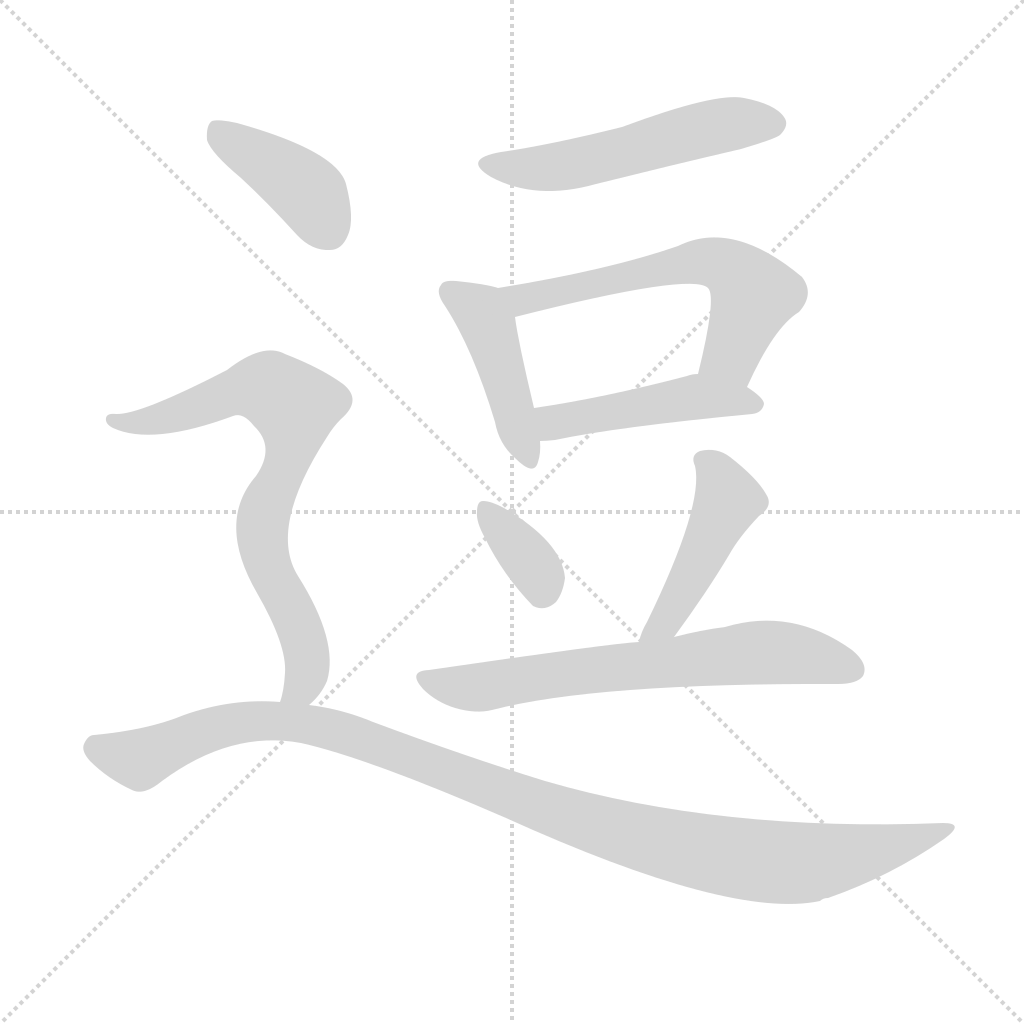
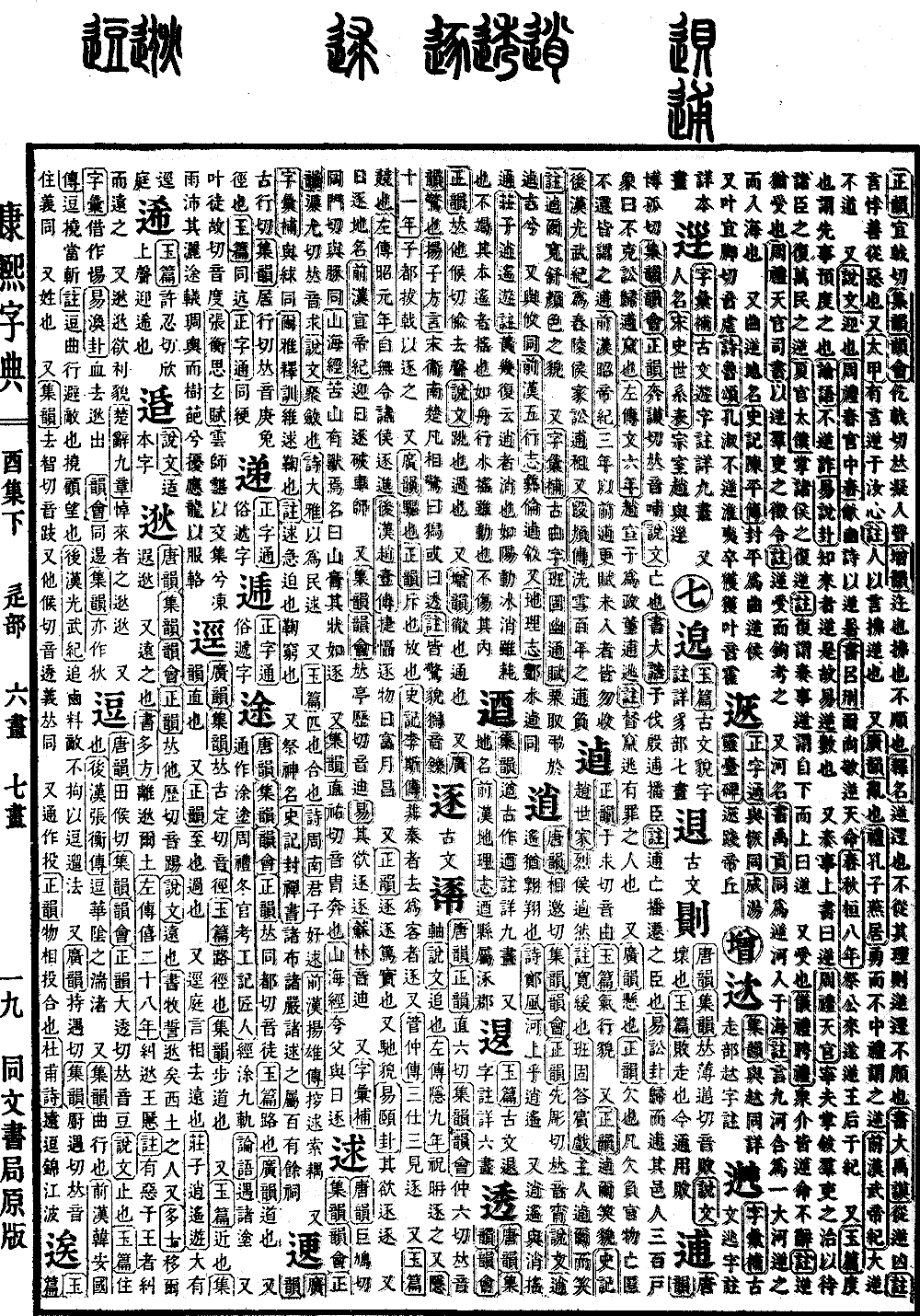
You Collection, Lower Volume
Radical: Walk (chuò)
Kangxi Strokes: 14
Page 1257, Entry 25
Pronounced dou.
In the Shuowen Jiezi (Shuowen), it means to stop.
In the Yupian, it means to dwell.
In the Biography of Zhang Heng in the History of the Later Han (Hou Hanshu), it is written: To linger at the rushing waters of Huayin.
Also, in the Jiyun, it means to walk in a winding manner.
In the Biography of Han Anguo in the History of the Former Han (Qian Hanshu), it states: To move in a winding manner to avoid the enemy is punishable by death. The commentary notes: To move in a winding manner means to walk circuitously to avoid the enemy; to waver means to look back with hesitation.
In the Annals of Emperor Guangwu in the History of the Later Han (Hou Hanshu), it states: To pursue the invaders and assess the enemy, not bound by the law against lingering and delaying.
Also pronounced zhu. The meaning is the same.
Also a surname.
Also pronounced qi.
Also pronounced tou. The meaning is the same.
Also used interchangeably with tou (to cast or join).
In the Zheng Yun, it means things joining or matching together.
In a poem by Du Fu: I journeyed far to join the waves of the Jin River.