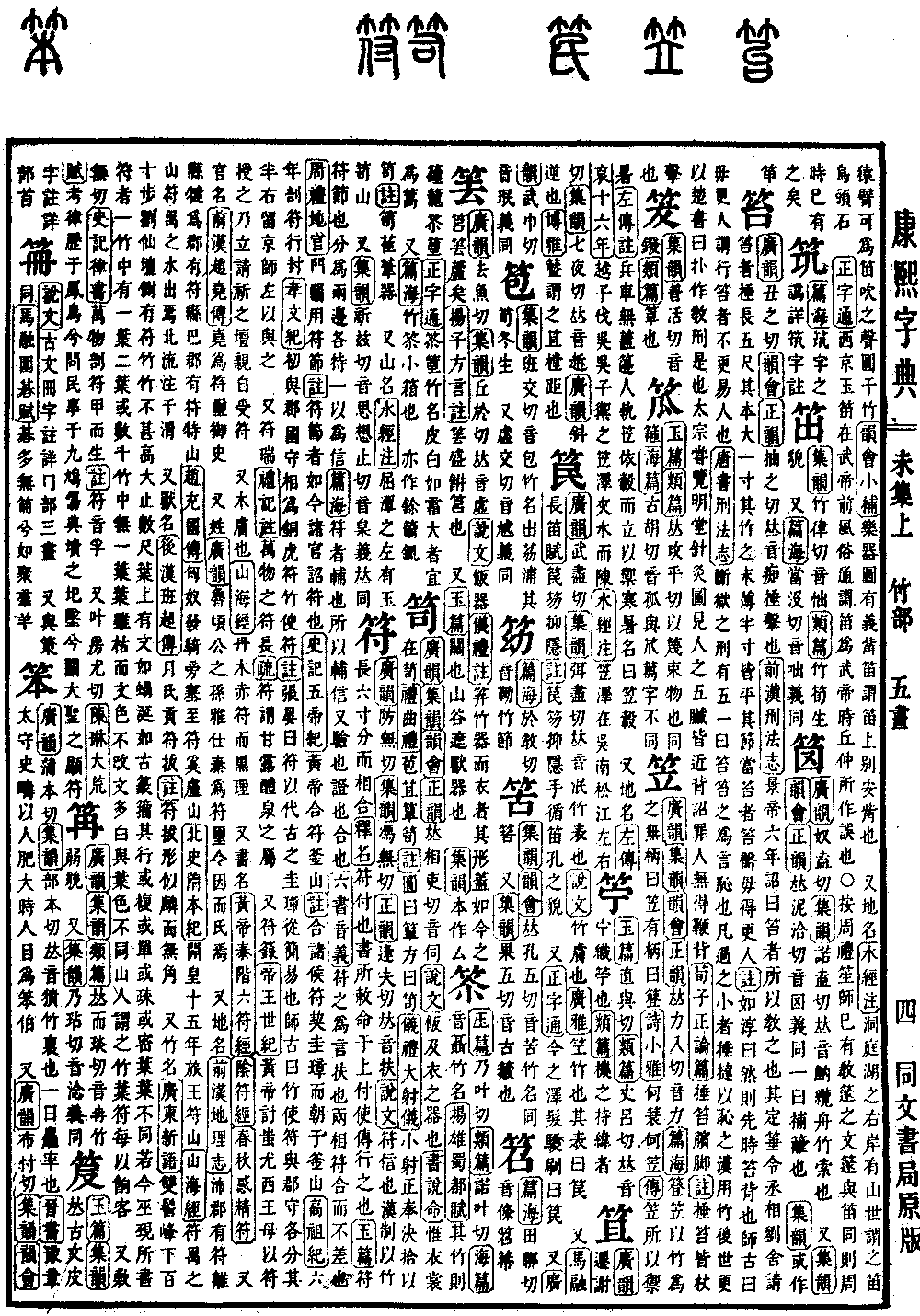
Wei Collection, Upper Volume
Radical: Bamboo (zhú)
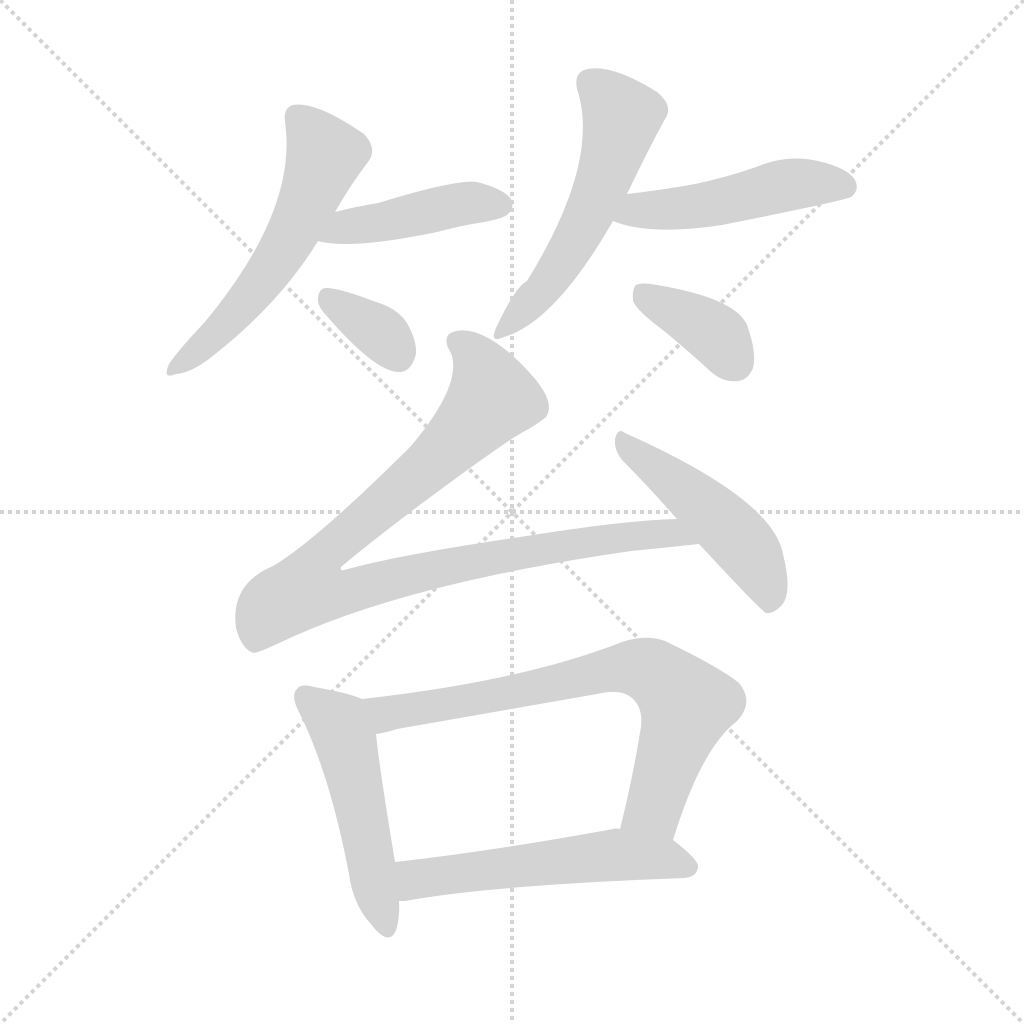
Chi
Kangxi stroke count: 11
Page 880, Entry 04
Pronounced chi. Meaning to strike or beat.
History of the Former Han (Qianhan shu), Treatise on Law: In the sixth year of Emperor Jing, an edict stated: The punishment of beating with a bamboo rod is a means to educate people. Therefore, regulations were established regarding the penal rod. Chancellor Liu She proposed the following: The rod used for punishment shall be five feet long, one inch thick at the handle, and the bamboo end shall be tapered to half an inch with the nodes planed smooth. Those sentenced to this punishment shall be struck on the buttocks, and the executioner may not be replaced mid-way.
Annotation: Ru Chun states: This implies that previously, the back was struck. Shi Gu states: Do not change the person, meaning the person executing the beating may not be swapped mid-way.
History of the Tang (Tang shu), Treatise on Law: There are five types of punishments for legal cases; the first is the beating with a rod. The character for this punishment carries the sense of causing one to feel shame. For minor transgressions, one is struck to induce this feeling of shame. In the Han period, bamboo was used; in later ages, willow branches were used. The Book of Documents (Shangshu) mentions using the rod as an educational punishment; this is what is meant. Emperor Taizong of Tang once examined the Diagram of Acupuncture points in the Bright Hall and saw that the five internal organs were close to the back, and he subsequently issued an edict prohibiting the beating of criminals on the back.
Xunzi, Discussion on Rectification: To strike with a staff, to beat with a bamboo board, to gouge out the kneecap.
Annotation: To strike and to beat are both methods of hitting with a wooden rod or stick.