Hai Collection, Upper Volume
Radical: Carriage (chē)
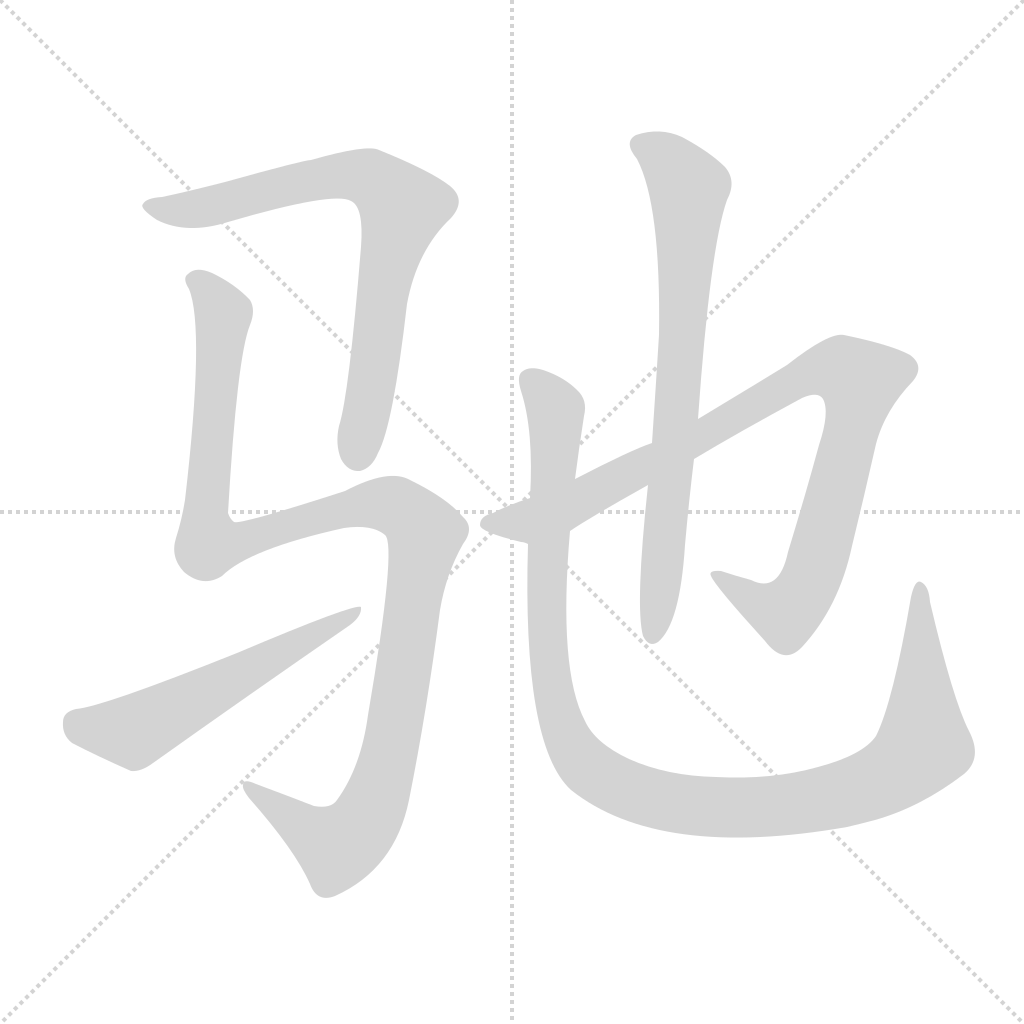
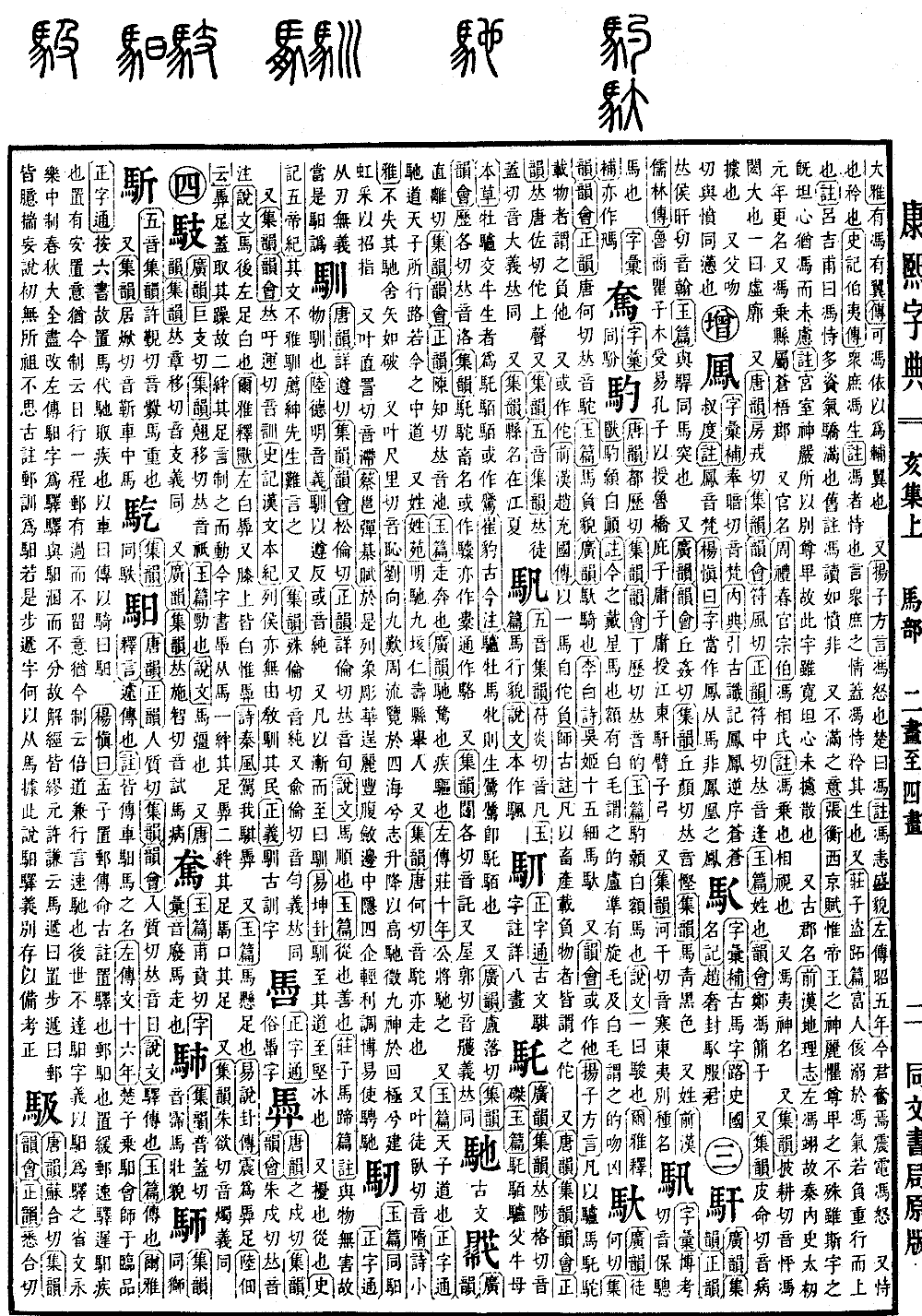
馳
Kangxi stroke count: 13
Page 1434, Entry 01
Ancient form. According to the Expanded Dictionary of Sounds and Meanings (Guangyun), it is pronounced chi. According to the Collected Dictionary of Sounds (Jiyun), the Dictionary of Phonology (Yunhui), and the Correct Dictionary of Rhymes (Zhengyun), it is pronounced chi.
In the Dictionary of Jade (Yupian), it means to run or to gallop. In the Expanded Dictionary of Sounds and Meanings (Guangyun), it means to gallop or to drive rapidly. In the Commentary of Zuo (Zuo Zhuan), under the tenth year of Duke Zhuang, it is written: The Duke was about to pursue them in chariots.
Also, in the Dictionary of Jade (Yupian), it refers to the path of the Emperor. In the Mastery of Orthography (Zhengzitong), the Imperial Way is the path traveled by the Emperor, similar to the modern central path.
Also a surname. According to the Garden of Surnames (Xingyuan), there was Chi Jiugai of the Ming dynasty, a provincial graduate from Renshou County.
According to the Collected Dictionary of Sounds (Jiyun), it is also pronounced tuo, meaning to run.
Also rhymes with the pronunciation sui. In the Book of Odes (Shijing), Lesser Odes of the Kingdom (Xiaoya), it is written: Do not lose the rhythm of the chariot, release the arrow as if splitting the target.
Also rhymes with the pronunciation chi. In Liu Xiang’s Nine Laments (Jiutan), it is written: Traveling through the four seas, my aspirations rise and fall as I soar high. Summoning the nine deities from the farthest reaches, establishing the rainbow colors to guide the way.
Also rhymes with the pronunciation zhi. In Cai Yong’s Rhapsody on Checkers (Tanqi Fu), it is written: Thus the ivory pieces are arranged, carved with elegance to display their beauty. With full bellies and gathered edges, hidden within are four supports. Light, sharp, balanced, and broad, easy to move and maneuver.