Mao Collection, Middle Volume
Radical: Hand (shǒu)
Kangxi strokes: 9
Page 426, Entry 03
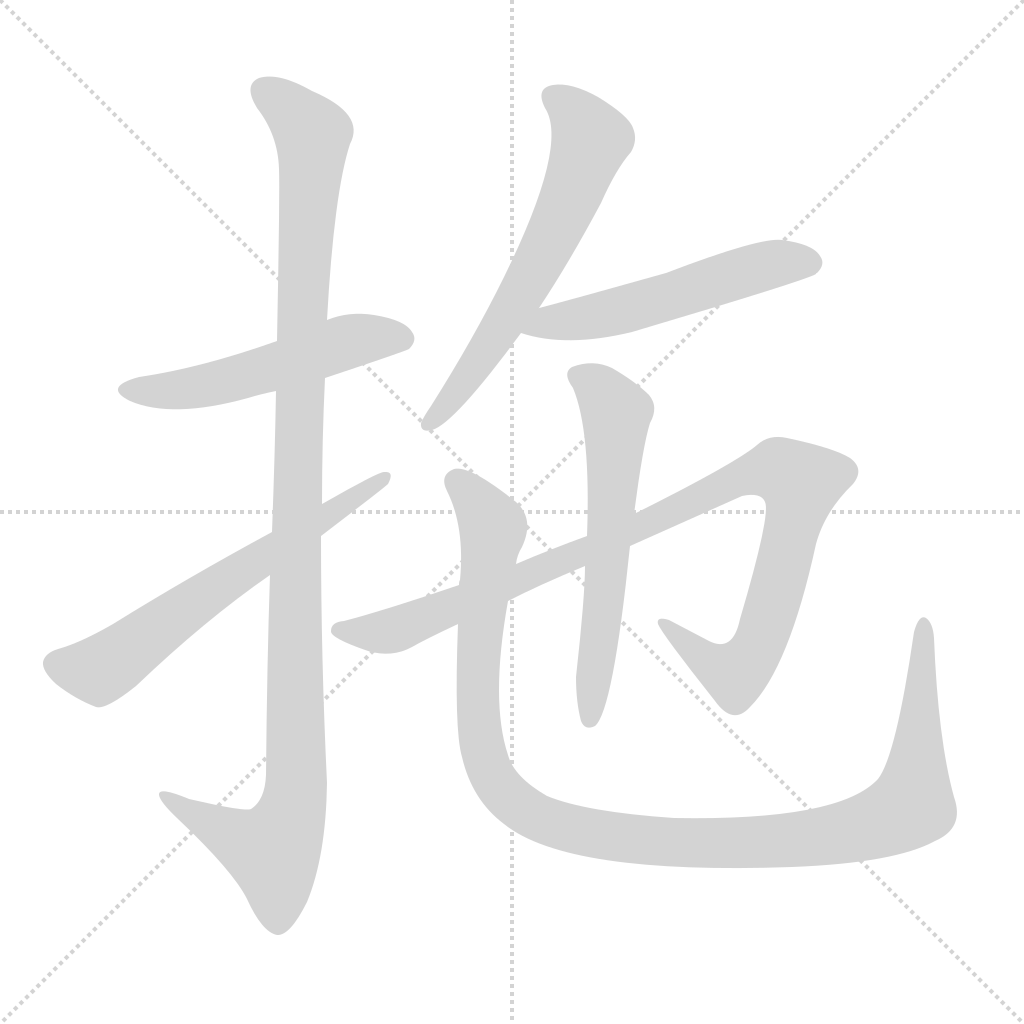
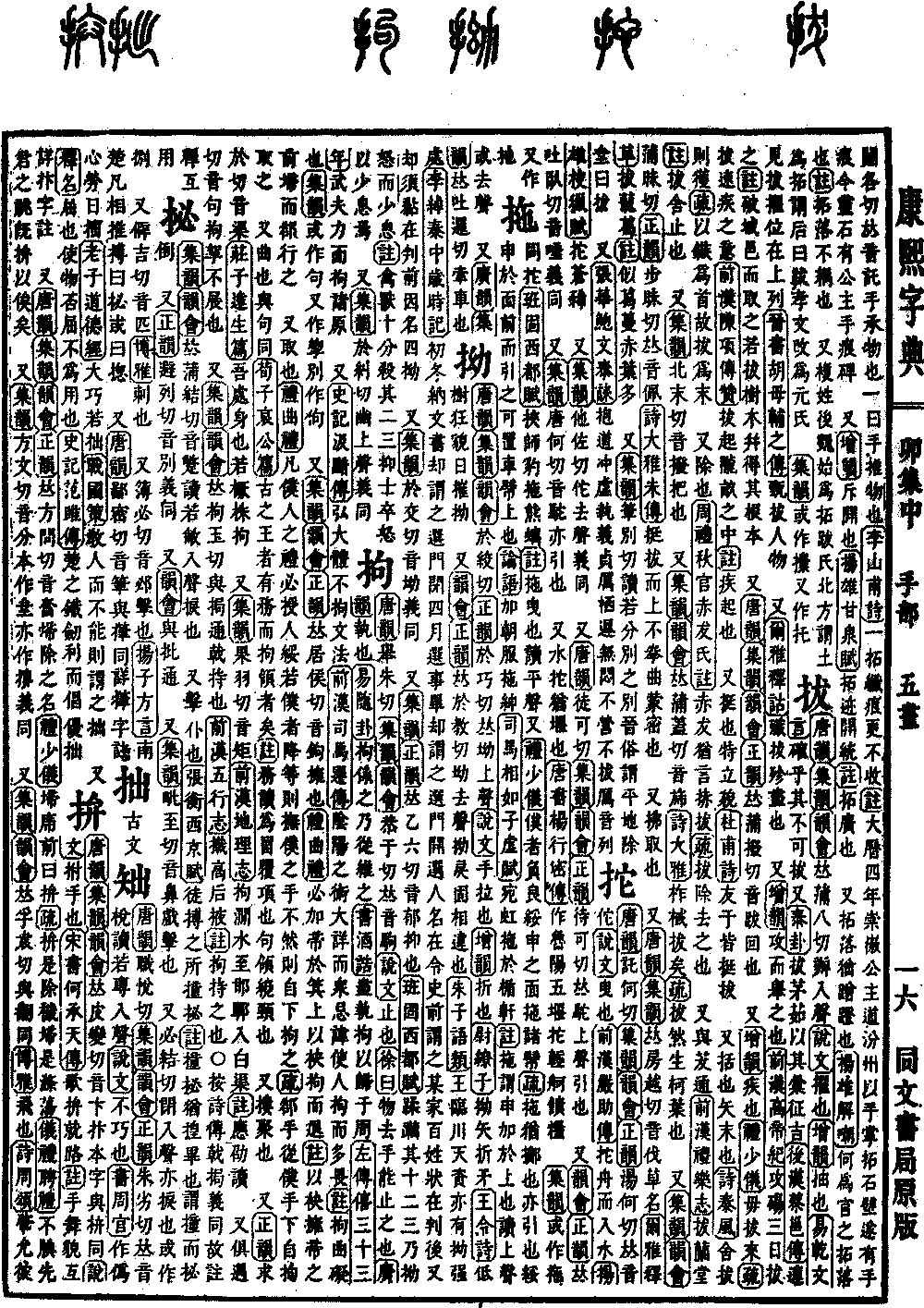
Identical to the character (tuo). In the Western Capital Rhapsody (Xidu Fu) by Ban Gu, it is written: Grasping the leopard, dragging the bear and dragon. The commentary states: To drag means to pull or trail. Pronounced ping (level tone).
In the Record of Rites (Liji), specifically the section on minor etiquette (Shaoyi): The attendant holds the strap for entering the carriage, spreads it out before him, and lets it drag over the carriage curtain. The sub-commentary states: Dragging is like throwing or casting. It also means to pull or guide. By spreading the strap out and pulling it, it can be positioned upon the carriage curtain.
In the Analects (Lunyu): He draped the court robes over his body, with the great sash dragging behind.
In the Park Rhapsody (Shanglin Fu) by Sima Xiangru: A curved rainbow hangs over the railings. The commentary states: To drag refers to the meaning of extending and laying something over. Pronounced with a rising tone or a falling tone.
Also in the Extensive Dictionary of Sounds and Meanings (Guangyun) and the Collected Sounds and Meanings (Jiyun): Pronounced tuoluo. It means to pull a carriage.
Textual research: In the Park Rhapsody (Shanglin Fu) by Sima Xiangru, the original text reads: The arched rainbow drags over the railings. It is noted that the source has been corrected from the Zixu Rhapsody (Zixu Fu) to the Park Rhapsody (Shanglin Fu) according to the original text.