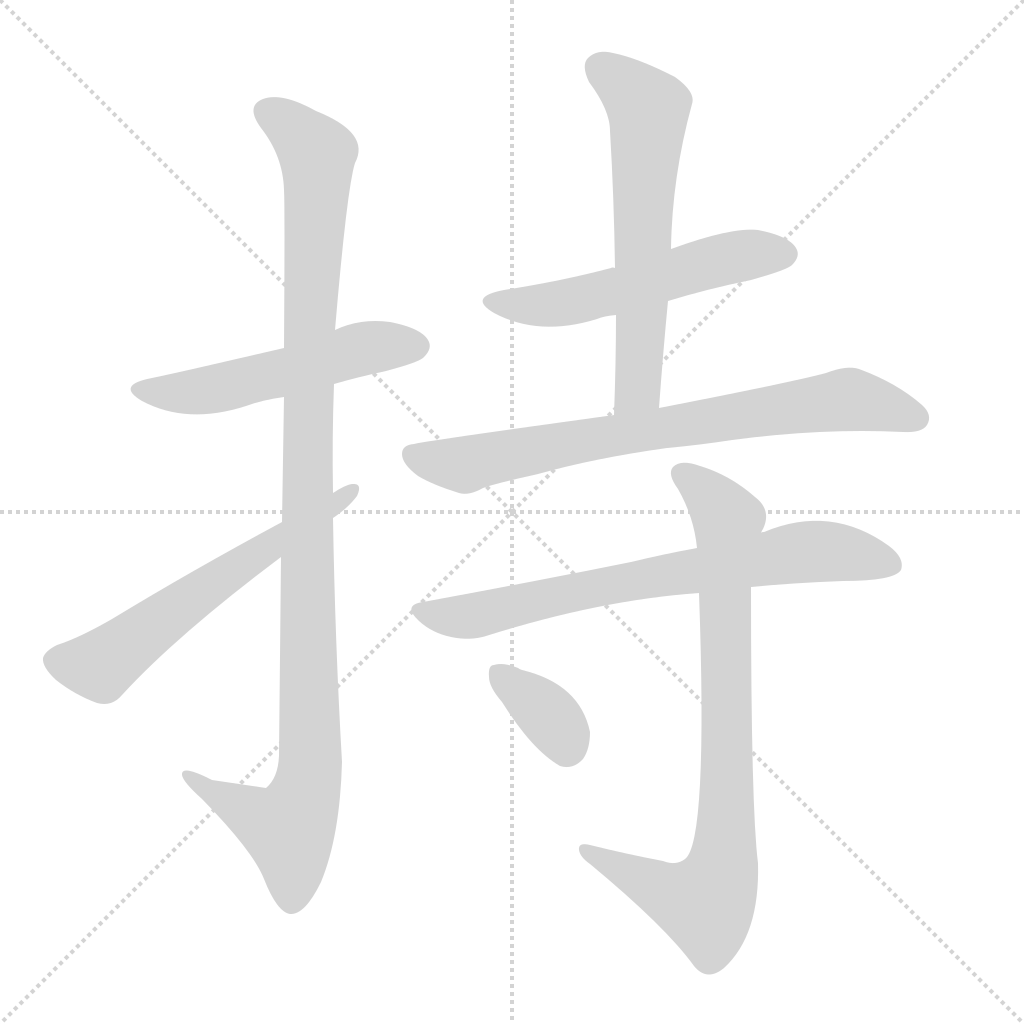
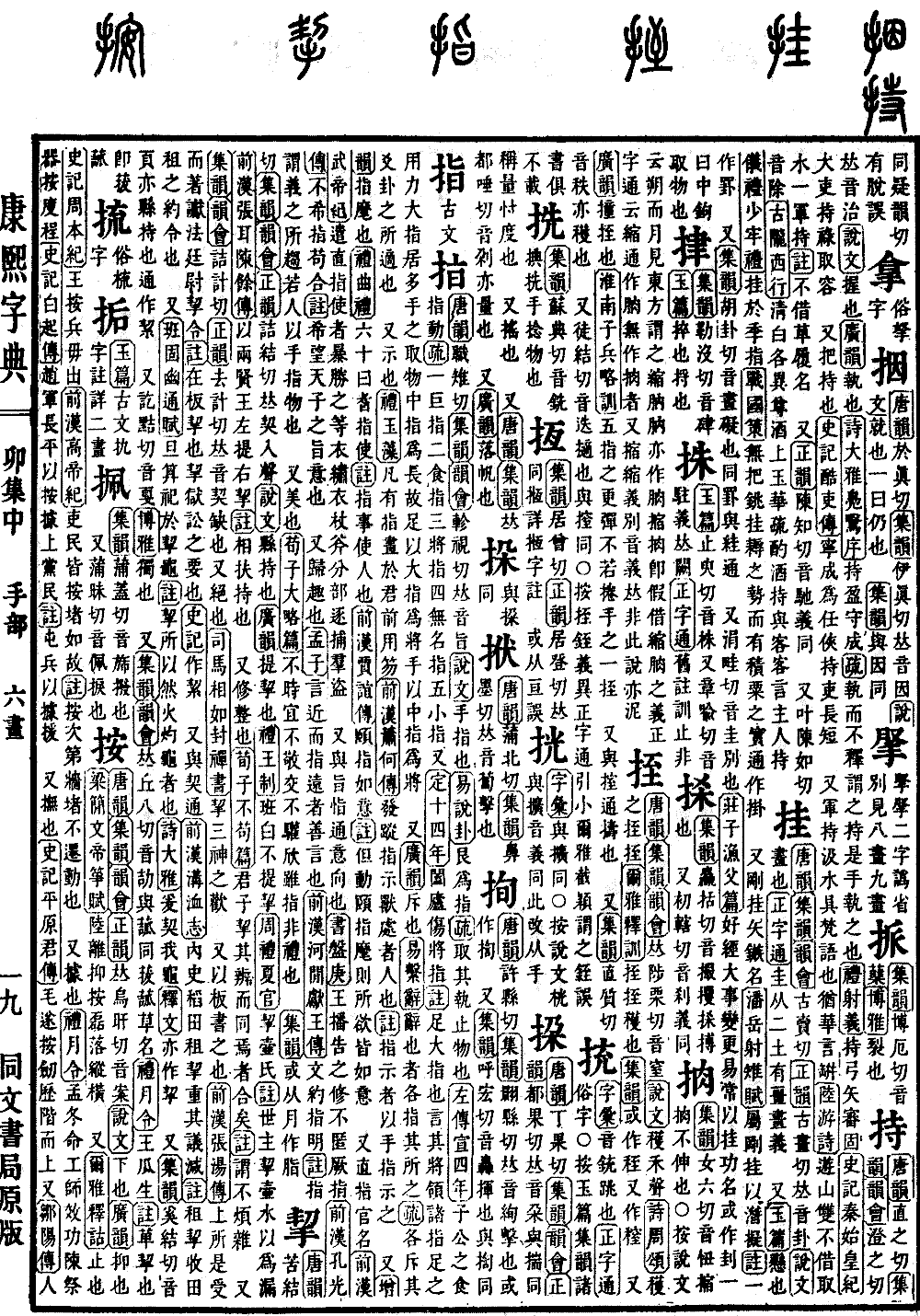
Mao Collection, Middle Volume. Radical: Hand (shǒu). Kangxi strokes: 10. Page 429, Entry 05.
Pronounced zhi.
According to the Shuowen Jiezi (Shuowen), it means to grasp. According to the Guangyun (Guangyun), it means to hold.
In the Book of Odes (Shijing), in the preface to the Greater Odes of the Kingdom, it is written: to hold onto one's accomplishments and maintain what has been achieved. The commentary states: to grasp without letting go is called chi, which refers to holding something in the hand.
In the Book of Rites (Liji), it is written: hold the bow and arrows with care and firmness.
In the Records of the Grand Historian (Shiji), the Annals of the First Emperor of Qin, it is written: high-ranking officials hold onto their positions and look for ways to please their superiors.
It also means to control or manipulate. In the Records of the Grand Historian, Biography of Harsh Officials, it is written: Ning Cheng acted as a chivalrous person, holding the strengths and weaknesses of officials in his hands.
Also, it is a term for a vessel used to draw water, derived from Sanskrit, which in Chinese refers to a bottle. In a poem by Lu You, it is written: touring the mountains in a pair of non-borrowed straw sandals, carrying one water vessel. The commentary notes that non-borrowed refers to a type of straw sandal.
Also, pronounced chi. The meaning is the same.
Also, pronounced chu. In the poem Ancient Song of Longxi, it is written: The clear and the white are in separate vessels, wine is served on jade-inlaid tables. Pour wine and hold it for the guest, the guest says the host is holding it.