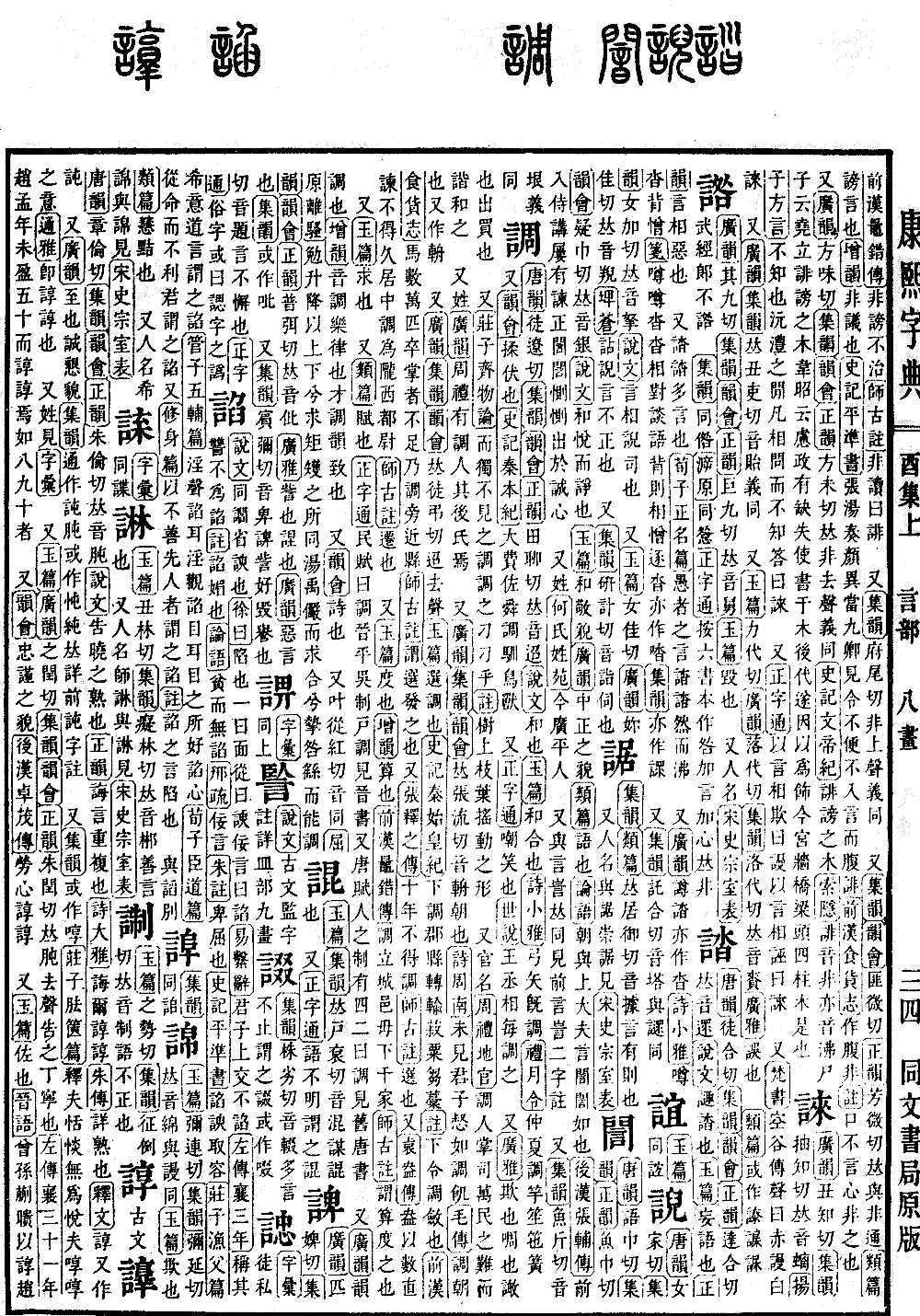
You Collection, Upper Volume
Radical: Speech (yán)
Zhūn
Kangxi stroke count: 15
Page 1166, Entry 05
Ancient form. Pronounced zhun. According to the Analytical Dictionary of Characters (Shuowen Jiezi), it means to advise and inform thoroughly. According to the Standard Rhymes (Zhengyun), it refers to words of instruction repeated for emphasis. In the Book of Odes (Shijing), Great Odes (Daya), it is written: Instructing you with repeated emphasis. According to the Commentary by Zhu Xi (Zhu Zhuan), it means detailed and thorough. According to the Explanation of Text (Shiwen), it is also written as zhun (variant form). Also, according to the Extensive Rhymes (Guangyun), it means to reach. It describes a sincere and earnest appearance. According to the Collection of Rhymes (Jiyun), it is used interchangeably with zhun (variant) and zhun (variant). It may also be written as tun (variant) or chun (variant). See the note for the previous character zhun (variant). It is also written as tun (variant) according to the Collection of Rhymes (Jiyun). In the Book of Zhuangzi (Zhuangzi), Opening Trunks chapter, it says: Abandoning that peaceful non-action and taking pleasure in that talkative (tun) intent. According to the Comprehensive Refinement (Tongya), this is the same as zhun-zhun. Also a surname, found in the Collection of Characters (Zihui).
Also pronounced zhun (falling tone). It refers to advising someone with meticulous detail. In the Zuo Tradition (Zuo Zhuan), 31st year of Duke Xiang, it is written: Zhao Meng was not yet fifty, yet he appeared as weary and earnest as an eighty or ninety-year-old. According to the Collection of Rhymes (Yunhui), it describes the appearance of loyalty and caution. In the History of the Later Han (Hou Han Shu), Biography of Zhuo Mao, it says: Diligent in spirit and earnest in instruction. According to the Jade Chapter (Yu Pian), it means to assist. In the Discourses of the States (Jin Yu), it says: The great-grandson Kuai Kui, because of assisting Zhao Yang. According to the Dialects (Fangyan) by Yang Xiong, zhun-zeng refers to that which one hates. In the regions of Song and Lu, to mutually dislike someone is called zhun-zeng, similar to how they say detestable in the regions of Qin and Jin. According to the Collection of Rhymes (Jiyun), it is also pronounced zhun (rising tone), with the same meaning as in the Dialects (Fangyan). According to the Collection of Rhymes (Yunhui), it is sometimes written as tun (variant). In the Book of Xunzi (Xunzi), Mourning Public chapter, it says: Do not adopt glib talk. The commentary states this is the same as zhun, meaning boastful. Also rhyming with zhuan (level tone). In the Records of the Grand Historian (Shiji), Sima Xiangru, Eulogy on the Feng and Shan Sacrifices: As for its structure, it need not be repetitive. By categorizing and using metaphors, he instructed them regarding the Feng and Shan altars.