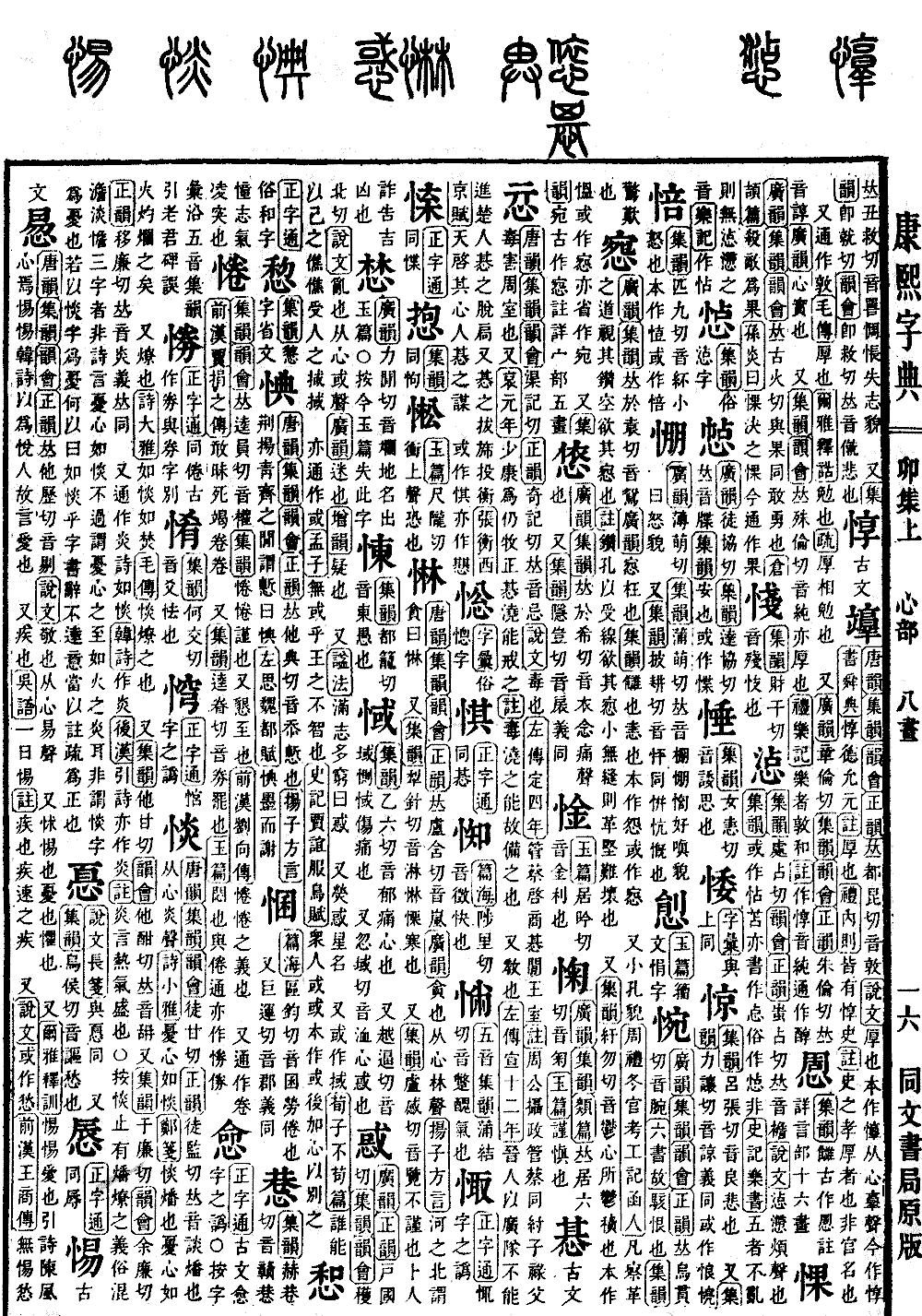
Mao Collection, Upper Volume
Radical: Heart (xīn)
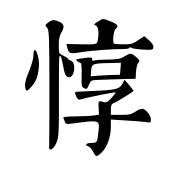
Dun
Kangxi strokes: 12
Page 390, Entry 01
Ancient form. According to the Tang Rhymes (Tangyun), Collection of Rhymes (Jiyun), Rhyme Meetings (Yunhui), and Correct Rhymes (Zhengyun), it is pronounced dun. In the Analytical Dictionary of Characters (Shuowen), it means sincere or thick. Originally written with a different radical, derived from the heart radical with a phonetic component. Now written as dun. In the Book of Documents (Shujing), it is written as sincere in virtue and trustworthy in the fundamental. The commentary notes this means sincere. In the Book of Rites (Liji), it mentions the sincere historians. The commentary notes these were historians who were filial and sincere, not an official title. It is also interchangeably written as dun. In the Mao Commentary (Maozhuan), it means sincere. In the Literary Expositor (Erya), it means to urge. The commentary explains this as sincerely urging one another. According to the Expanded Rhymes (Guangyun), it is also pronounced zhun. According to the Expanded Rhymes, it means a sincere heart. According to the Collection of Rhymes (Jiyun), Rhyme Meetings (Yunhui), and Correct Rhymes (Zhengyun), it is pronounced chun. It also means sincere. In the Book of Rites (Liji), it states that music is sincere and harmonious. The commentary notes that it is written as dun, pronounced chun. It is interchangeably used with the character for pure (chun). According to the Mastery of Orthography (Zhengzitong), it is the vulgar form of the character. The component within the character is similar to the upper part of the character for offering (xiang), like the character itself.