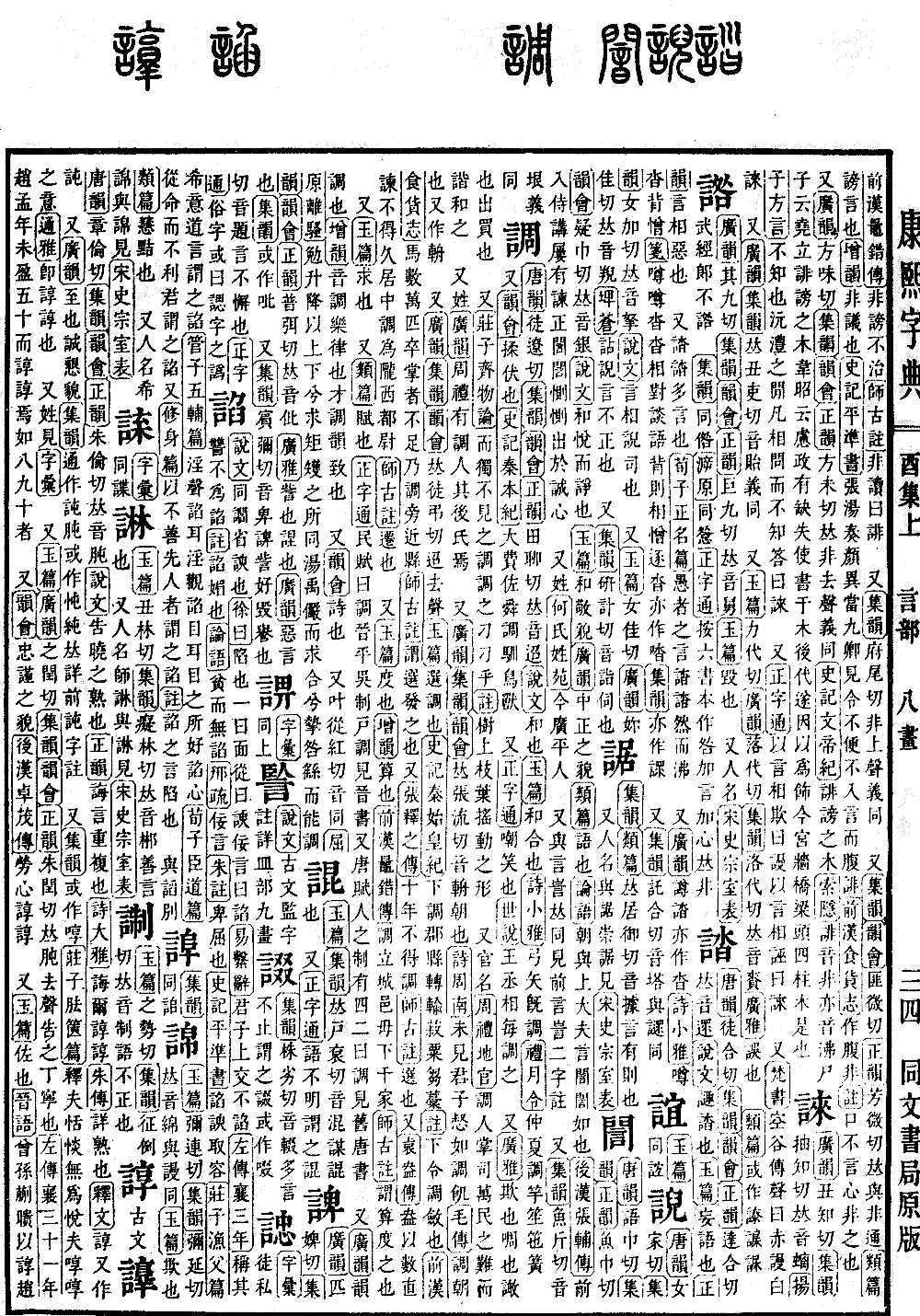
You Collection, Upper Volume
Radical: Speech (yán)
Zhūn
Kangxi strokes: 15
Page 1166, Entry 21
Ancient text. Pronounced zhūn.
According to the Analytical Dictionary of Characters (Shuowen Jiezi), it means to instruct or enlighten thoroughly.
According to the Standard Rhymes (Zhengyun), it means repetitive instruction.
In the Book of Odes (Shijing), Great Odes (Daya), it is written: Instructing you repeatedly.
The Zhu Commentary states it means to be detailed and familiar.
The Explanation of Text (Shiwen) notes that zhūn is also written as zhūn (variant).
Also, according to the Extensive Rhymes (Guangyun), it means to arrive at, or the appearance of sincerity and earnestness.
The Collected Rhymes (Jiyun) notes it is interchangeable with zhūn (variant) and zhūn (variant), and sometimes written as tún or chún. Refer to the note under the previous zhūn entry.
It is also sometimes written as hēng.
In the Zhuangzi, under the Breaking Open Trunks (Quqie) chapter: Release that which is indifferent and inactive, and take pleasure in the meaning of being verbose.
The Comprehensive Refinement (Tongya) states this is the same as zhūn-zhūn (repeatedly).
Also a surname. See the Collection of Characters (Zihui).
Also, according to the Jade Compendium (Yupian) and Extensive Rhymes (Guangyun), pronounced zhùn (falling tone).
It means to inform or instruct emphatically.
In the Zuo Commentary (Zuo Zhuan), 31st year of Duke Xiang: Zhao Meng was not yet fifty, yet he spoke as earnestly as an eighty or ninety-year-old.
According to the Rhyme Collection (Yunhui), it denotes the appearance of loyalty and caution.
In the History of the Later Han (Houhan Shu), Biography of Zhuo Mao: Laboring the mind with earnestness.
According to the Jade Compendium (Yupian), it means to assist.
In the Discourses of the States (Guoyu), Jin Discourses: The great-grandson Kuai Kui, because of assisting Zhao Yang.
According to the Dialects of Yangzi (Yangzi Fangyan), zhūn-zēng means that which is loathed. In the regions of Song and Lu, mutual dislike is called zhūn-zēng, similar to how those in Qin and Jin say hateful.
According to the Collected Rhymes (Jiyun), it is also pronounced zhǔn. It has the same meaning as in the Dialects.
According to the Rhyme Collection (Yunhui), it is sometimes written as tūn.
In the Xunzi, Duke Ai chapter: Do not adopt the boastfulness of speech. The commentary states this is the same as zhūn, meaning to brag.
Also, to rhyme with zhuān (level tone): In the Records of the Grand Historian (Shiji), Sima Xiangru, Fengshan Hymn: If there is a pattern to the writing, it does not need to be repetitive. Rely on categories and allegories to explain the sealing of the mountain.