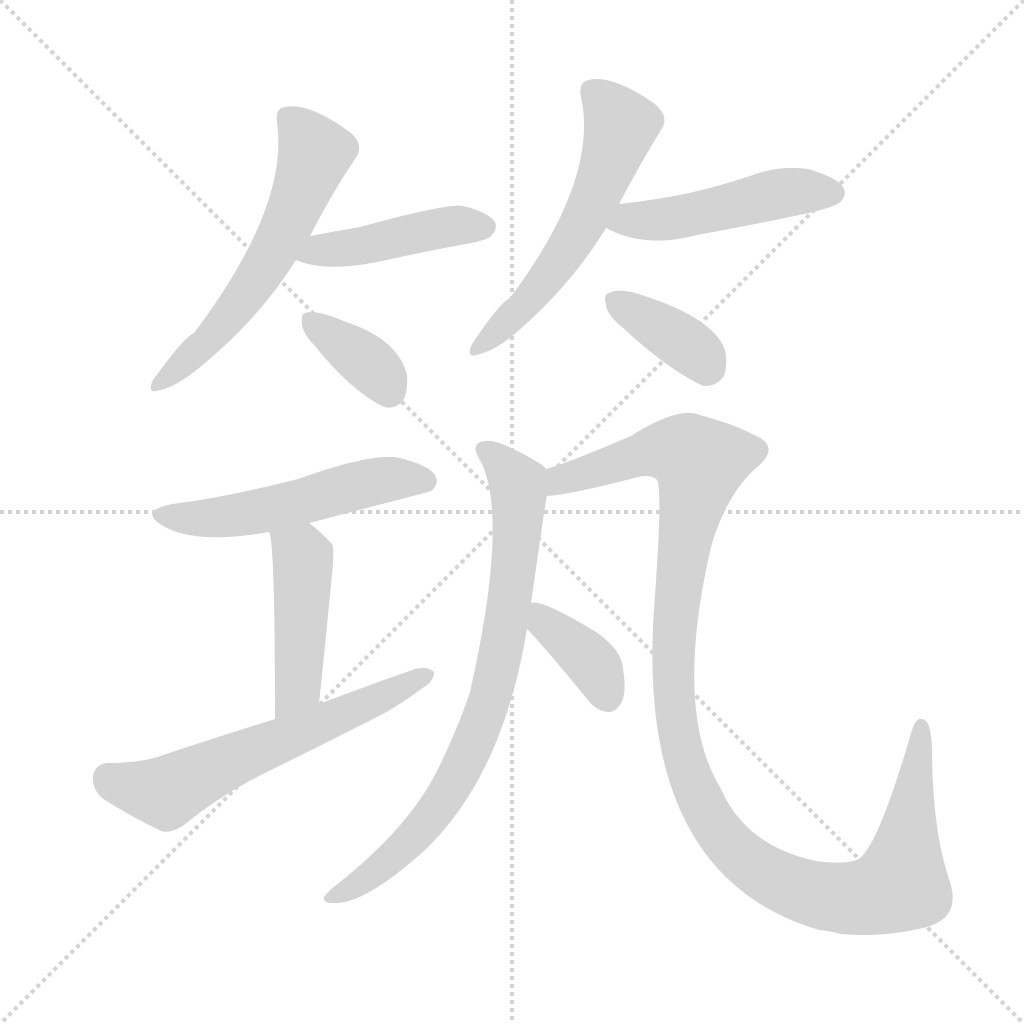
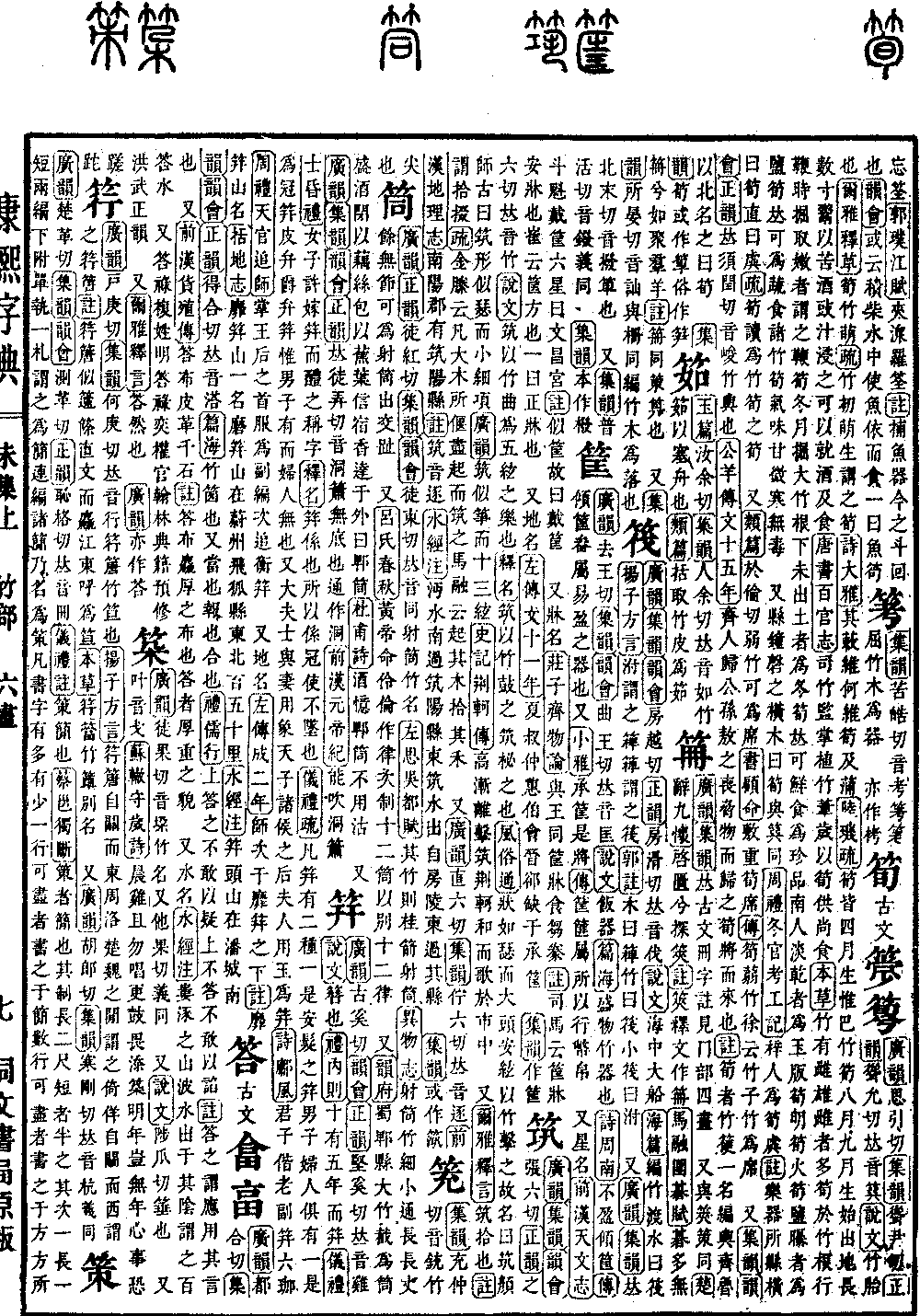
Wei Collection, Upper Volume
Radical: Bamboo (zhú)
Kangxi Strokes: 15
Page 883, Entry 09
Pronounced zhú.
According to the Explaining Graphs and Analyzing Characters (Shuowen Jiezi), the zhu is a musical instrument made of curved bamboo with five strings.
According to the Explaining Names (Shiming), the zhu is a musical instrument played by striking it with a bamboo implement.
According to the Comprehensive Customs (Fengsutong), its shape resembles a zither (se) but it is larger at the head, fitted with strings, and played by striking with bamboo, hence the name zhu. Yan Shigu states that the shape of the zhu resembles a zither (se) but is smaller, with a long, thin neck.
According to the Broad Rhymes (Guangyun), the zhu resembles a zheng but has thirteen strings.
As stated in the Records of the Grand Historian (Shiji), Biography of Jing Ke: Gao Jianli struck the zhu, and Jing Ke sang along with the music in the marketplace.
Also, according to the Erya, Definitions (Erya Shiyan), zhu means to gather or pick up. The commentary explains this as the act of organizing or collecting. The sub-commentary notes that the Golden Coffer (Jinteng) chapter says: All trees felled by the gale should be raised and gathered. Ma Rong says: Raise those trees and gather the grain.
Also, pronounced zhú.
According to the History of the Former Han (Qianhan Shu), Treatise on Geography, Nanyang Commandery contained Zhu-yang County. The commentary notes that the character for Zhu is pronounced like the word for chase (zhú).
According to the Commentary on the Water Classic (Shuijing Zhu), the Mian River flows south past the east of Zhu-yang County, and the Zhu River originates east of Fangling and flows through the county.
According to the Collected Rhymes (Jiyun), it is sometimes also written in a variant form.