Shen Collection, Upper Volume
Radical: Grass (cǎo)
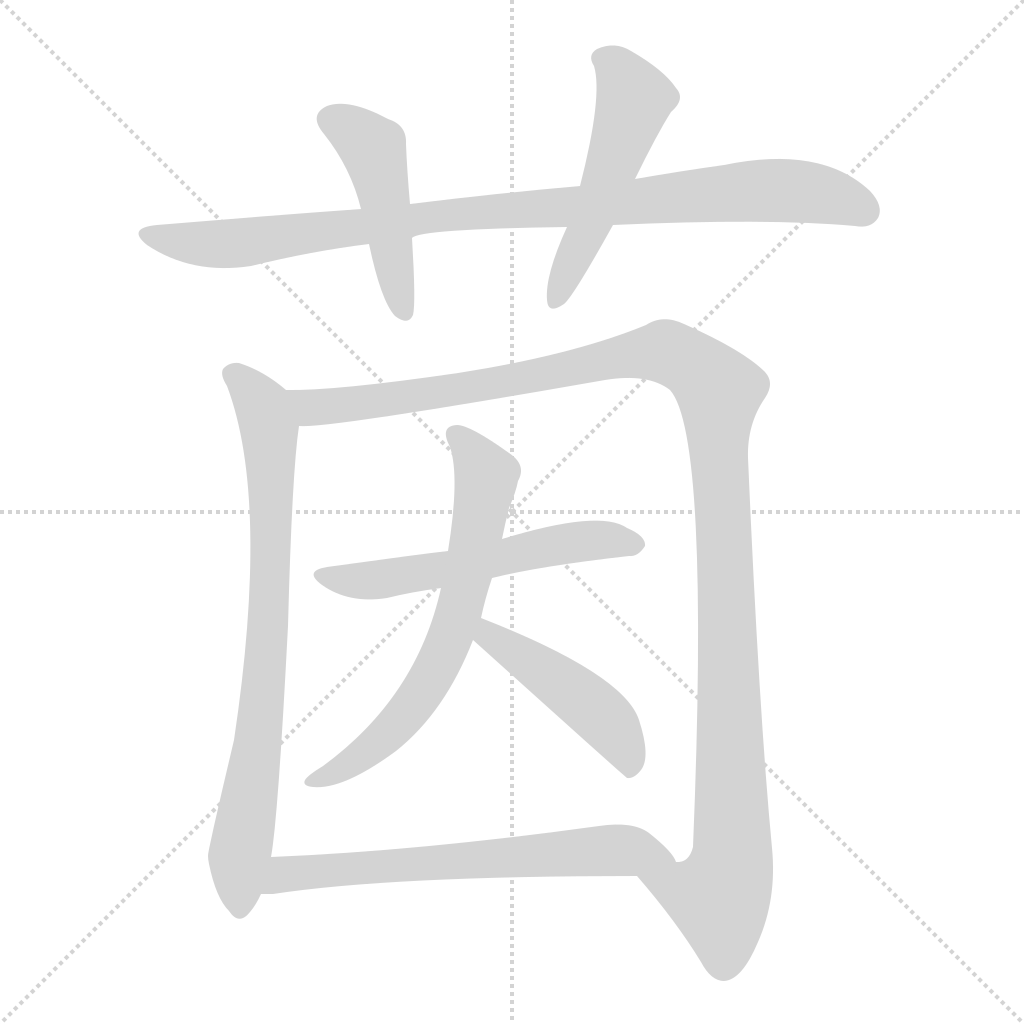
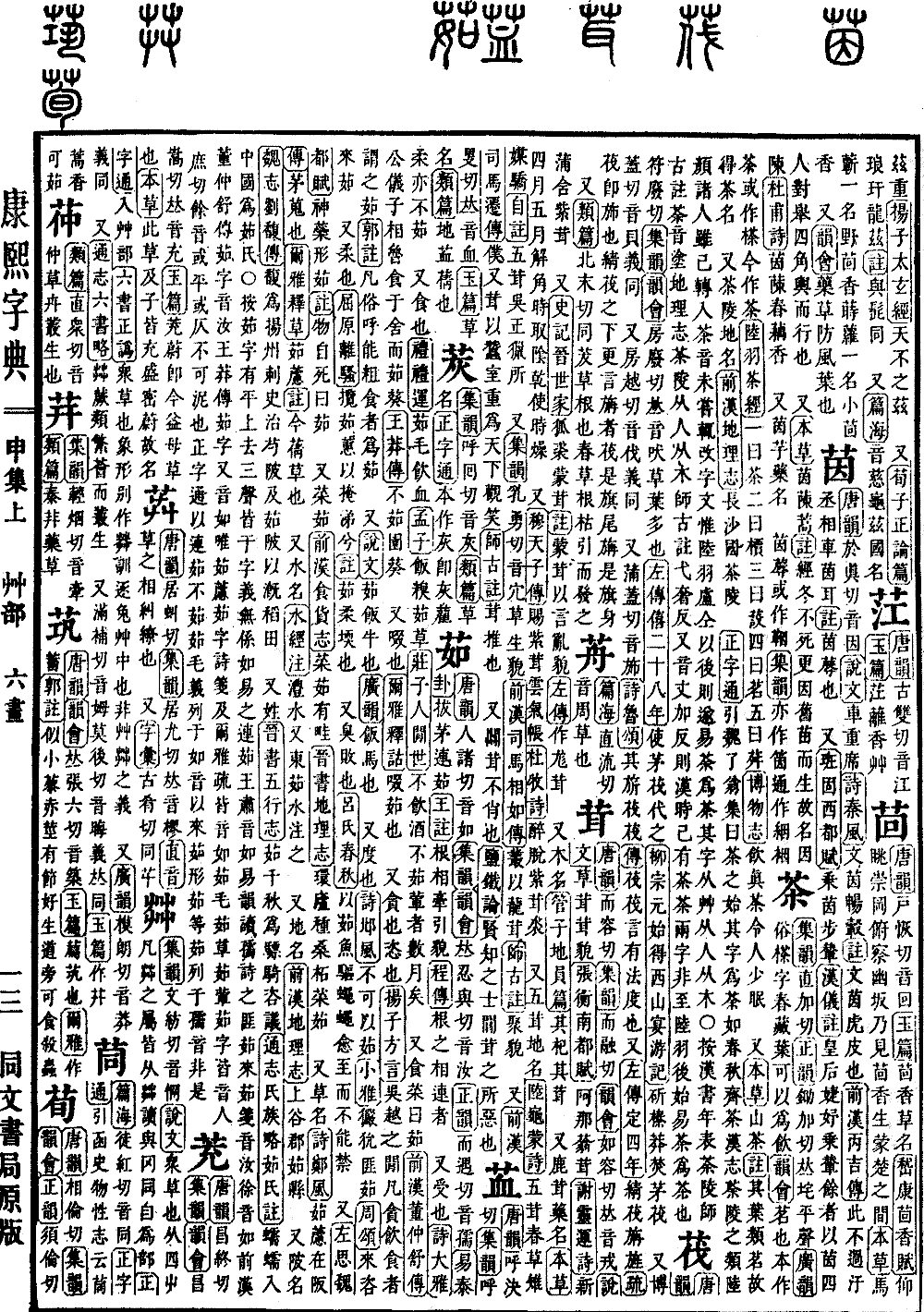
茵
Kangxi Stroke Count: 12
Page 1029, Entry 03
Pronounced yin.
According to the Explaining and Analyzing Characters (Shuowen), it refers to a double-layered mat for a carriage.
From the Book of Odes (Shijing): With patterned mats and long axle ends. The commentary states that a patterned mat is a tiger skin.
From the History of the Former Han (Qianhan shu), Biography of Bing Ji: This is nothing more than staining the chancellor's carriage mat. The commentary states that a mat is a sleeping cushion.
From Ban Gu's Western Capital Rhapsody (Xidu fu): Riding a mat and walking in a palanquin. The Han Court Regulations (Han yi zhu) state that the empress and high-ranking consorts rode in palanquins, while others used mats held by four people at the corners, carried as they walked.
From the Materia Medica (Bencao): Yin-chen is a type of mugwort. The commentary notes that it survives the winter without dying and sprouts again from the old stems, hence the name meaning to follow the old.
From Du Fu's poetry: The yin-chen and spring lotus roots are fragrant.
Also, yin-yu is the name of a medicinal herb. It can also refer to a cushion or sleeping mat.
Sometimes written in a variant form (yīn). According to the Collection of Rhymes (Jiyun), it is also written as a variant and is interchangeable with the characters pronounced yin and yin.