You Collection, Lower Volume
Radical: City (yì)
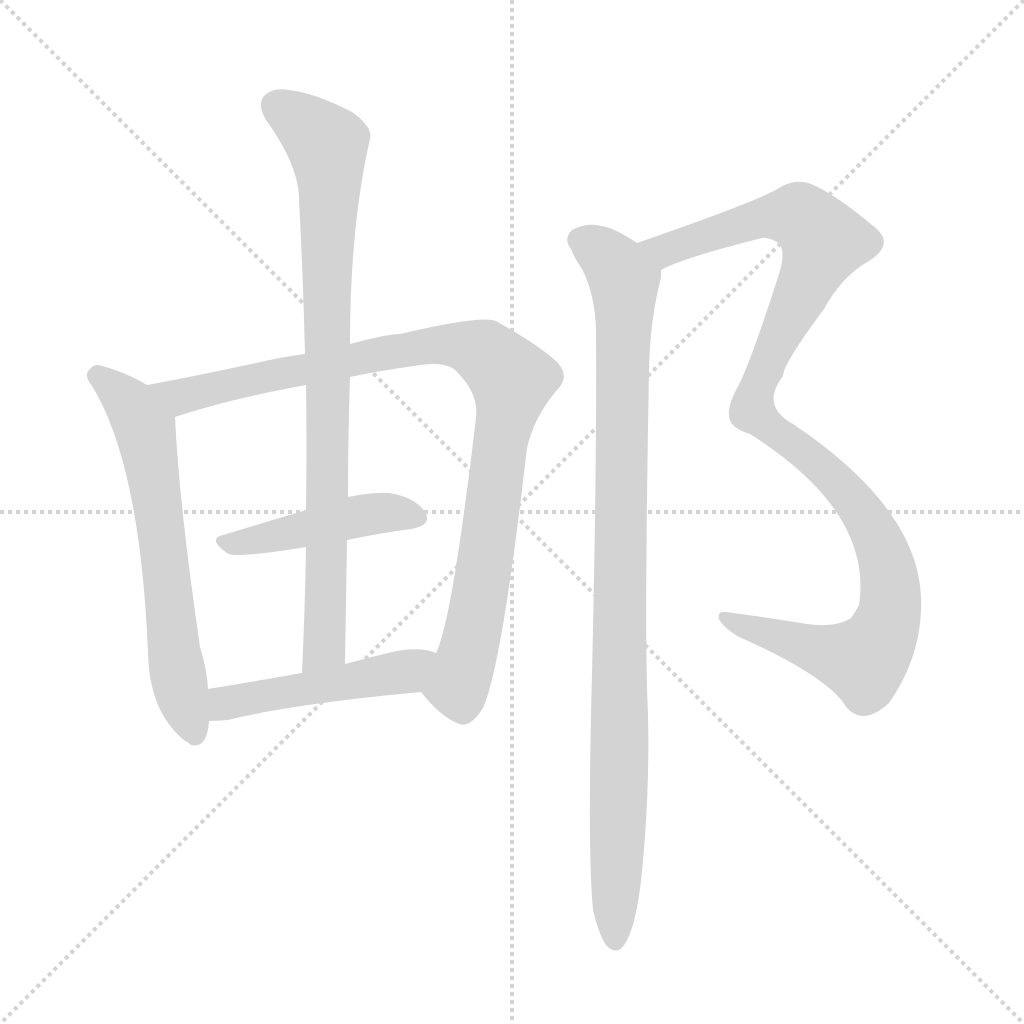
Character: You
Kangxi stroke count: 15
Page 1269, number 20
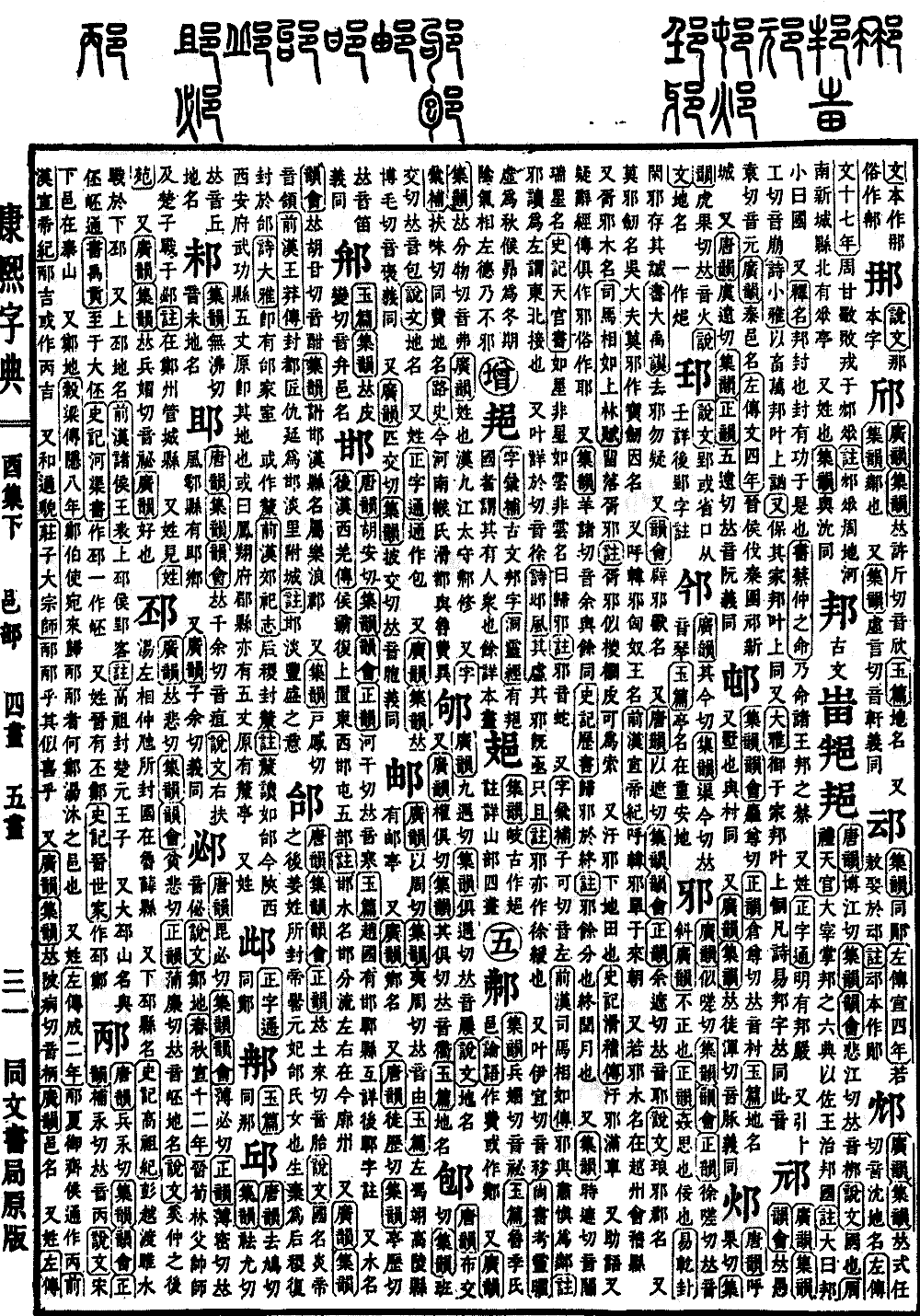
Compendium of Rhymes (Guangyun): y i plus zhou, Collected Rhymes (Jiyun): y i plus zhou, pronounced you. Jade Chapters (Yupian): In Gaoling County of the Zuo Fengyi region, there is a you pavilion. Also Guangyun: The name of a township. Also Tang Dynasty Rhymes (Tangyun): t u plus l i, Jiyun: t i n g plus l i, pronounced d i. Meaning is the same. Variant form you: Tangyun: y u plus q i u, Jiyun and Correct Rhymes (Zhengyun): y u plus q i u, pronounced you. Explaining Graphs and Analyzing Characters (Shuowen Jiezi): A post house on the border for delivering official documents. Guangyun: You means a post station. Comprehensive Meaning of Customs (Fengsu Tong): During the Han dynasty, the term you was changed to zhi; a zhi is also a post station, established by measuring distance. Supplemented Rhymes (Zengyun): Transmission by horse is called zhi; transmission by foot is called you. Erya: You means to pass through. Commentary: Places passed through on a journey. Also Jiyun: A hut in the fields. Book of Rites (Liji), Sacrificial Animal of the Suburbs (Jiaotesheng): Huts along the paths between fields. Commentary: You is like a post pavilion, referring to agricultural officials building huts at the connecting paths of fields to reside and supervise the people's farming. Also Zhengyun: A fault or error. Interchangeable with the term you (meaning blame). Book of Rites, Royal Regulations (Wangzhi): Faults and punishments should be attached to the specific deeds. Commentary: You means fault. Li means to attach. When identifying faults or punishing people, each must be attached to the specific incident and must not be influenced by personal joy or anger. Book of Han (Hanshu), Annals of Emperor Cheng: To make my faults manifest. Also Zhengyun: The ultimate or extreme. The term used for ranking merit, dian zui, is also called dian you. Liezi: The gentlemen of Lu are the most deluded. Commentary: You is interchangeable with you (meaning extreme). Also Guangyun: Duyou, an ancient official title. Explaining Names (Shiming): In charge of supervising and investigating the punishments, failures, and rankings of various counties. Book of Jin (Jinshu), Biography of Tao Qian: The commandery sent an inspector to the county. Also Gaoyou, the name of a prefecture. Also a surname. Zuo Commentary (Zuozhuan), Second Year of Duke Ai: There was a person named You Wuxu. Also Jiyun: shi plus wei, pronounced chui. A place name in the State of Wei. Also rhyming with yu plus qi, pronounced yi. Book of Odes (Shijing), Lesser Odes (Xiaoya): Not knowing their faults. Rhymes with the word qi in the preceding line. Correct Character Mastery (Zhengzitong): Shuowen Jiezi states it was originally written in a specific form composed of a radical meaning a distant border. It is commonly simplified. Jiyun records it written in the form xie.
Textual Research: In the Book of Jin, Biography of Tao Kan, it states the commandery sent an inspector to the county. Note: The citation is actually from the Biography of Tao Qian; the name Kan should be corrected to Qian.