Wei Collection, Upper Volume
Radical: Bamboo (zhú)
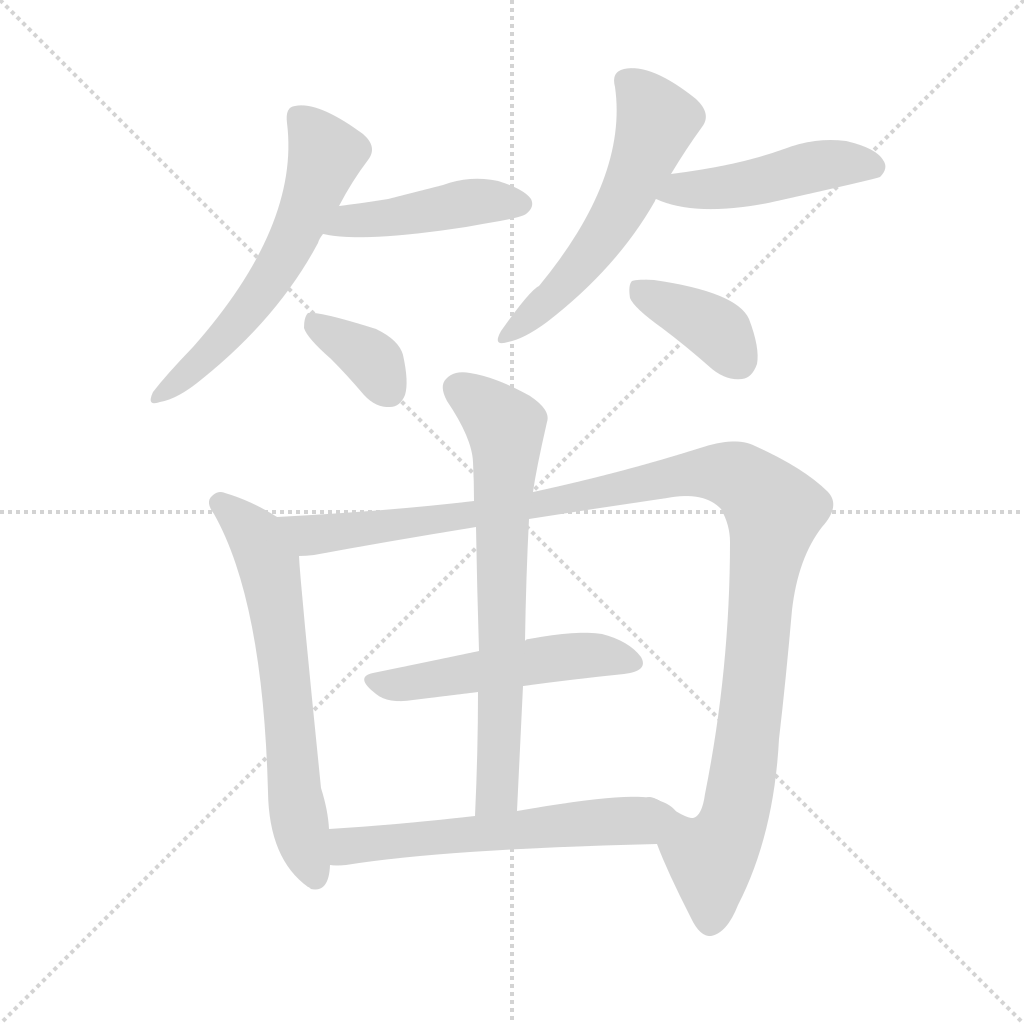
笛
Kangxi stroke count: 11
Page 879, Entry 33
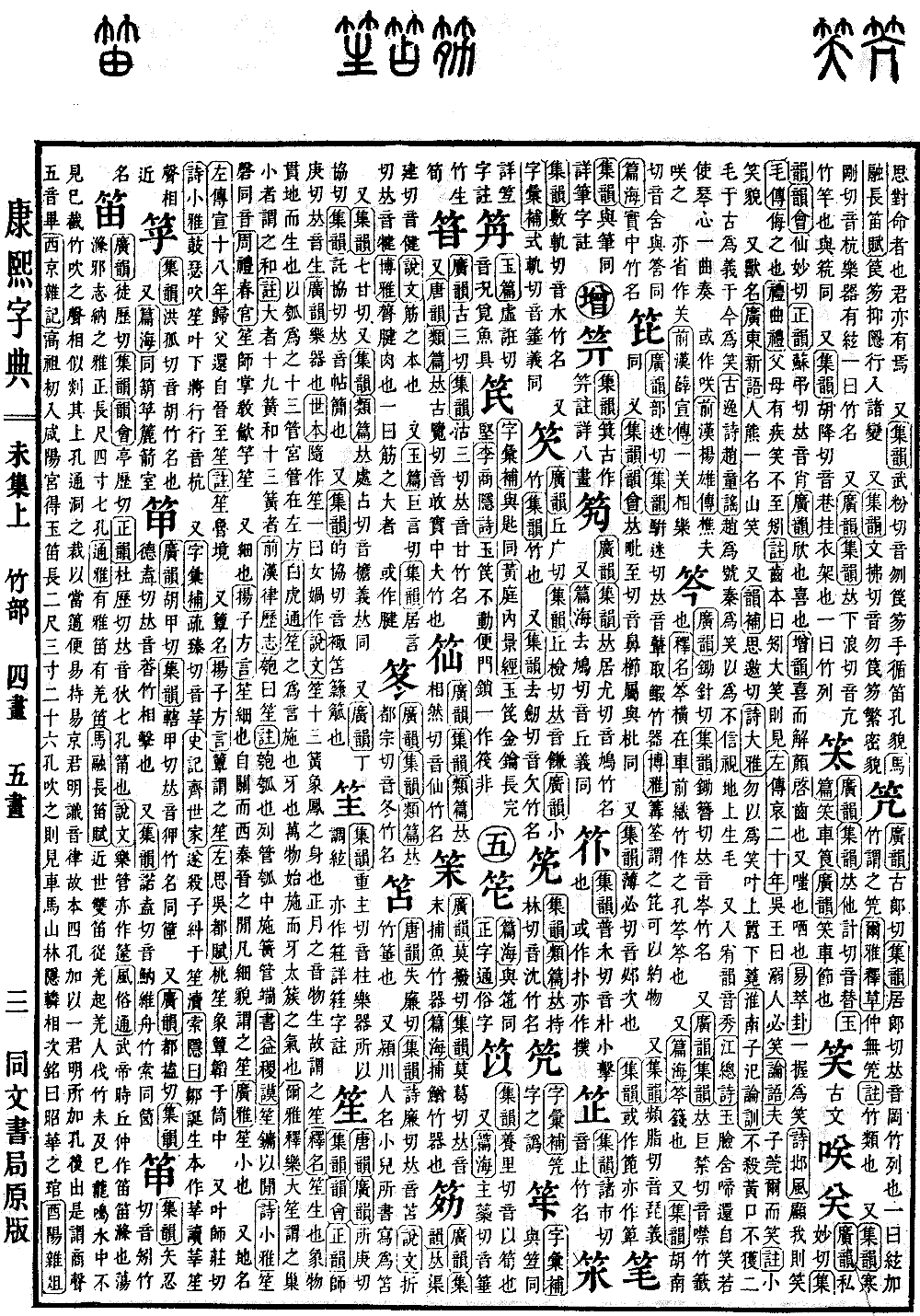
Pronounced dí. A seven-holed tube. According to the Shuowen Jiezi (Shuowen), a musical pipe. Also written in a variant form (dí). According to the Fengsu Tong, it was created by Qiu Zhong during the reign of Emperor Wu. The flute acts to cleanse; it cleanses wicked intentions and introduces elegance and rectitude. It is one foot four inches long with seven holes. According to the Tongya, there are elegant flutes and Qiang flutes. In the Ode to the Long Flute by Ma Rong, it is written: In recent generations, the double flute arose from the Qiang; the Qiang people felled bamboo without pause. The dragon cries in the water unseen; they cut the bamboo and blow through it, the sounds are alike. They pare the upper holes to make them clear and cut them to be handled like a whip for convenience. Yi Jing, known as Junming, understood musical temperaments, so he added one hole to the original four. The hole added by Junming appeared later; it is called the shang tone, completing the five notes. According to the Xijing Zaji, when Emperor Gaozu first entered the Xianyang Palace, he obtained a jade flute two feet three inches long with twenty-six holes. When blown, one sees carriages, horses, and mountains; they appear faintly one after another. It is inscribed as the Flute of Radiant Splendor. According to the Youyang Zazu, the arm of an ape can be made into a flute; when blown, the sound is rounder than that of bamboo. According to the Yunhui Xiaobu, in diagrams of musical instruments, there is the yi-zui flute, meaning a flute fitted with a separate mouthpiece. Also a place name. According to the Commentary on the Classic of Water (Shuijingzhu), on the right bank of Dongting Lake, there is a mountain popularly known as the Diewutou Stone. According to the Zhengzitong, the jade flute of the Western Han was from before Emperor Wu, so the statement in the Fengsu Tong that the flute was created by Qiu Zhong during the reign of Emperor Wu is incorrect. Note that in the Rites of Zhou (Zhouli), section on the Master of Reed Pipes, there is already text about teaching it, which is the same as the flute, so it already existed during the Zhou dynasty. Editorial note: In the Shuowen Jiezi, it is written as a musical pipe and also written as a variant form. After verification, the character is included in this radical with eleven strokes, using the character for pursue as the phonetic component; it is corrected here accordingly.