You Collection, Middle Volume
Radical: Cowrie (bèi)
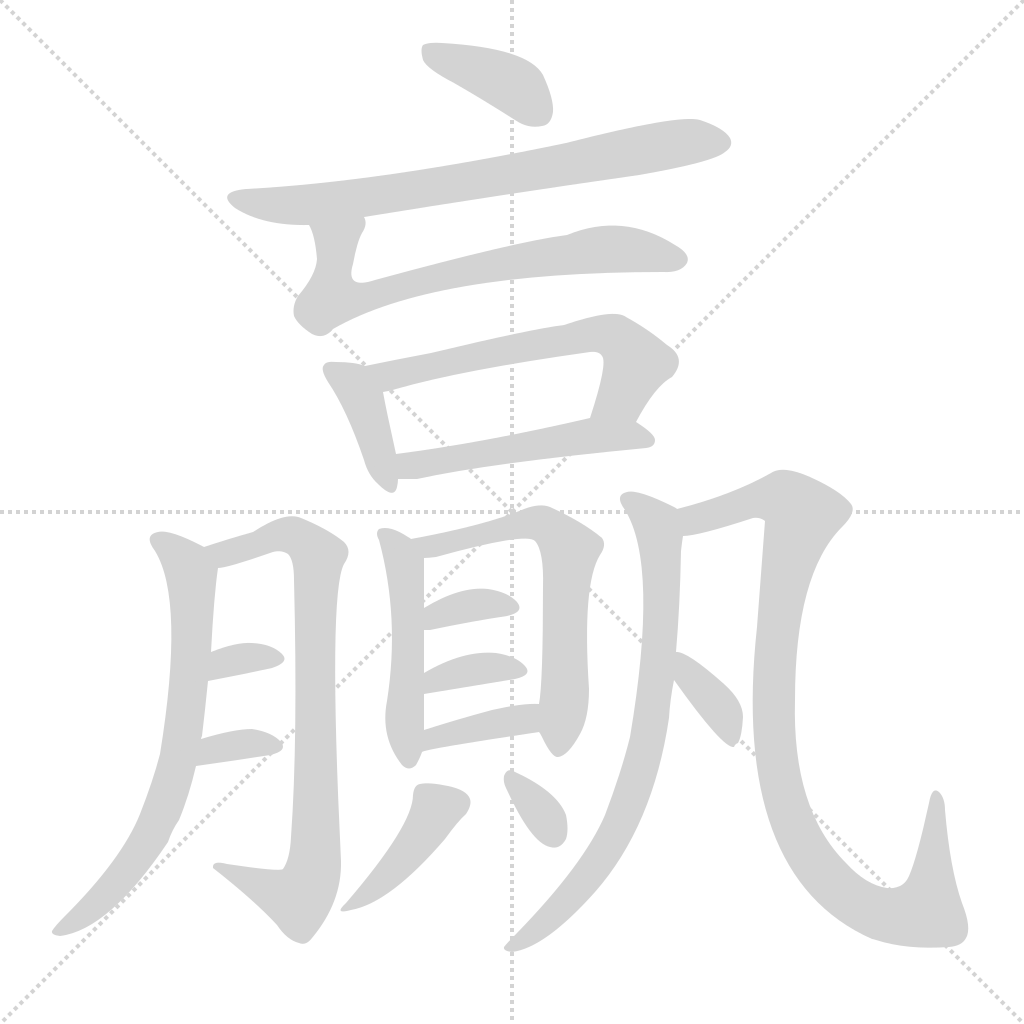
赢
Kangxi strokes: 20
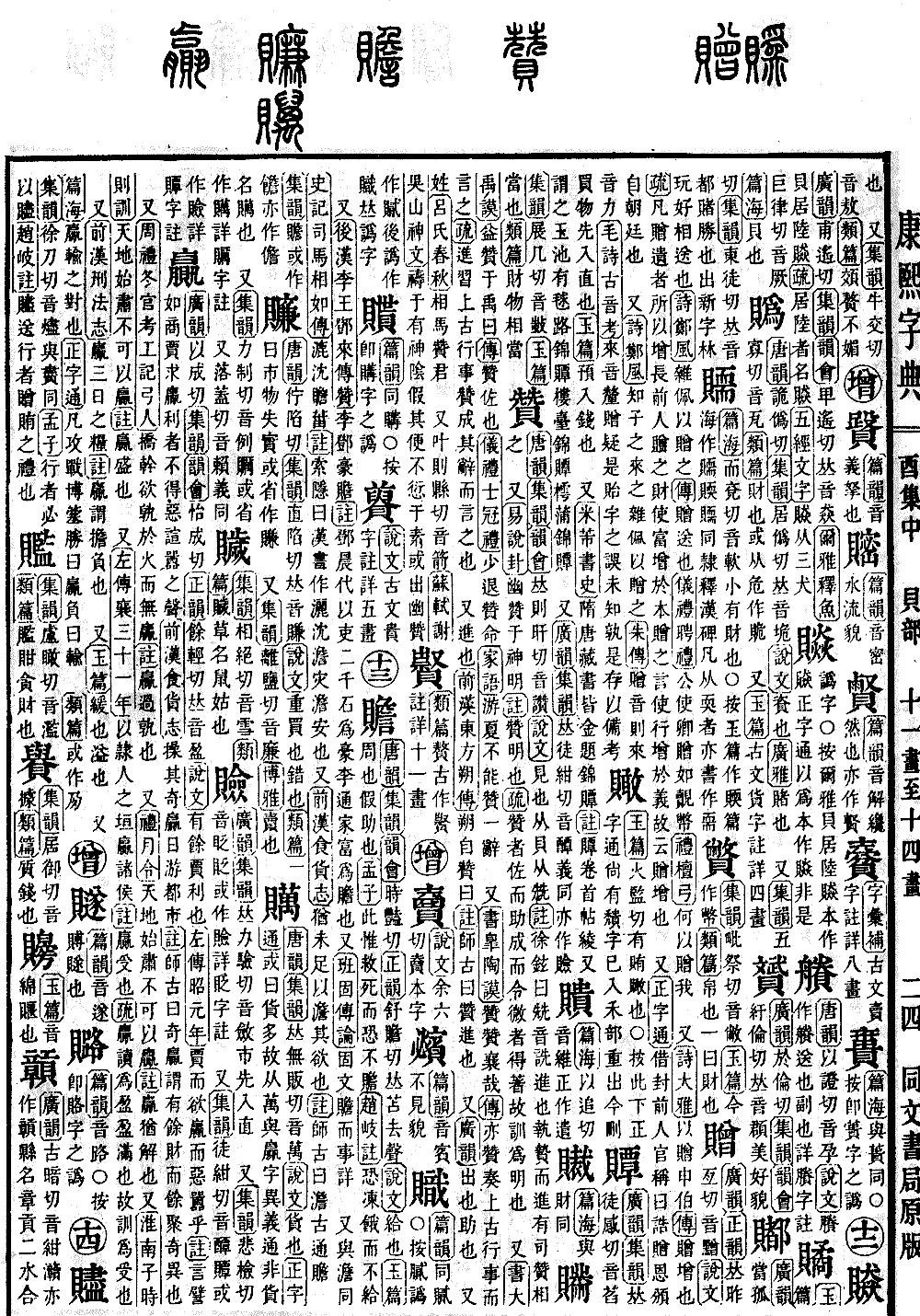
Page 1212, Entry 33
Pronounced yíng
According to the Shuo wen jie zi (Shuo wen), it refers to gaining profit through commerce.
Zuo Zhuan (Zuo zhuan), first year of Duke Zhao: Merchants wish to make a profit; how could they hate a noisy clamor? The commentary explains: It means that just as merchants pursue profit, they cannot dislike noisy sounds.
History of the Former Han (Qian Han shu), Treatise on Food and Money: Managing surplus wealth and rare commodities, strolling through the markets every day. The commentary by Yan Shigu states: Rare surplus refers to having excess wealth and hoarding rare goods.
Also, Rites of Zhou (Zhou li), Winter Office, Artificers' Record, Bow Makers: When straightening the bow shaft, one must roast it in the fire until it is just right, and it must not be excessive. The commentary explains: Ying means excessive.
Also, Book of Rites (Liji), Monthly Ordinances: Heaven and earth begin to turn cold and stern; one must not be lax. The commentary explains: Ying means lax.
Also, Huainanzi (Huainan zi), Treaty on Seasonal Rules: Heaven and earth begin to turn cold and stern; one must not be at the peak of fullness. The commentary explains: Ying means flourishing.
Also, Zuo Zhuan (Zuo zhuan), thirty-first year of Duke Xiang: Using the low walls of a servant's quarters to receive the lords. The commentary explains: Ying means to receive. The sub-commentary notes: Ying is pronounced like yíng. Yíng means full, therefore it is interpreted as to receive.
Also, History of the Former Han (Qian Han shu), Treatise on Law: Carrying three days' worth of provisions. The commentary explains: Ying means to carry or bear.
Also, Yu pian (Yu pian): Refers to being loose or overflowing.
Also, Pian hai (Pian hai): Ying is the opposite of losing.
Zheng zi tong (Zheng zi tong): Any victory in war or gambling is called yíng, and defeat is called losing.
Lei pian (Lei pian): Some write it in a variant form.