You Collection, Middle Volume
Radical: Cowrie (bèi)
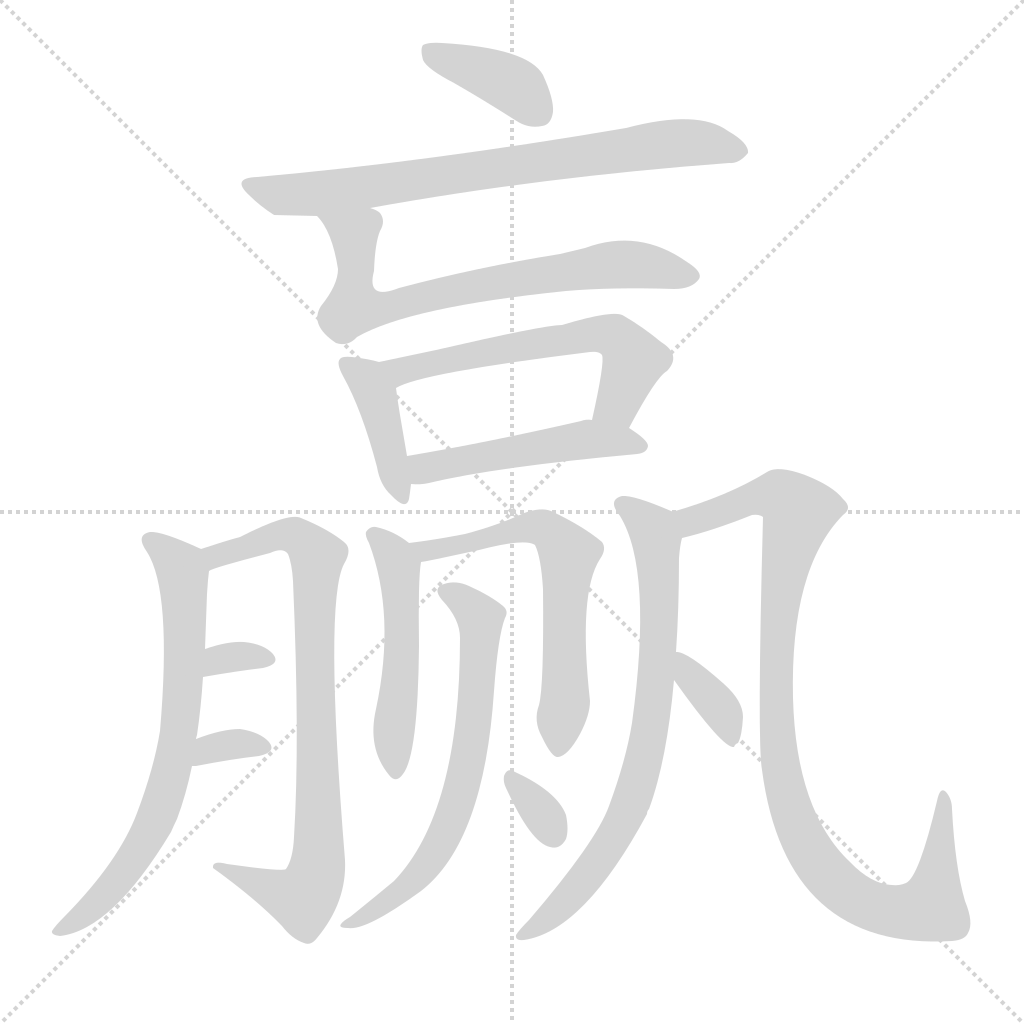
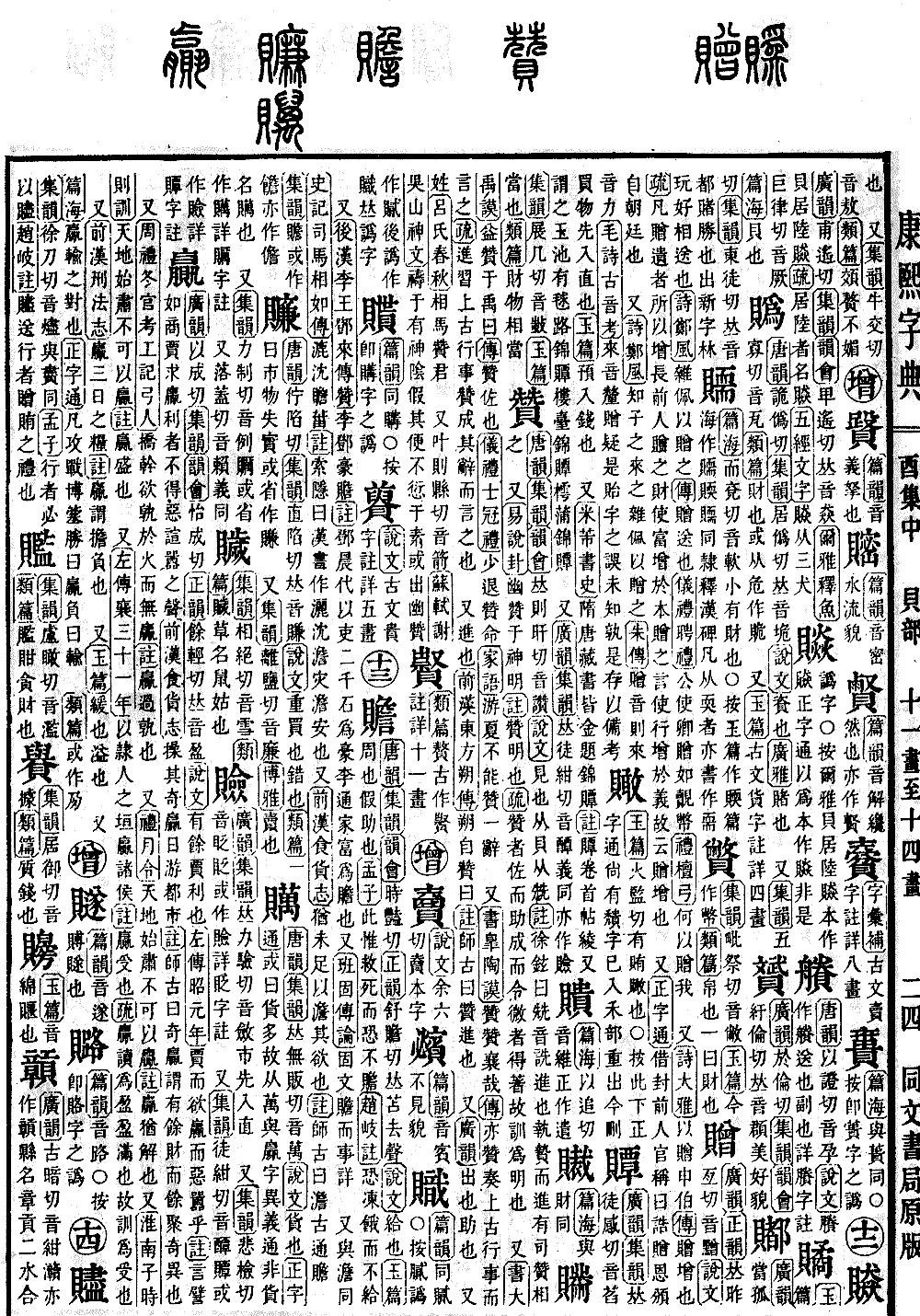
赢
Kangxi strokes: 20
Page 1212, Entry 06
Pronounced ying
Shuowen Jiezi (Explanation of Simple and Compound Characters): To earn a profit through trade.
Zuo Zhuan (Chronicle of Zuo): Merchants desire profit, so how could they dislike the noise of the marketplace?
Annotation: This means that just as merchants pursue profit, they cannot loathe the bustling clamor.
Book of Han (Hanshu), Treatise on Food and Money: Managing surplus wealth and rare commodities, wandering daily through the capital markets.
Annotation: Shigu (Yan Shigu) says: Rare surplus refers to having excess wealth and hoarding extraordinary goods.
Also, Rites of Zhou (Zhouli), Winter Officer, Record of Artificers, Bow-maker: When straightening the bow frame, it should be heated over fire to the appropriate degree and not be excessive.
Annotation: Ying means excessive.
Also, Book of Rites (Liji), Monthly Ordinances: Heaven and Earth begin to turn cold and desolate; one must not be lax.
Annotation: Ying means to be lax.
Also, Huainanzi, Treatise on Seasonal Rules: Heaven and Earth begin to turn cold and desolate; one must not be arrogant or overbearing.
Annotation: Ying means arrogant or full.
Also, Zuo Zhuan (Chronicle of Zuo), 31st Year of Duke Xiang: Using a low-walled house, such as those where slaves live, to receive the feudal lords.
Annotation: Ying means to receive.
Exegesis: Ying is read as ying. Ying means to be full, so it is interpreted as to receive or to contain.
Also, Book of Han (Hanshu), Treatise on Punishments and Law: Preparing three days of dry rations.
Annotation: Ying means to carry or bear on the back.
Also, Yupian (Jade Chapters): Means loose, slack, or excessive.
Also, Pianhai (Sea of Characters): Ying is the opposite of losing.
Zhengzitong (Correct Character Guide): In warfare or gambling, to win is called ying, to fail is called shu.
Leipian (Classified Characters): Sometimes written in a variant form.