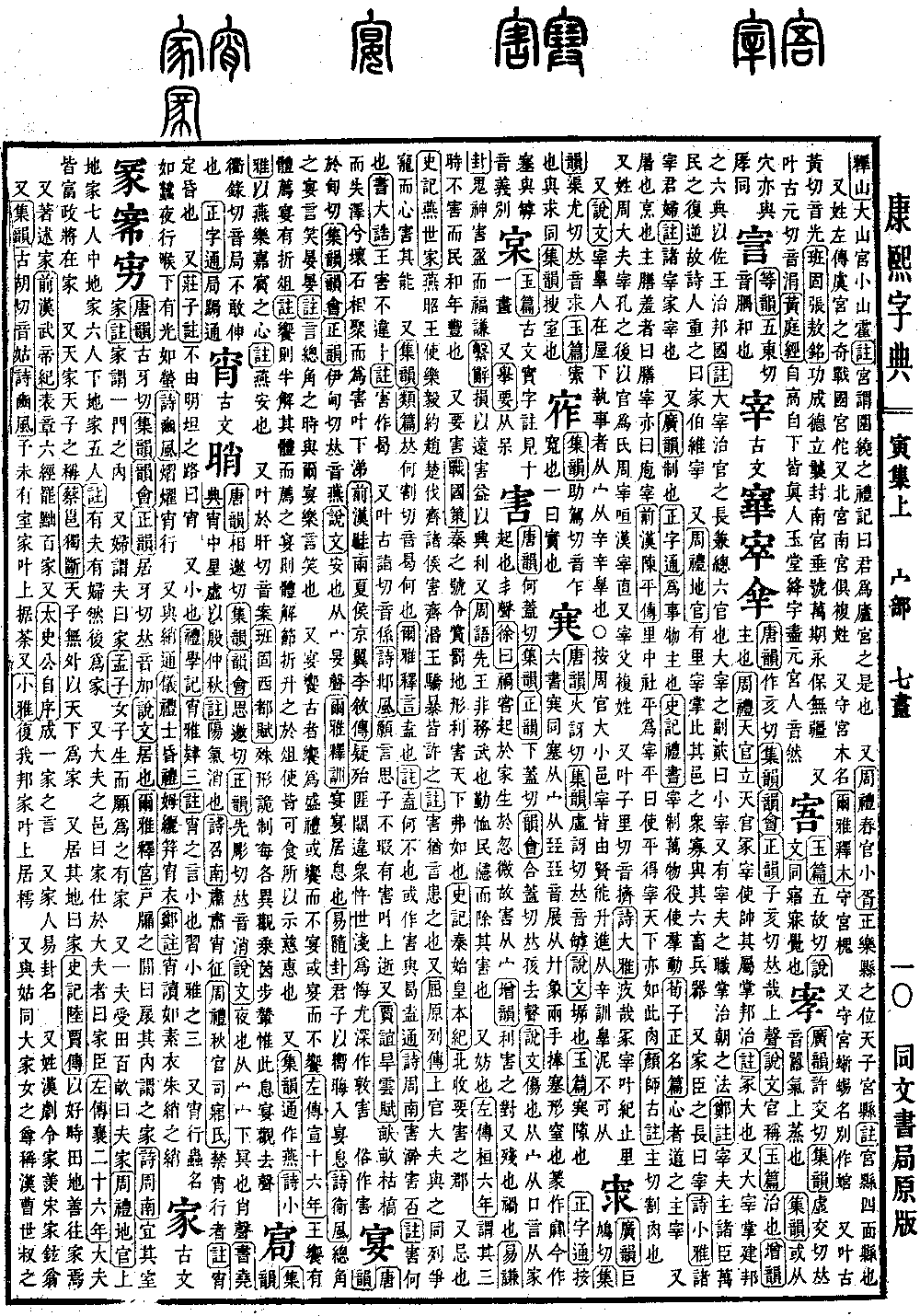
Yin Collection, Upper Volume
Radical: Roof (bù)
Entry: Yan
Kangxi Stroke Count: 10
Page 286, Entry 13
According to Tang Rhymes (Tangyun), pronounced yan; according to Collected Rhymes (Jiyun), Rhyme Meetings (Yunhui), and Correct Rhymes (Zhengyun), pronounced yan. According to the dictionary Explanation of Simple and Compound Characters (Shuowen), it means to be at peace. It is formed from the roof radical and the phonetic component yan. According to the dictionary Approach to Refinement (Erya), the phrase yan-yan denotes rest and repose. According to the Book of Changes (Yijing), within the Follow (Sui) hexagram, the superior man, when dusk falls, retires to rest and find peace. According to the Book of Odes (Shijing), in the Odes of Wei, it says with hair gathered in tufts like horns, we were happy and cheerful, laughing and talking together. The commentary notes that this refers to the time when, with hair gathered in tufts, we found joy and laughter together.
It also refers to a banquet. In ancient times, a formal reception was considered a grand ceremony; sometimes there was a reception without a banquet, and sometimes a banquet without a reception. According to the Zuo Commentary (Zuozhuan), sixteenth year of Duke Xuan, when the king holds a reception, he presents parts of the sacrificial animal, and when he holds a banquet, he presents cut pieces on a serving platter. The commentary notes that in a formal reception, the animal is halved, but in a banquet, it is cut into pieces at the joints and placed on a platter so that it is easy to eat, which is a display of kindness and favor.
Also, according to Collected Rhymes (Jiyun), it is used interchangeably with the character pronounced yan. According to the Book of Odes (Shijing), in the Odes of Lesser Elegantia (Xiaoya), it serves to bring joy and peace to the hearts of honorable guests. The commentary notes that yan here means peace.
It is also pronounced an. According to the Western Capital Rhapsody (Xidu Fu) by Ban Gu, with varied forms and strange designs, each sight is different. Riding in covered carriages or walking with palanquins, only here do we rest and banquet. Note: the final character is read in the departing tone.