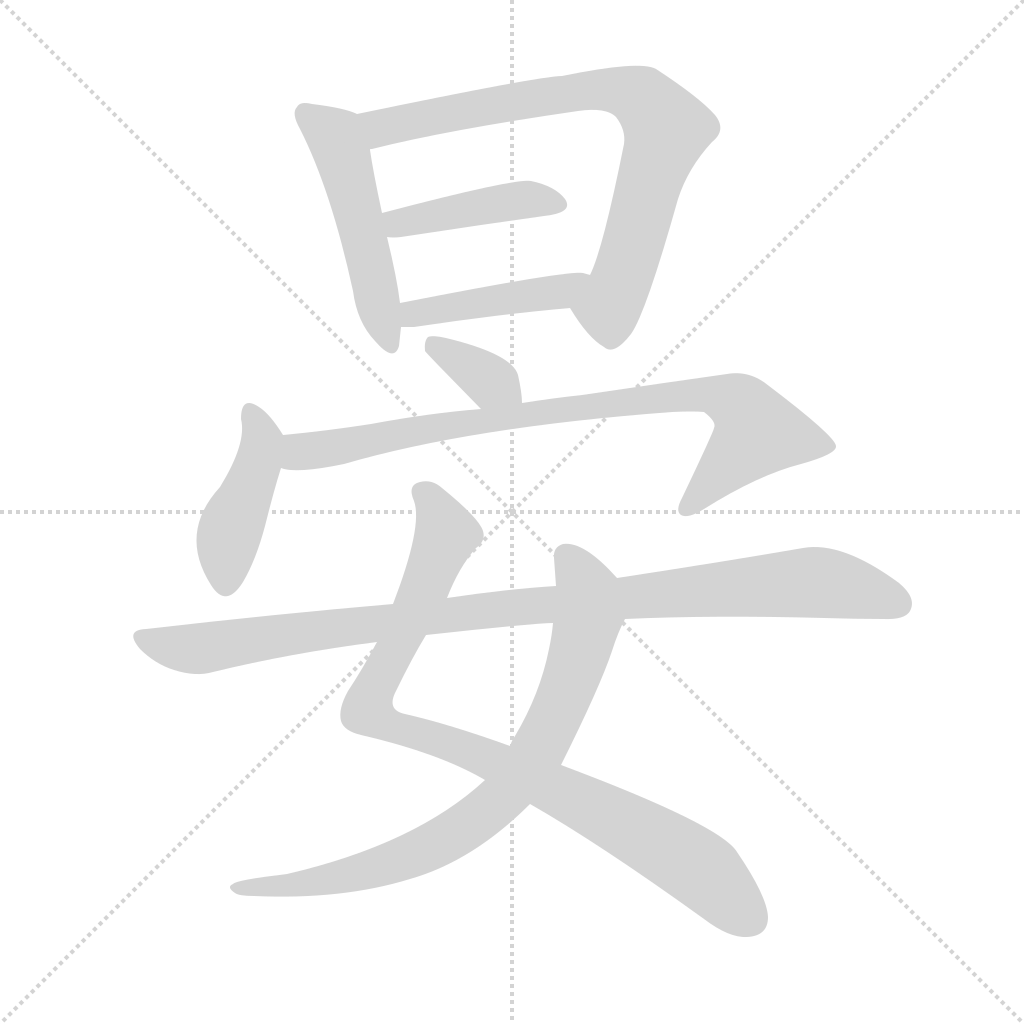
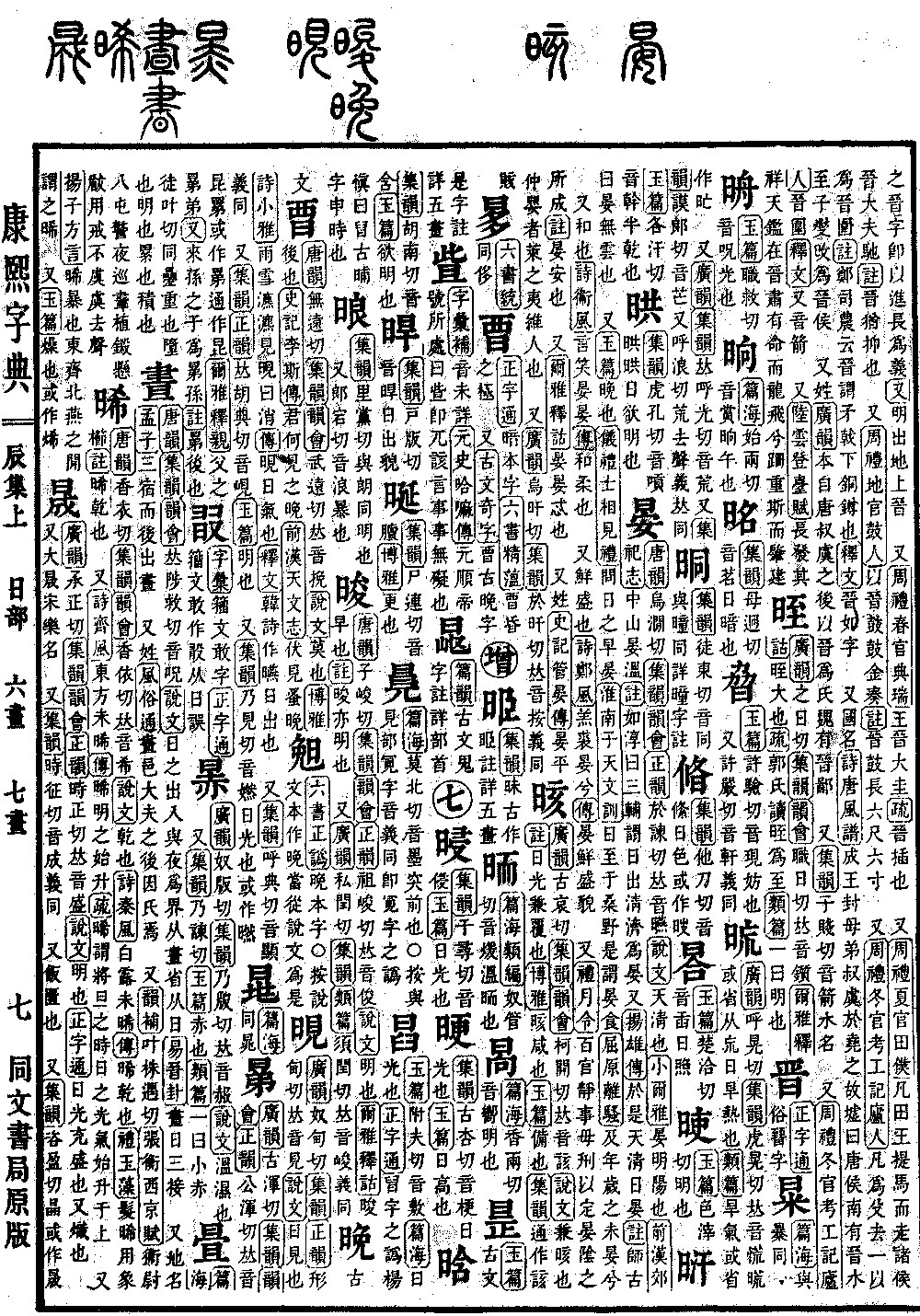
Chen Collection, Upper Volume
Radical: Sun (rì)
10 strokes
Page 495, Entry 15
Pronounced yan (falling tone).
As defined in the Shuowen Jiezi (Shuowen): The sky is clear.
As defined in the Little Erya (Xiao Erya): Bright and sunny.
In the History of the Former Han (Qianshan Shu): In Zhongshan, the weather was clear and warm. Commentary by Ru Chun states: In the regions around the capital, when the sun rises and the air is clear, it is called yan.
In the Biography of Yang Xiong: Then the sky was clear and the sun was bright. Commentary by Yan Shigu states: Yan means without clouds.
Also: Late.
In the Book of Etiquette and Ceremonial (Yili): Asking if the day is early or late.
In the Huainanzi (Huainanzi): When the sun reaches the mulberry fields, it is called the late meal.
In Qu Yuan's Encountering Sorrow (Lisao): Before the years and age have grown late.
Also: Harmonious.
In the Book of Odes (Shijing): Words and laughter are harmonious and gentle. Commentary states: Harmonious and gentle.
Also: Fresh and abundant.
In the Book of Odes (Shijing): Lambskin robes look fresh and abundant. Commentary states: Yan means the appearance of being fresh and abundant.
Also: As defined in the Book of Rites (Liji): Let the officials be quiet and have no affairs, so as to settle the peace established by the yin. Commentary states: Yan means peace.
Also: As defined in the Erya (Erya): Yan-yan means changing or hesitant.
Also a surname.
In the Records of the Grand Historian (Shiji): Yan Pingzhong Ying was a man from Yiwei in Lai.
Pronounced an (falling tone). The meaning is the same.