Mao Collection, Upper Volume
Radical: Heart (xīn)
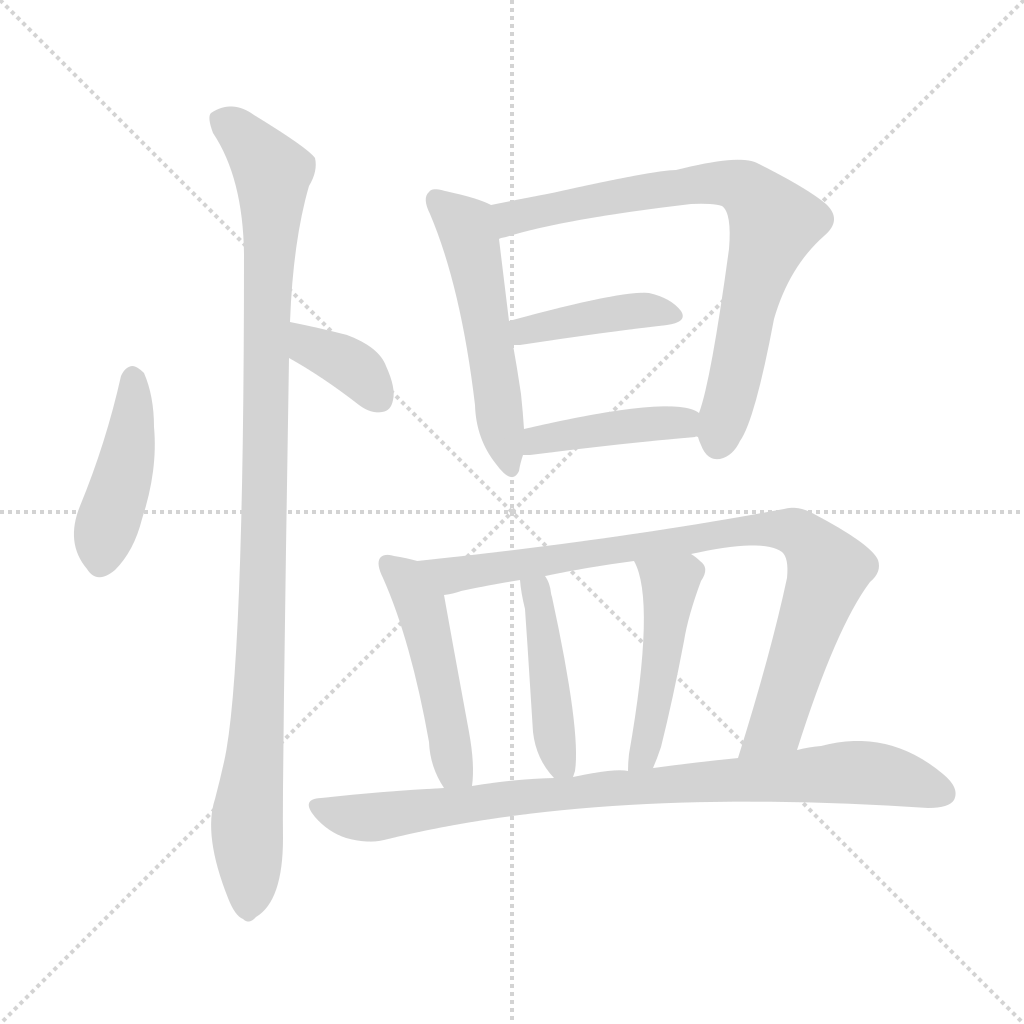
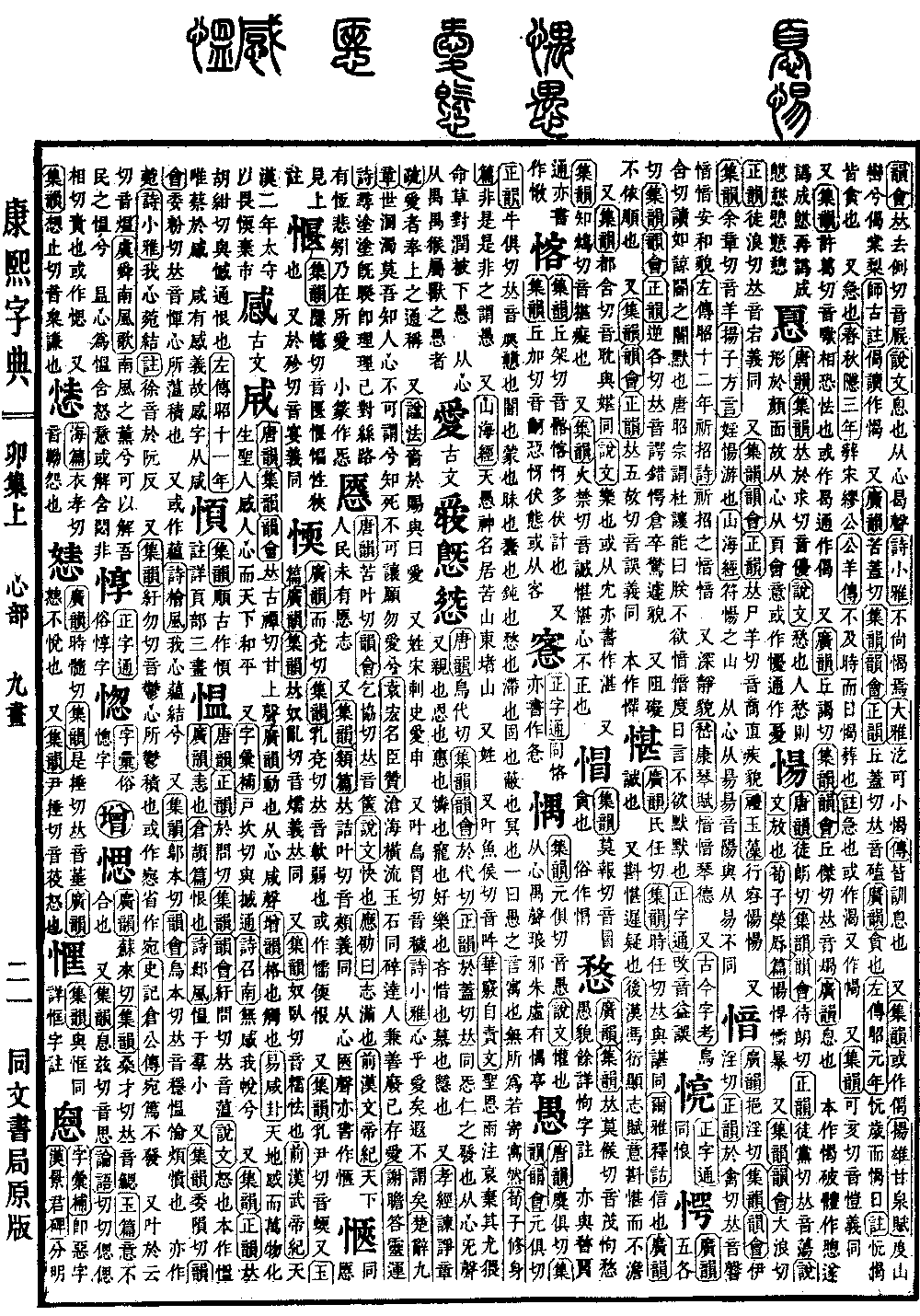
愠
Kangxi stroke count: 14
Page 395, Entry 24
Pronounced yun (falling tone).
Shuowen Jiezi (Explaining Graphs and Analyzing Characters): To be angry. Originally written as 愠.
Guangyun (Broad Rhymes): To be resentful.
Cangjie Pian: To hate.
Book of Odes (Shijing), Odes of Bei: Resentful of the small-minded men.
Also, pronounced yun (falling tone). That which the heart stores up. Also written as 蕴.
Book of Odes (Shijing), Odes of Kuai: My heart is knotted and repressed.
Also, pronounced wen (rising tone). Anger and frustration, troubled and confused. Also written as 菀.
Book of Odes (Shijing), Lesser Odes of the Kingdom: My heart is knotted and repressed. Note: Xu pronounces it as yuan (rising tone).
Also, pronounced yu (entering tone). That which is suppressed and stored within the heart. Sometimes written as 惌, shortened to 宛.
Records of the Grand Historian (Shiji), Biography of Cang Gong: Feeling suppressed and ill, unable to express it.
Also, rhyming as yun (level tone).
Song of the South Wind by Emperor Shun: The southern wind is warm and fragrant, it can relieve the anger of my people.
The character is formed by heart and the sound wen, indicating suppressed anger. Some interpret it as suppressed sorrow, which is incorrect.
The Zhengzitong dictionary states that 愠 is the original form. According to Shuowen Jiezi, it is formed from heart and the sound wen. The Zhengzitong claims that using the element wen is a mistake, but this is incorrect.