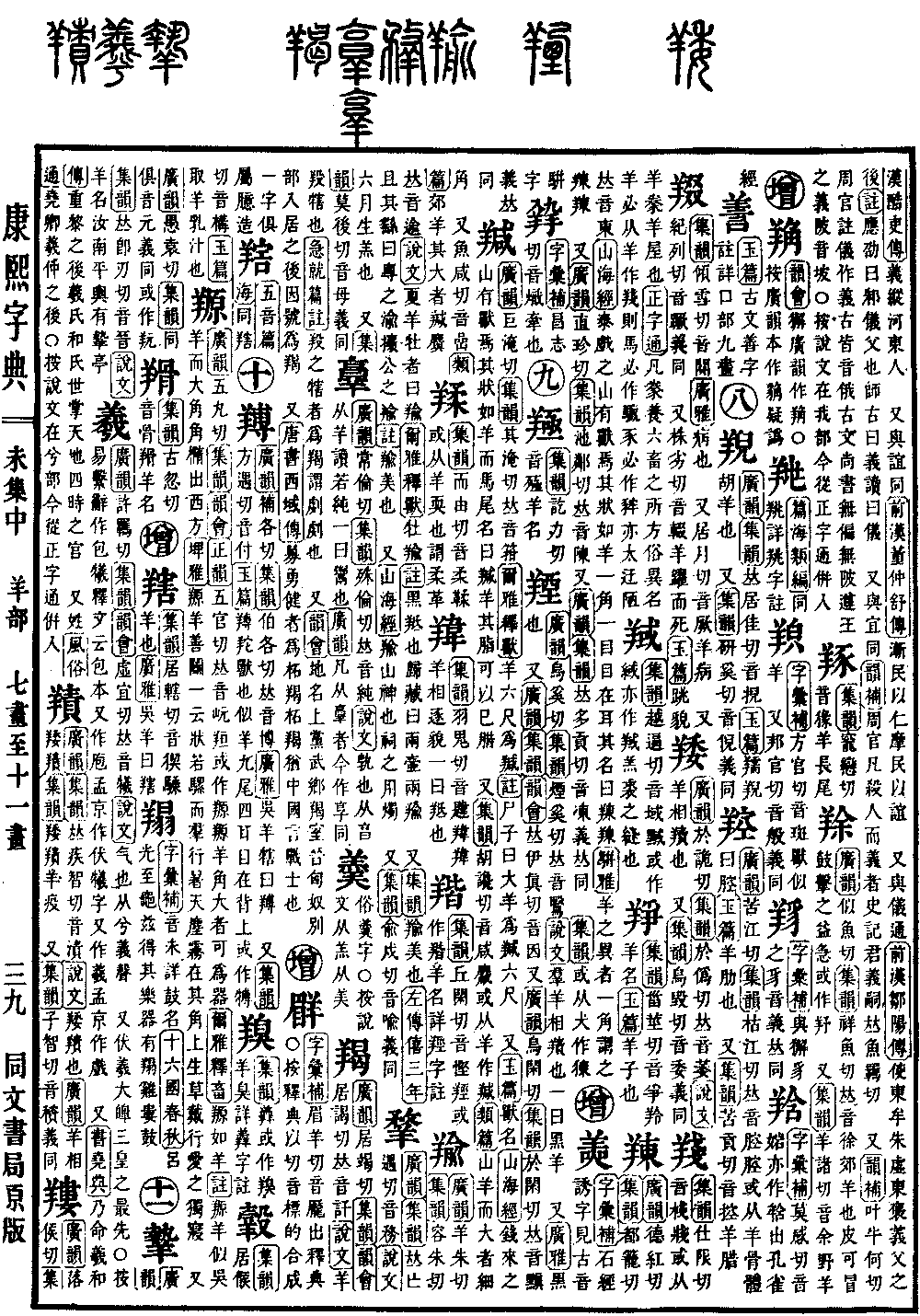
Wei Collection, Middle Volume. Radical: Sheep (yáng). Kangxi strokes: 16. Page 953, Entry 35.
In Broad Rhymes (Guangyun), pronounced wan. In Collected Rhymes (Jiyun), Rhyme Meetings (Yunhui), and Correct Rhymes (Zhengyun), pronounced wan, with the sound of wan. Sometimes written in a variant form. The horns of the wild mountain sheep, the larger ones, can be used to make vessels.
In Er Ya: Explanation of Domestic Animals (Erya), it is stated: The wild mountain sheep is like a sheep. The commentary states: The wild mountain sheep resembles the Wu sheep but has large, elliptical horns and originates from the West.
In Pi Ya, it is stated: The wild mountain sheep is good at fighting. Another source says it is shaped like a mule and travels in herds; during the summer, dust and fog settle on its horns, where grass grows, which it carries as it walks; it is fond of sleeping alone.
Also, in Broad Rhymes (Guangyun), pronounced yuan. In Collected Rhymes (Jiyun), it has the same sound as yuan. The meaning is the same. Sometimes written in a variant form.