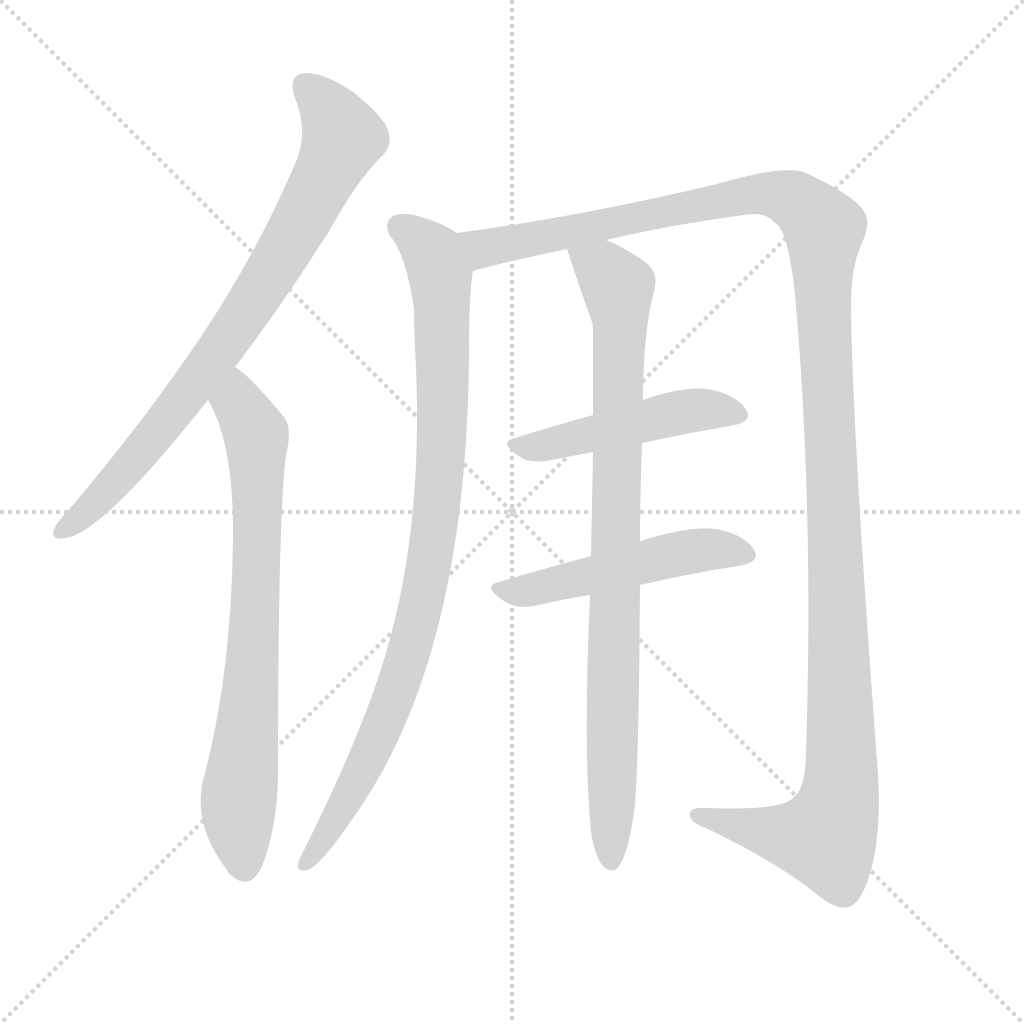
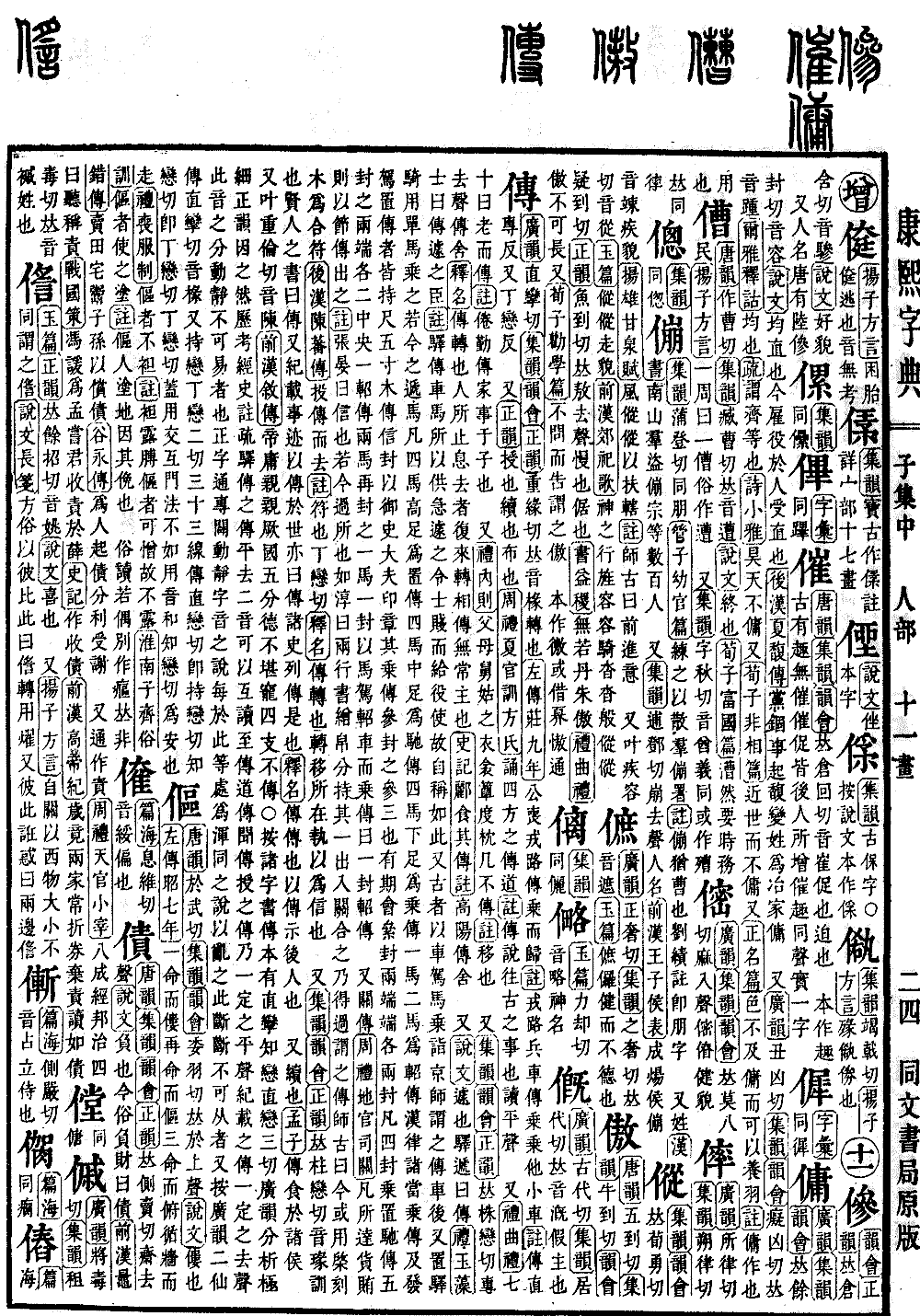
Zi Collection, Middle Volume. Radical: Person (rén). Character: yōng. Kangxi stroke count: 13. Page 114.
According to the Broad Rimes (Guangyun), Collected Rimes (Jiyun), and Collected Rimes (Yunhui), the pronunciation is derived from the initial of yú and the final of fēng, sounding like róng.
The Explaining Graphs and Analyzing Characters (Shuowen Jiezi) states it means a fair wage. Currently, it refers to being hired by others for labor and receiving a wage.
The Book of the Later Han (Houhanshu), in the Biography of Xia Fu, records: When the incident of the Partisan Prohibitions occurred, Xia Fu changed his surname and worked as a hired laborer for a metalworker.
Furthermore, according to the Broad Rimes (Guangyun), it has a pronunciation derived from the initial of chǒu and the final of xiōng; according to the Collected Rimes (Jiyun) and Collected Rimes (Yunhui), it has a pronunciation derived from the initial of chī and the final of xiōng, sounding like zhǒng.
The Approaching Elegance (Erya), in the section Explaining Words (Shiyan), defines it as equal. The sub-commentary states this refers to being uniform or level.
The Book of Odes (Shijing), in the Minor Odes, states: Great Heaven is not fair.
Also, the Xunzi, in the chapter Against Physiognomy (Feixiang), mentions: Belonging to recent times but not being mediocre.
Additionally, in the chapter On the Rectification of Names (Zhengming), it says: The color does not reach the level of being useful, yet it can nourish the eyes. The note explains that the character yōng means to work or to use.
Textual Research: The citation in Approaching Elegance (Erya) was previously listed under Explaining the Old (Shigu) as meaning equal; it is now corrected to Explaining Words (Shiyan) according to the original book. In the chapter On the Rectification of Names (Zhengming), the phrase nourish feathers is corrected to nourish eyes according to the original text.