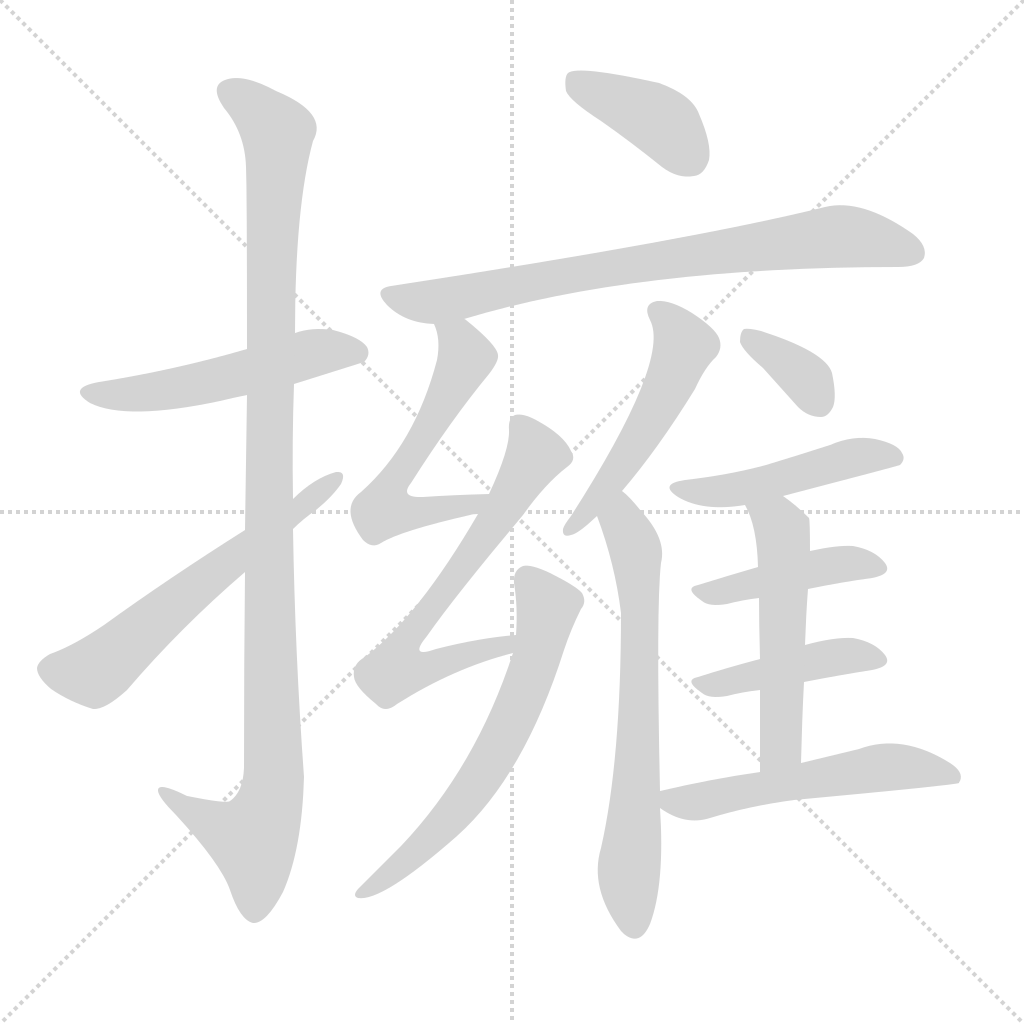
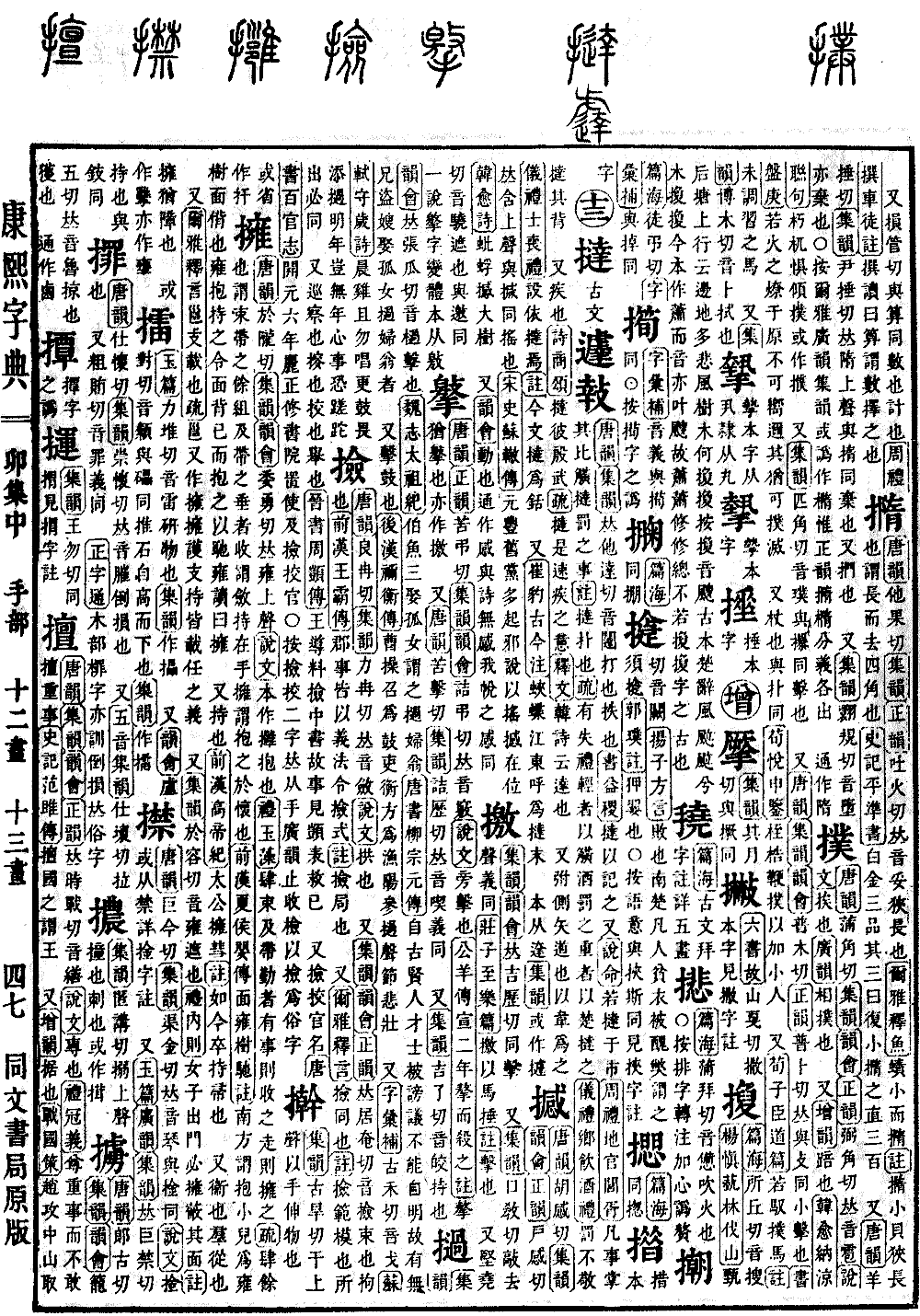
Mao Collection, Middle Volume
Radical: Hand (shǒu)
Kangxi stroke count: 17
Page 457, Entry 26
Pronounced yong (rising tone).
Shuowen Jiezi (Explanation of Simple and Compound Characters): Originally written as the base character. To embrace.
Book of Rites (Liji): When the straps and cords are arranged, if the official has business, he gathers them; if he runs, he embraces them.
Commentary: The gathering refers to the leftover cords and the hanging parts of the belt. Gathering means to hold them in the hand; embracing means to hold them to the bosom.
History of the Former Han (Hanshu): In the commentary to the biography of Xiahou Ying, it is noted that in the south, carrying a child is called yong shu. Face and back refer to holding the child so that their face is toward one's back, or holding them so they face away while running. Yong is pronounced yong.
Also means to hold.
History of the Former Han (Hanshu): In the annals of Emperor Gao, the Duke Taigong carried a broom.
Commentary: Like soldiers holding brooms today.
Also means to protect or a group of followers.
Erya (Approaching Standards): In the commentary to the section on words, it is noted that yong is also written as yong. To protect, support, and sustain all carry the meaning of bearing a burden.
Pronounced yong.
To cover or obstruct.
Book of Rites (Liji): When a woman goes out, she must cover her face.
Commentary: Yong means to block or screen. Sometimes written in a variant form. Also written in a variant form.