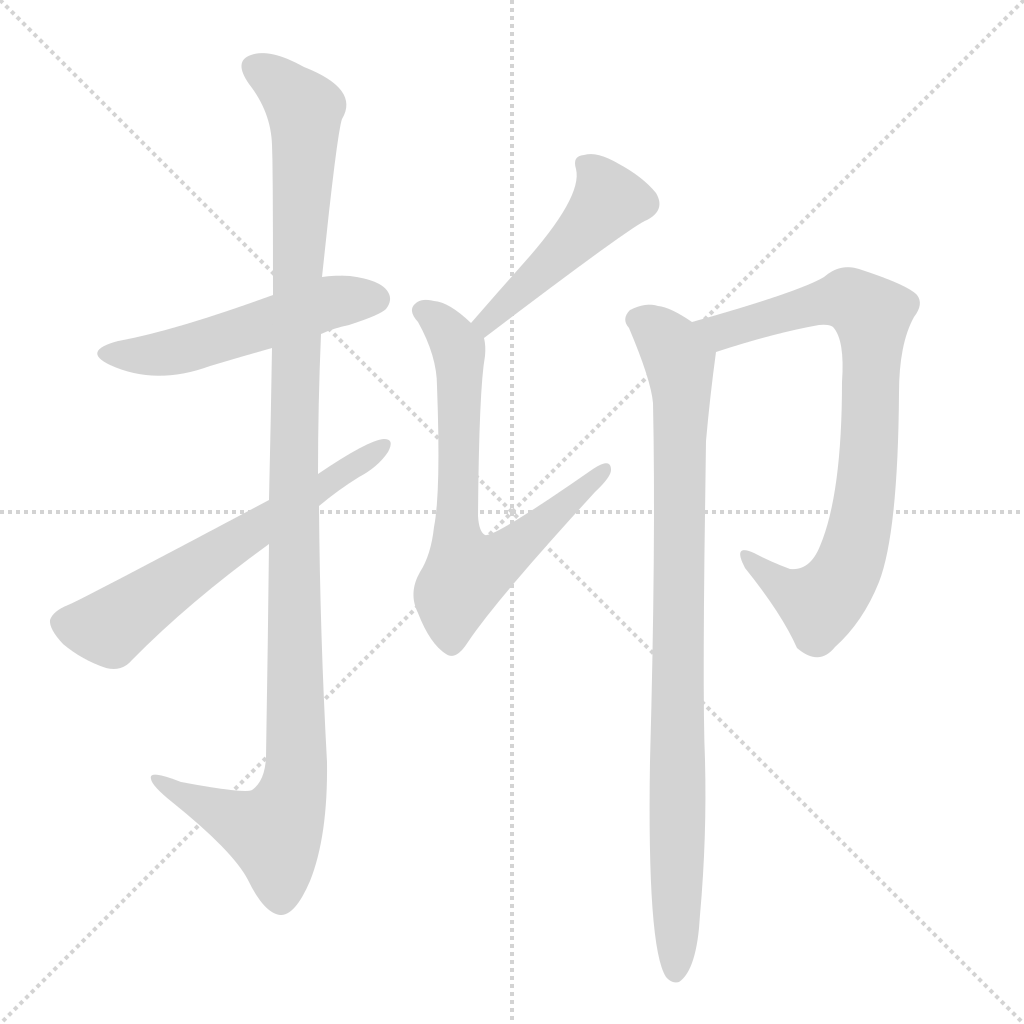
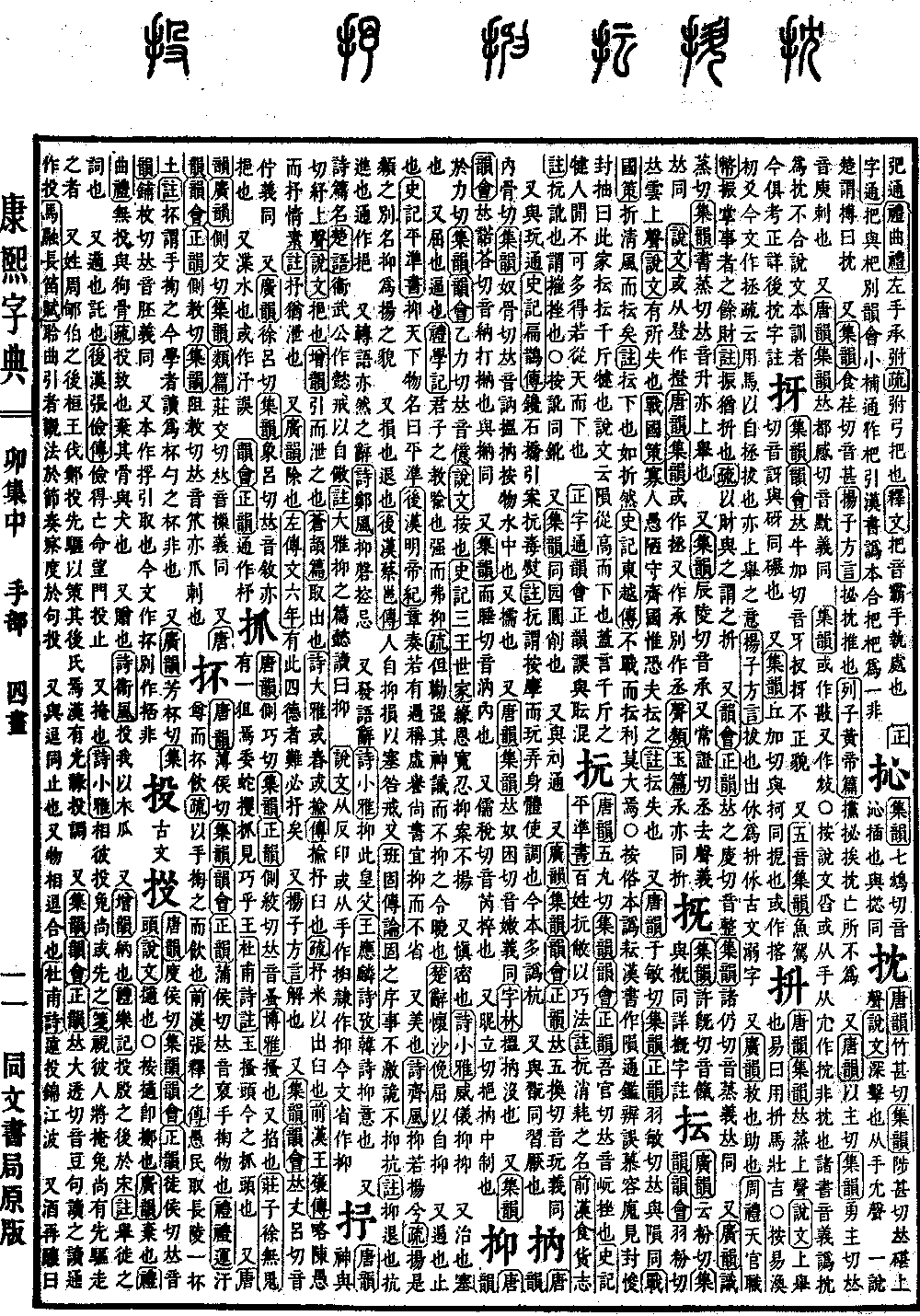
Mao Collection, Middle Volume
Radical: Hand (shǒu)
Kangxi Strokes: 8
Page 421, Entry 09
Pronounced yì
Shuowen Jiezi: To press down.
Records of the Grand Historian (Shiji), Biography of the Three Kings: To show grace and leniency, to press down and not publicize.
Also, cautious and dense.
Book of Odes (Shijing), Lesser Odes: Dignified and restrained in demeanor.
Also, to govern; to block.
Also, to yield; to constrain.
Book of Rites (Liji), Record of Learning: The instruction of a noble person is to encourage without constraint. Commentary: Merely encouraging the spirit and consciousness without suppressing it so that they may understand.
Songs of the South (Chuci), Embracing the Sand: To bow and yield to constrain oneself.
Also, to check; to stop.
Records of the Grand Historian, Treatise on the Balanced Standard: To check the commodities of the realm, calling it the balanced standard.
History of the Later Han (Hou Hanshu), Annals of Emperor Ming: If memorials or reports contain excessive praise or empty reputations, the Secretariat should suppress them without review.
Also, beautiful.
Book of Odes, Odes of Qi: Beautiful, as if rising. Commentary: Yang is another name for the forehead. Yi describes the appearance of being raised.
Also, to diminish; to withdraw.
History of the Later Han, Biography of Cai Yong: People should restrain and diminish themselves to block the warnings of fault.
History of the Later Han, Treatise on Ban Gu: In his recording of affairs, Ban Gu was neither extreme nor deceptive, neither suppressing nor resisting. Commentary: Yi means to withdraw; Kang means to advance. Commonly written as the variant form (yì).
Also, a connective particle, or a word expressing agreement.
Book of Odes, Odes of Zheng: Now pulling the reins and controlling the horses.
Also, an introductory particle.
Book of Odes, Lesser Odes: Now this Grand Minister Huangfu.
Wang Yinglin, Critical Examination of the Odes: In the Han School of Odes, yi means intent.
Also, a title of an ode.
Discourses of the States (Chu Yu): Duke Wu of Wei wrote the Yi, to provide a warning for self-caution. Commentary: The Yi poem of the Greater Odes; Yi is read as Yi.
Shuowen Jiezi: Composed of the inverted form of the radical for seal. Sometimes written with the hand radical. In clerical script, it is written thus. In modern script, it is simplified as yì. The character is composed of the hand radical and the element for seal.