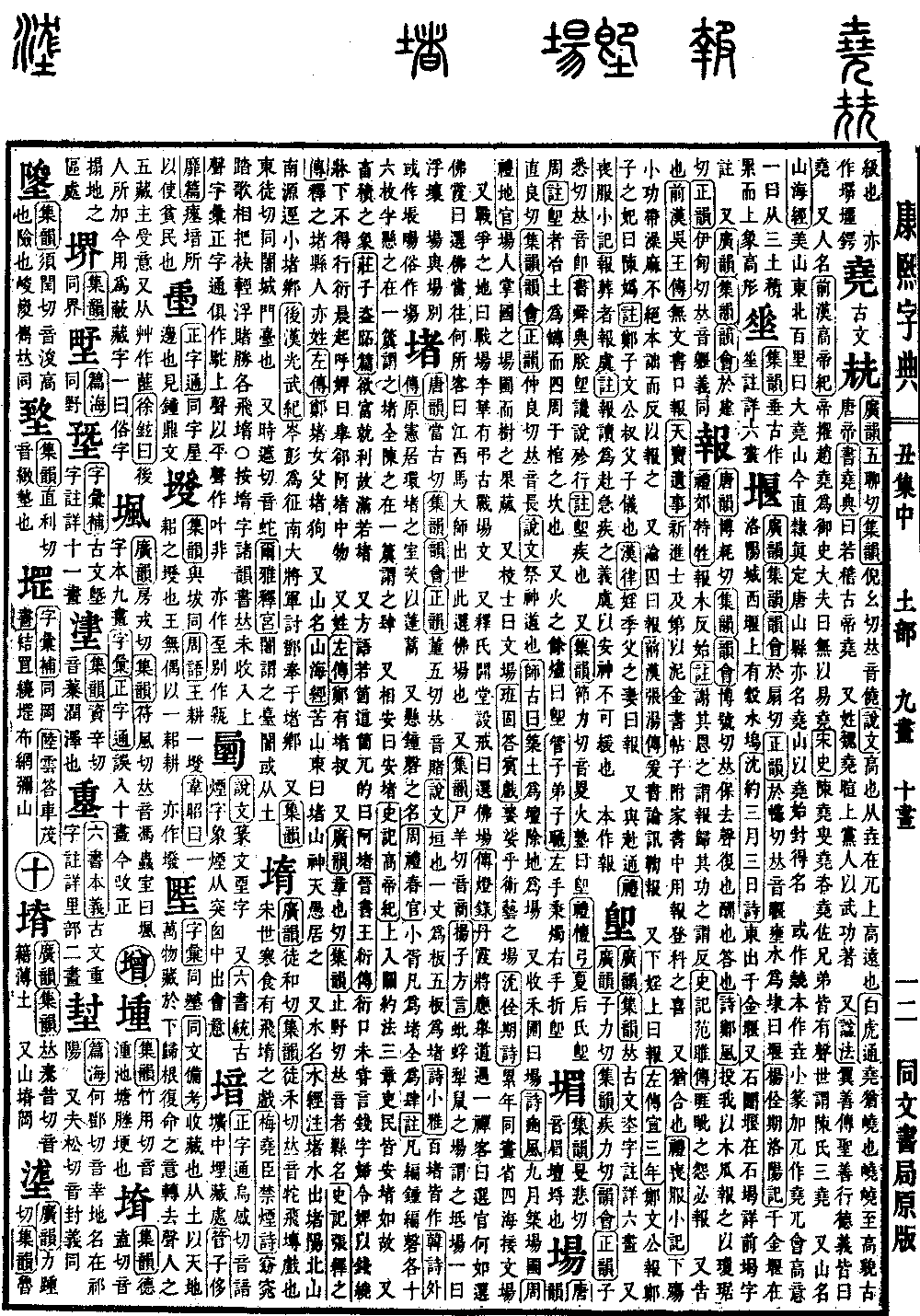
Chou Collection, Middle Volume. Radical: Earth (tǔ). Yao; Kangxi strokes: 12; Page 234, Entry 01.
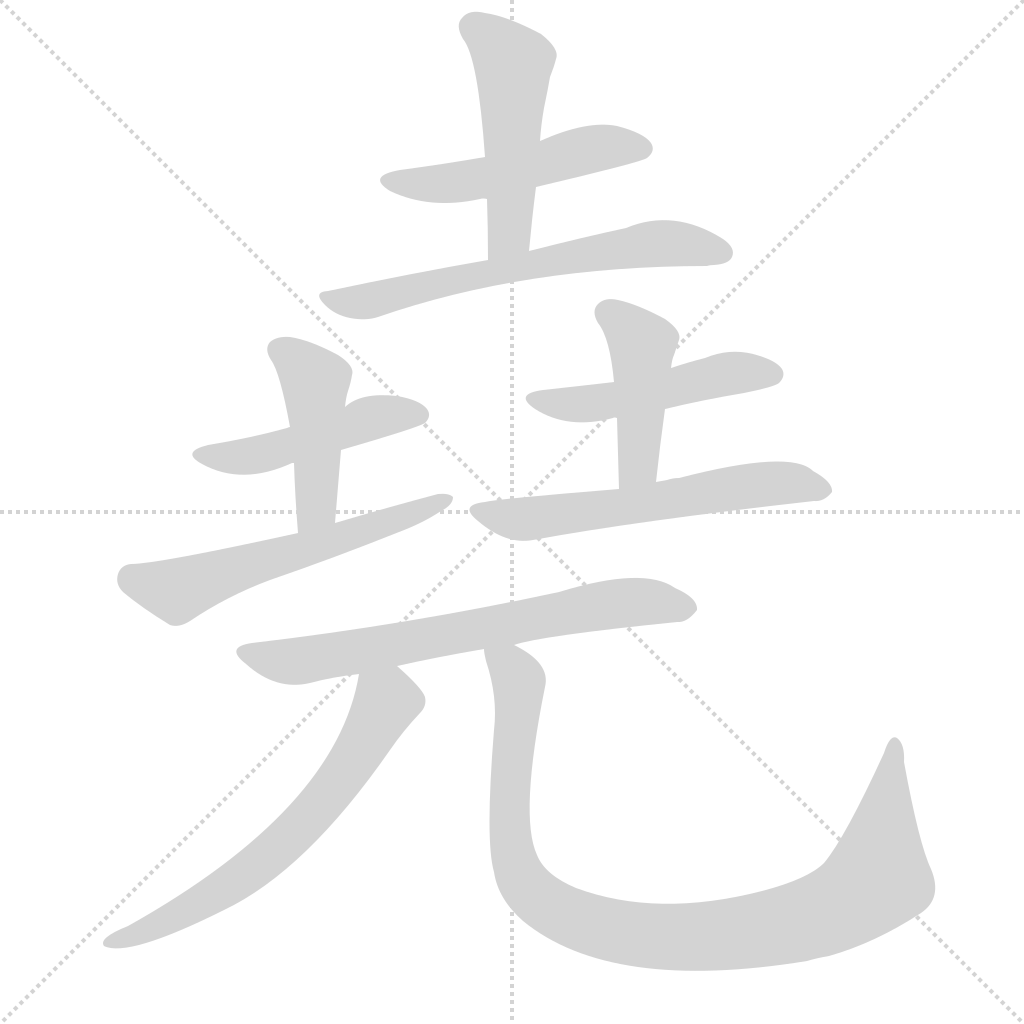
According to the Expanded Rhymes (Guangyun) and the Collected Rhymes (Jiyun), the pronunciation is yao. According to the Discussion of Writing (Shuowen), it means high. It is formed from the character for earth mounds stacked, with the character for high placed on top, signifying height and distance. According to the White Tiger Hall Discussions (Baihu Tong), Yao is synonymous with lofty. Lofty, describing the appearance of extreme height. The ancient Tang emperor. Book of Documents (Shujing), Canon of Yao: In examining the ancients, Emperor Yao. Also a surname. Wei dynasty official Yao Xuan, a person from Shangdang, renowned for his military achievements. According to the Posthumous Titles Law, one who promotes goodness and transmits sagacity, or one whose virtuous conduct and benevolence are exemplary, is titled Yao. Also a personal name. History of the Former Han (Qian Hanshu), Annals of Emperor Gao: The Emperor promoted Zhao Yao to the position of Censor-in-Chief, stating that there was no one who could replace Yao. History of Song (Songshi): Yao Shou, Yao Zi, and Yao Zuo were brothers who all had fine reputations; the world referred to them as the Three Yaos. Also the name of a mountain. Classic of Mountains and Seas (Shanhaijing): One hundred miles to the northeast of Meishan is Great Yao Mountain; it is the present-day Tang Mountain in Zhending, Zhili, and the district is also named Yao Mountain, derived from the fact that it was the site of Yao's first enfeoffment. Sometimes written as a variant form. Originally written as three earth characters stacked; in small seal script, the character for high was added to form Yao, with the character for high representing the meaning of elevated. One source states it is formed from three earth characters accumulated one upon another, representing the shape of something high.