Chou Collection, Lower Volume
Radical: Woman (nǚ)
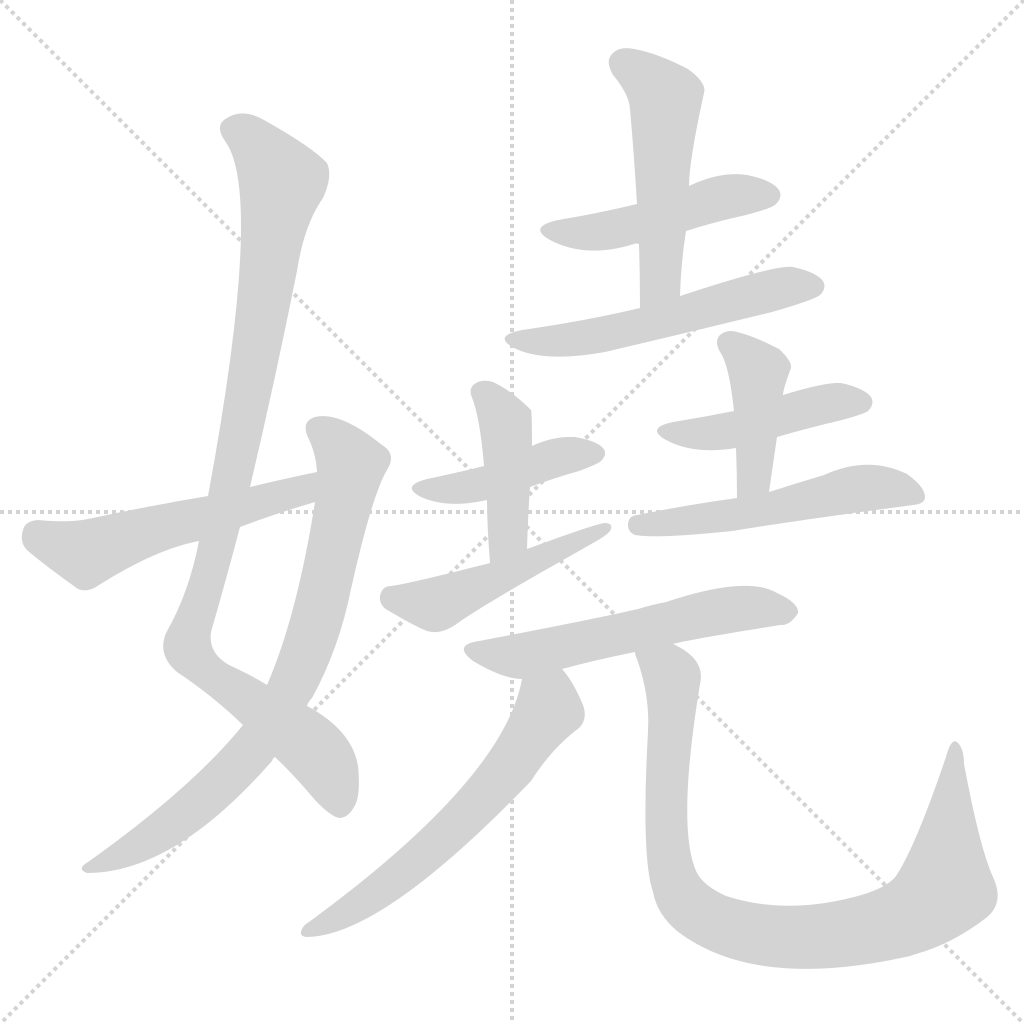
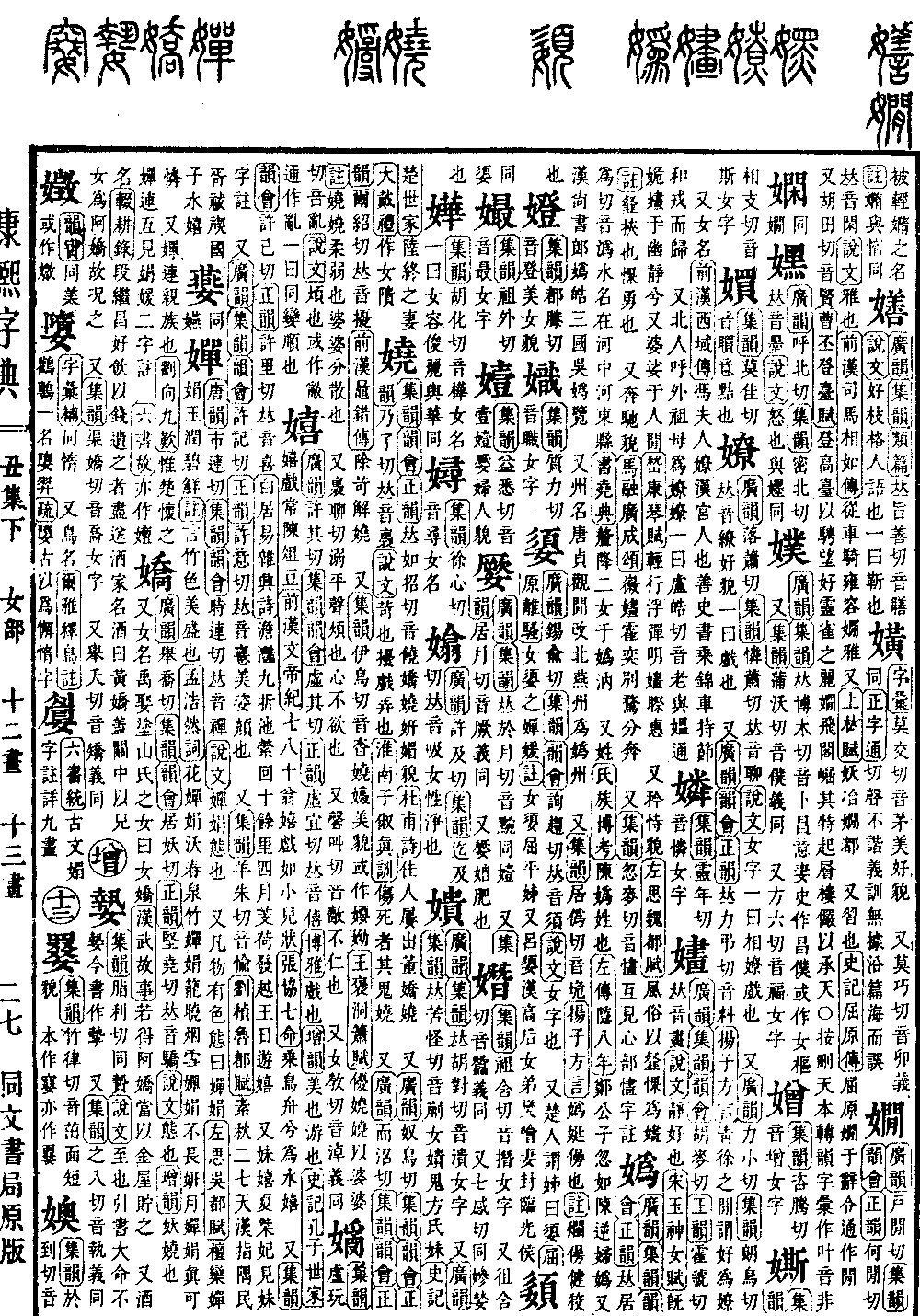
Entry: 娆
Kangxi Stroke Count: 15
Page 271, Entry 26
According to Collection of Rhymes (Jiyun), Rhyme Meetings (Yunhui), and Orthodox Rhymes (Zhengyun), the pronunciation is rao. It describes a delicate and charming appearance. From a poem by Du Fu: A beauty often comes out as Dong Jiaorao.
According to Broad Rhymes (Guangyun), the pronunciation is niao. According to Collection of Rhymes (Jiyun), Rhyme Meetings (Yunhui), and Orthodox Rhymes (Zhengyun), the pronunciation is niao. As defined in Explaining Graphs and Analyzing Characters (Shuowen): to be harsh, or to harass and tease. From Huainanzi (Huainanzi), Chapter on the True Nature of Originality (Chuzhenxun): For those who die from injury, their ghosts are restless.
According to Broad Rhymes (Guangyun), the pronunciation is rao. According to Collection of Rhymes (Jiyun), Rhyme Meetings (Yunhui), and Orthodox Rhymes (Zhengyun), the pronunciation is rao. From the Biography of Chao Cuo in the Former Han (Qianhan): Eliminate harshness and resolve annoyance.
According to Collection of Rhymes (Jiyun), the pronunciation is yao. Used to describe a beautiful appearance. Sometimes written in a variant form (yao). From Wang Bao, Rhapsody on the Cave Flute (Dongxiaofu): Gentle and swaying, moving in a dance. The commentary notes that this refers to a soft and weak state, with the movement being scattered.
Also pronounced ni (level tone). Defined as vexed or a lack of desire in the heart.
Also pronounced nao. The meaning is the same.