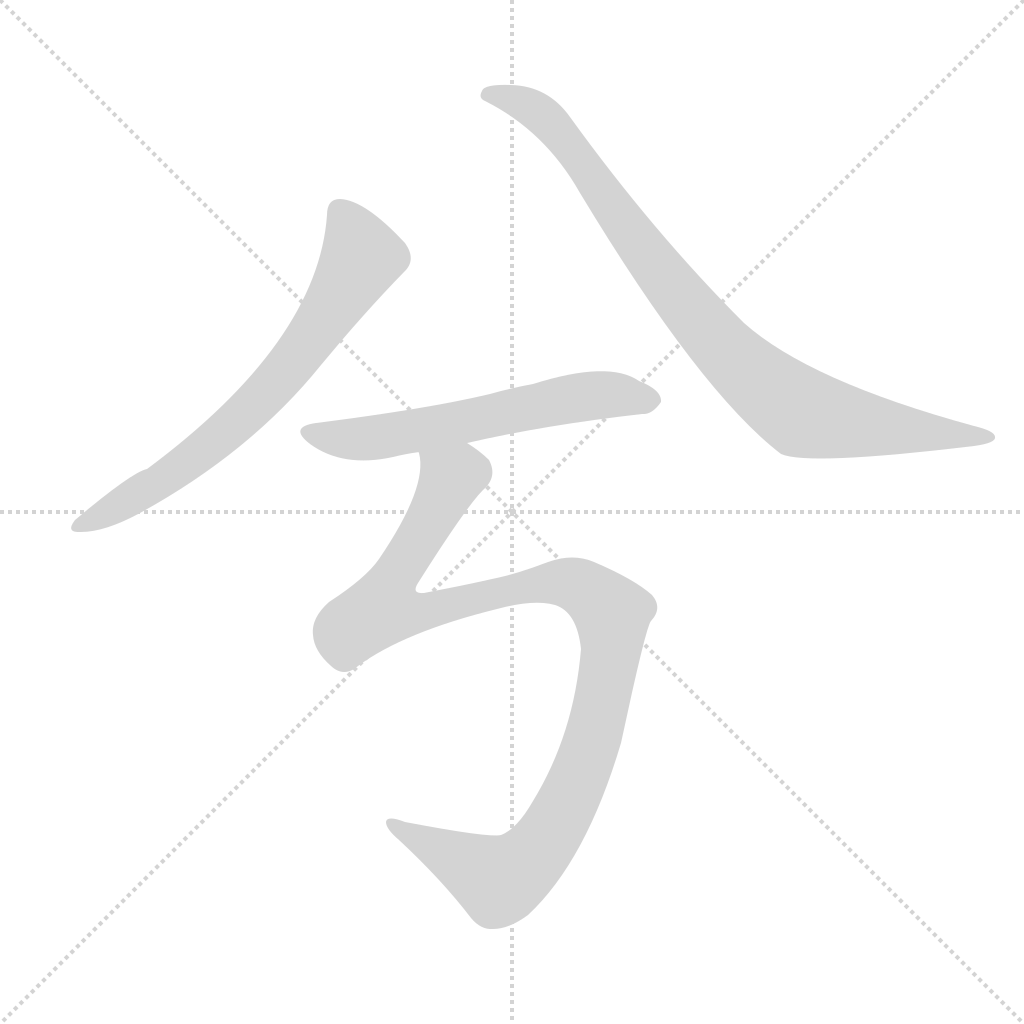
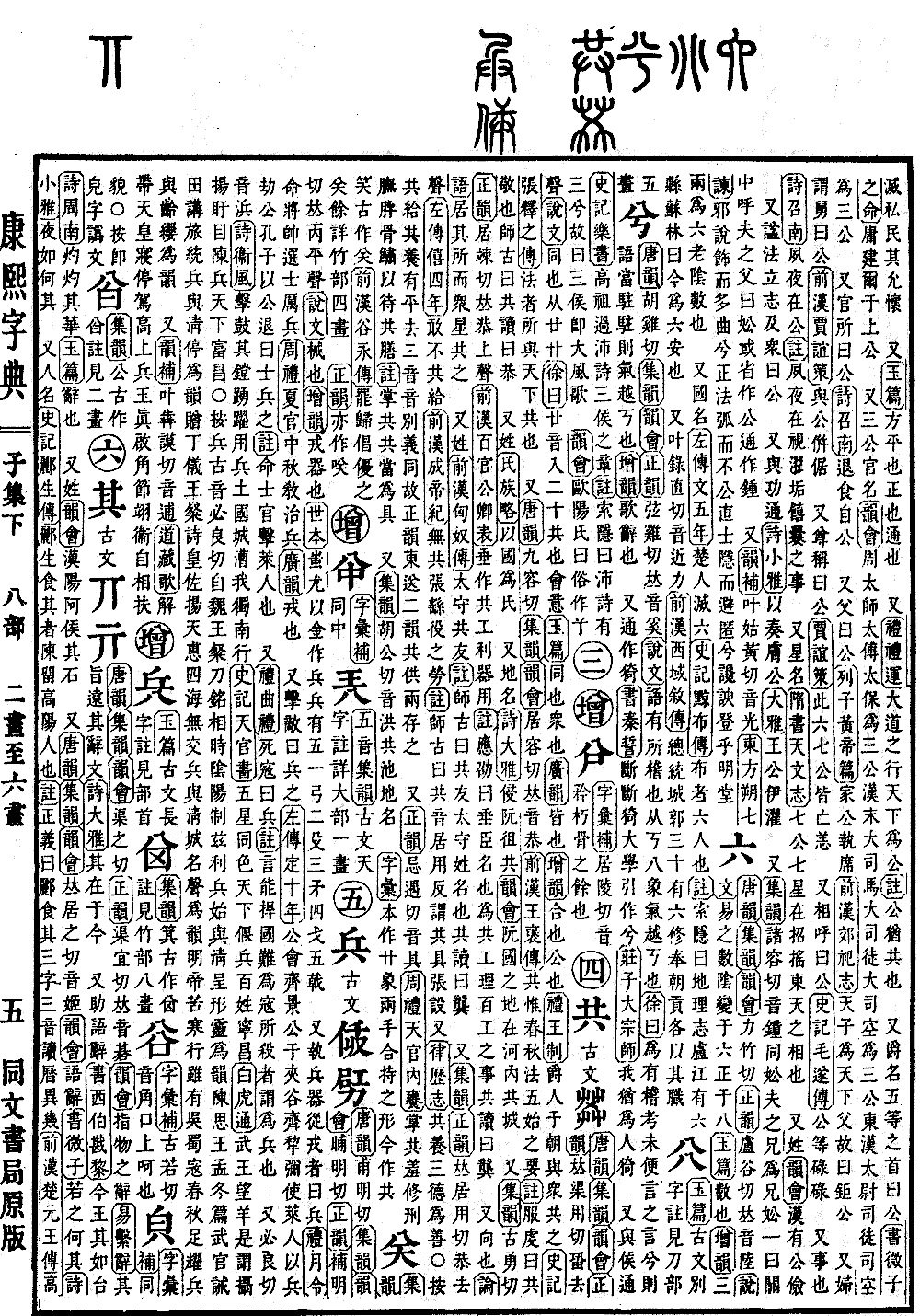
Zi Collection, Page Position: Lower. Radical: Eight (bā). Xi. Kangxi stroke count: 4. Page 127, Number 03. Tang Rhymes (Tangyun): Pronounced with the initial of hú and the final of jī. Collected Rhymes (Jiyun), Rhyme Assembly (Yunhui), and Correct Rhymes (Zhengyun): Pronounced with the initial of xián and the final of jī. Pronounced the same as xī. Explaining Graphs and Analyzing Characters (Shuowen Jiezi): A particle used when speech has a pause or hesitation. It is derived from the components kǎo and bā, representing the breath passing over the kǎo component. Xu says: Because there is something to be considered and it is not yet convenient to speak, when the word xī is uttered, the speech should pause; when it pauses, the breath passes over the kǎo component. Supplemented Rhymes (Zengyun): A word used in song lyrics. It is also interchangeably used with the word yī. Book of Documents (Shangshu), in the section The Oath of Qin (Qinshi), contains the phrase duanduan yi, which is quoted in the Great Learning (Daxue) using the word xī. Zhuangzi, in the chapter The Great and Most Honored Master (Dazongshi), says: I am still a human, yi. It is also interchangeable with the word hóu. Records of the Grand Historian (Shiji), in the Book of Music (Yueshu), records: When Emperor Gaozu passed through Pei, he composed a poem with three hóu. The commentary Seeking the Obscure (Suoyin) says: The poem of Pei contains three instances of xī, therefore it is called three hóu, referring to the Song of the Great Wind (Dafeng Ge). Rhyme Assembly: Mr. Ouyang says: In popular form, it is written with the component bā above the component xià.