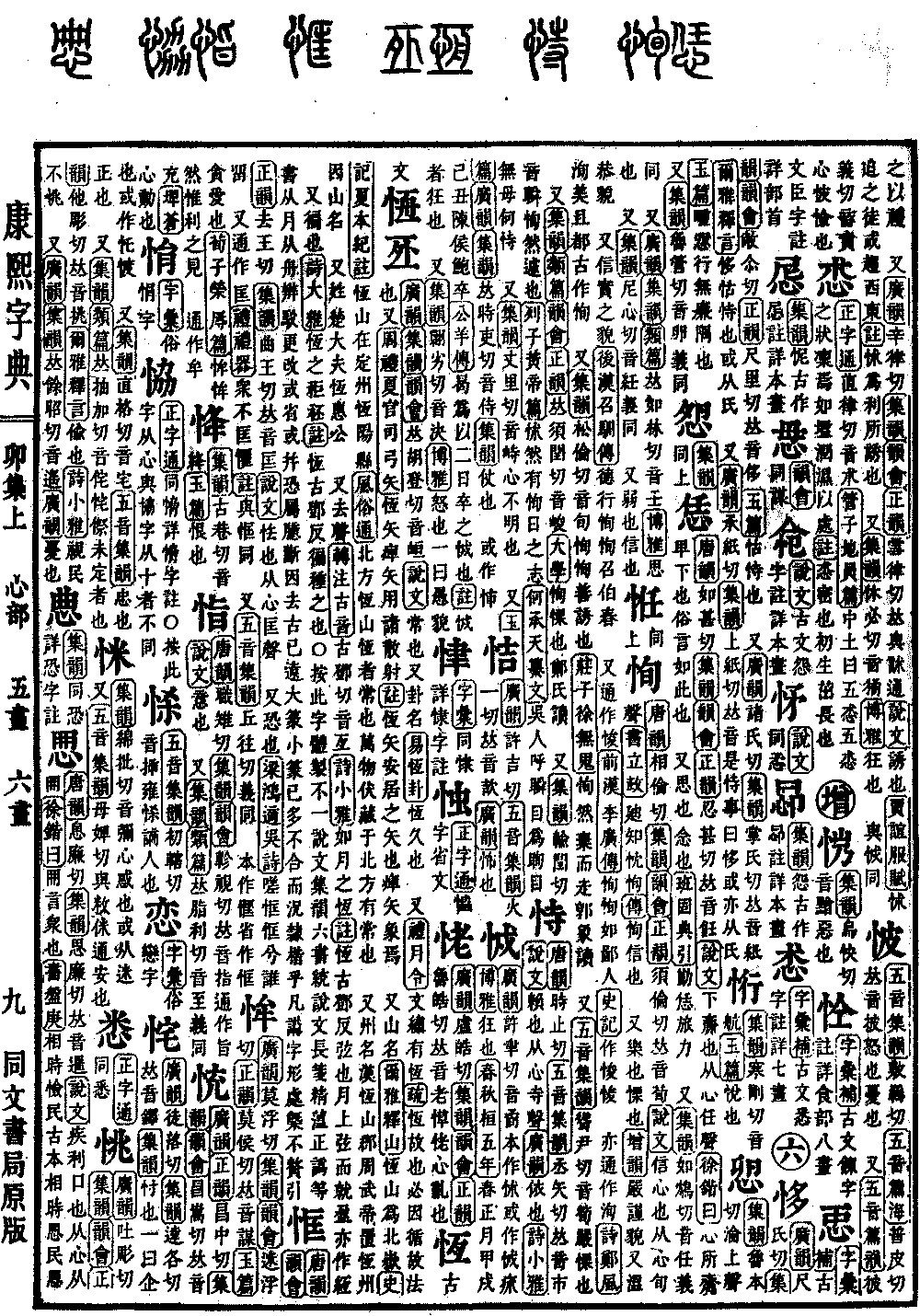
Mao Collection, Upper Volume
Radical: Heart (xīn)
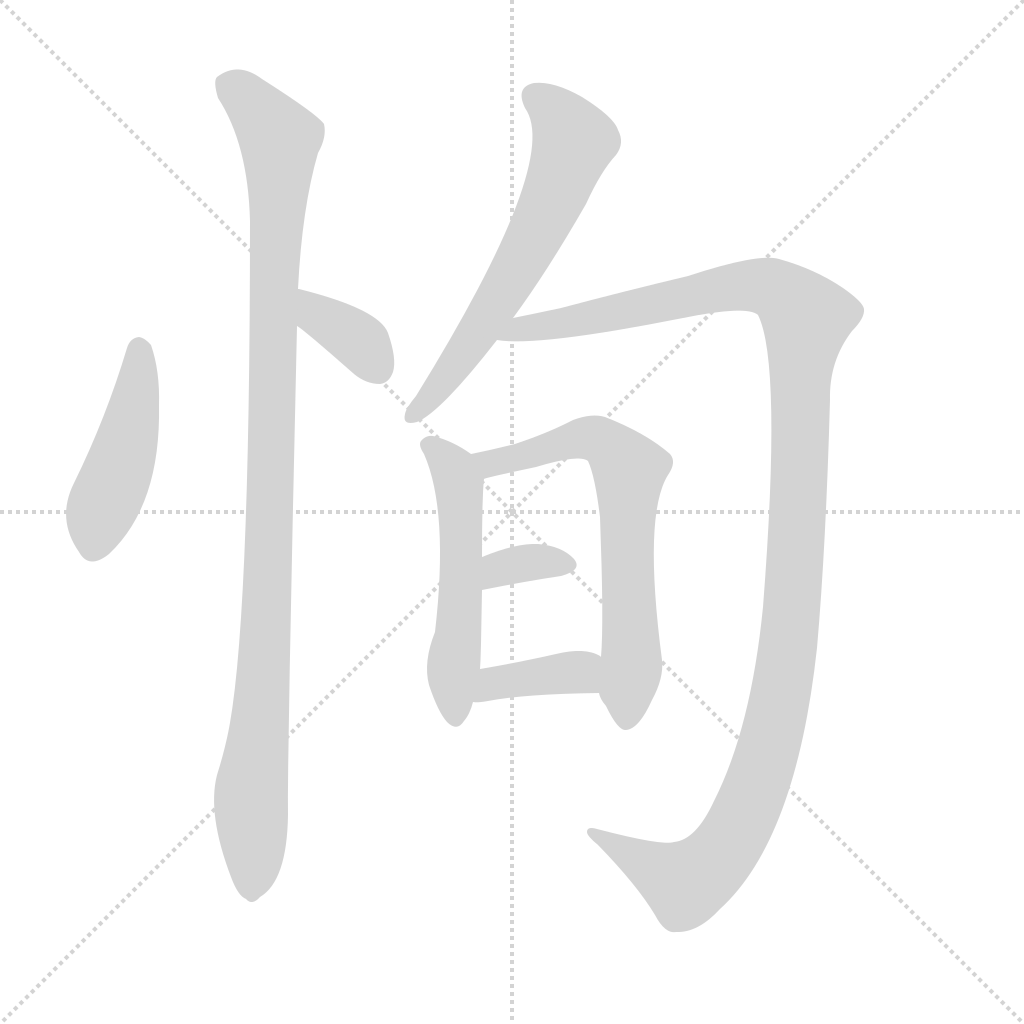
恂
Kangxi strokes: 10
Page 383, Entry 18
Tang Rhyme (Tangyun) states: pronounced xun. Collected Rhymes (Jiyun), Rhyme Compilation (Yunhui), and Orthodox Rhymes (Zhengyun) state: pronounced xun.
Shuowen Jiezi says: to be confident in one's heart. Composed of the heart radical and xun as the phonetic element.
Book of Documents (Shujing), section on Establishing Government (Lizheng): To understand the truth with sincerity. The commentary states: xun means sincerity. It also means happy and trembling.
Expanded Rhymes (Zengyun) states: the appearance of being strict and cautious. It also refers to the appearance of being gentle and respectful, and the appearance of being sincere and honest.
Biography of Zhao Xun in History of the Later Han (Hou Hanshu): With virtuous conduct, Zhao Bochun was gentle and respectful.
Also written in a variant form (quan). Biography of Li Guang in History of the Former Han (Hanshu): humble like a rustic man. Records of the Grand Historian (Shiji) uses the character quan.
Also used interchangeably with xun. Book of Odes (Shijing), Odes of Zheng: truly beautiful and refined. Anciently written as xun.
Collected Rhymes (Jiyun) states: pronounced xun. Xunxun means to guide with kindness. Zhuangzi, chapter on Xu Wugui: startled and ran away. Guo Xiang read it as such.
Five Sounds Rhyme Compilation (Wuyin Jiyun) states: pronounced sun. To be strictly trembling.
Collected Rhymes (Jiyun), Classified Chapters (Leipian), Rhyme Compilation (Yunhui), and Orthodox Rhymes (Zhengyun) state: pronounced jun. The Great Learning (Daxue): xun means trembling. Zheng Xuan read it as such.
Collected Rhymes (Jiyun) states: pronounced shun. Xunran means in a hurry. Liezi, Yellow Emperor chapter: terrified with a heart set on fleeing. He Chengtian, Zuanwen: The people of Wu call a blink of the eye a shun.