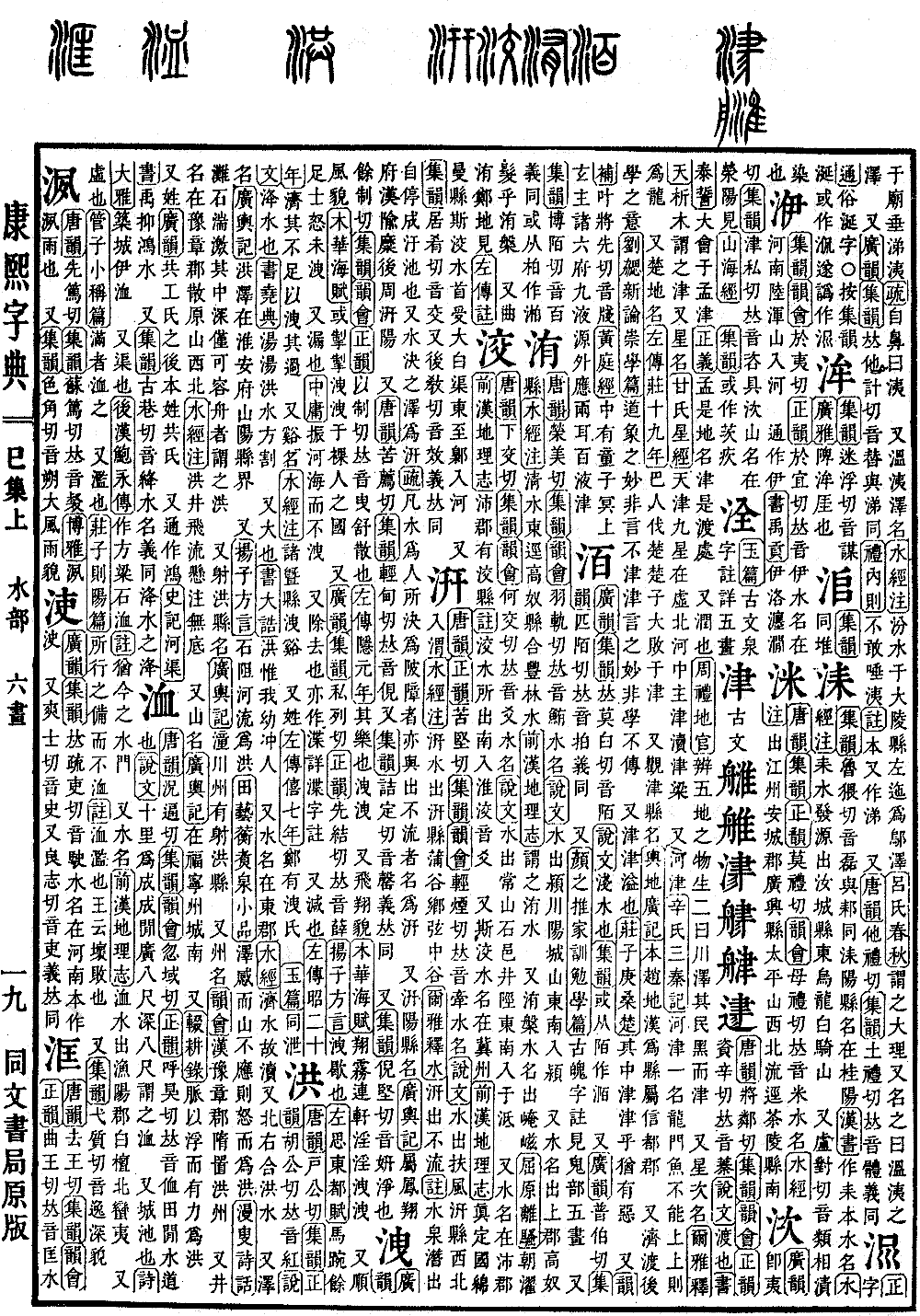
Si Collection, Upper Volume
Radical: Water (shuǐ)
Kangxi Strokes: 10
Page 621, Entry 22
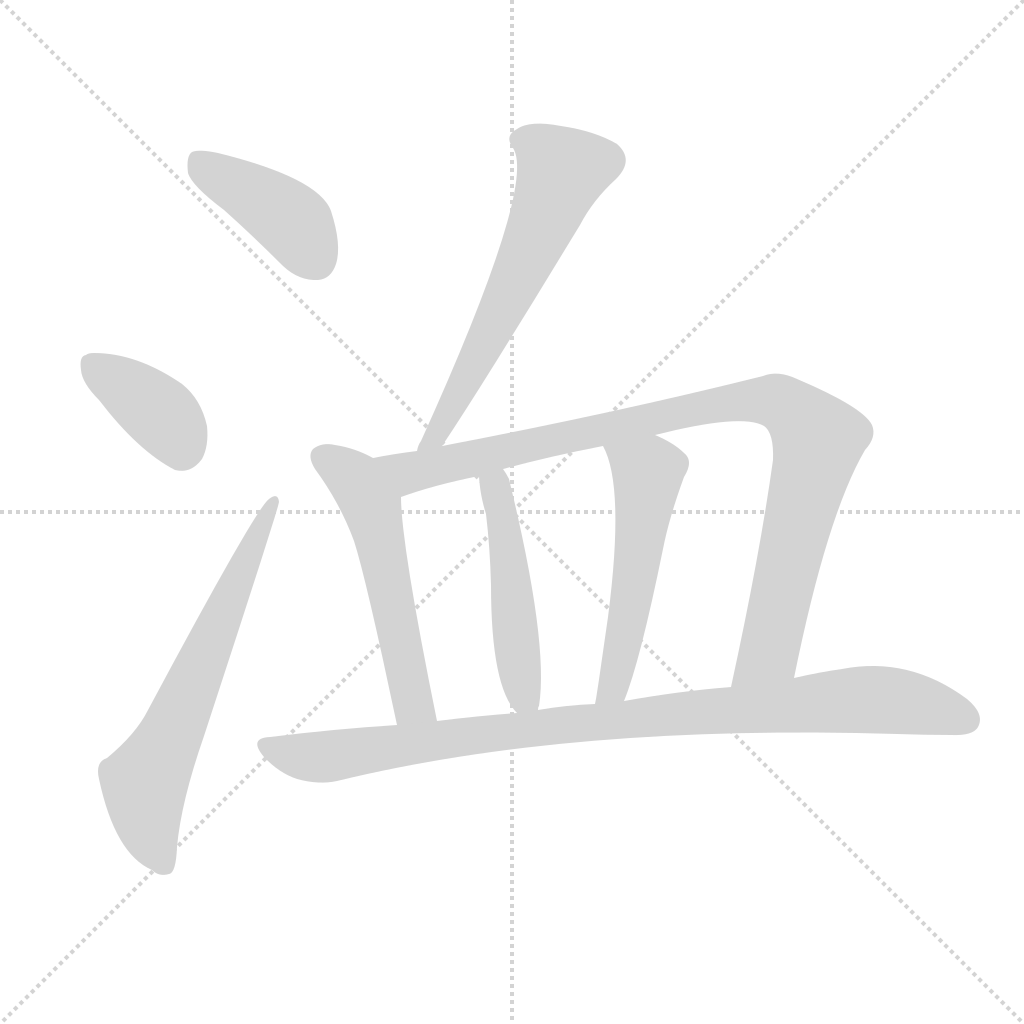
Pronounced xu. Refers to the waterways between fields. The Explication of Written Characters (Shuowen Jiezi) records: ten li is termed one cheng. The waterway between each cheng, measuring eight feet wide and eight feet deep, is called xu. Also refers to the moats of a city. The Book of Odes (Shijing), Deya section, contains a sentence about building city walls and digging moats. Also refers to irrigation canals. The History of the Later Han (Houhanshu), Biography of Bao Yong, records the construction of square stone canals. The commentary notes that this is similar to modern sluice gates. Also the name of a river. The History of the Former Han (Hanshu), Treatise on Geography, records that the Xu River originates in the northern regions of the minority tribes of Baitan County, Yuyang Commandery. Also means to cause to be empty. The Guanzi, Xiaocheng chapter, states that what is full should be made empty. Also means to overflow or exceed. The Zhuangzi, Zeyang chapter, states that one's conduct is complete and does not exceed limits. The commentary notes that xu means to overflow. Wang Bi interprets this as to ruin or destroy. Also, in the Collected Rhymes (Jiyun), it is pronounced yi. It means the appearance of being secluded and deep.