Chen Collection, Upper Volume
Radical: Sun (rì)
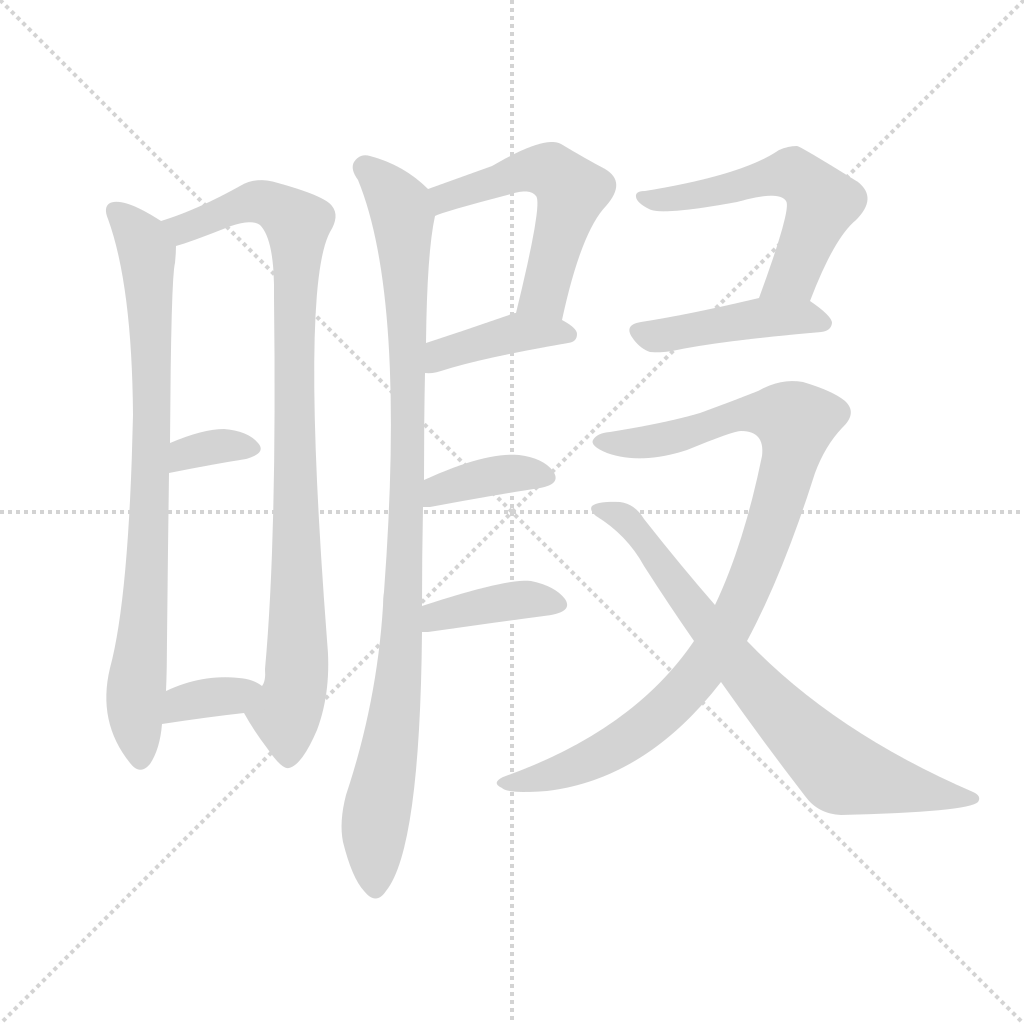
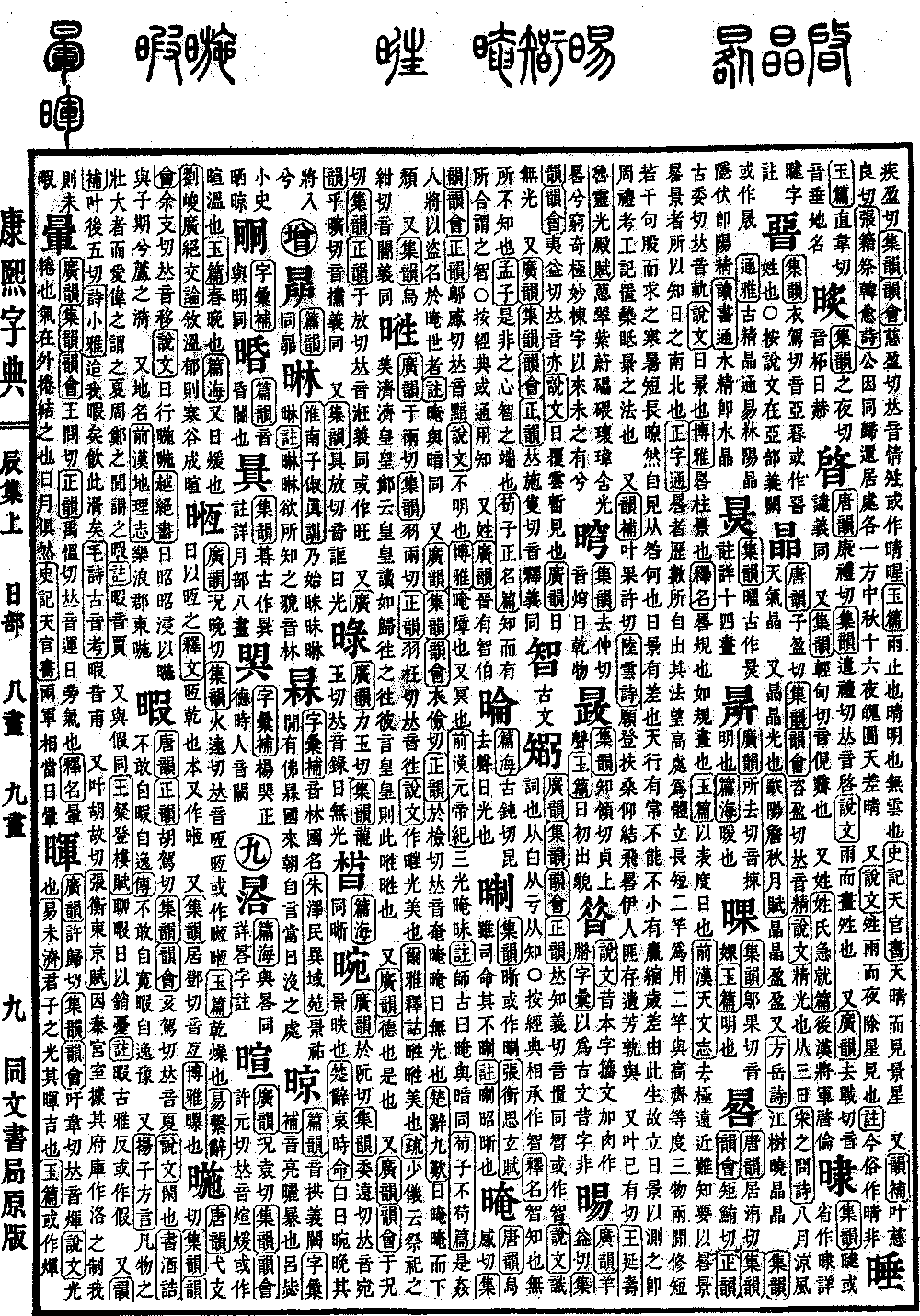
暇
Kangxi strokes: 13
Page 497, Entry 36
Pronounced xia.
According to the Shuo Wen Jie Zi (Explaining Graphs and Analyzing Characters), it means to be at leisure or free.
As stated in the Book of Documents (Shujing), specifically the Wine Announcement (Jiugao): One does not dare to allow oneself to be idle or self-indulgent. The commentary notes this means one does not dare to allow oneself leisure or to indulge in ease and pleasure.
According to the Fangyan (Regional Speech) by Yangzi: Anything that is grand in scale and elicits admiration is called xia, a term used in the regions of Zhou and Zheng. The commentary notes that xia is pronounced like jia.
It is also used synonymously with jia (to borrow). In the Ascent of the Tower Rhapsody (Denglou Fu) by Wang Can: I shall borrow this time to dissipate my sorrow. The commentary notes that it is pronounced like gu, ya, fan. It is sometimes written as jia.
According to the Rhyme Supplement (Yunbu), it is also pronounced hu. As recorded in the Book of Odes (Shijing), specifically the Minor Odes (Xiao Ya): When I have leisure, I shall drink this clear wine. According to the Mao Odes Ancient Phonology Examination (Mao Shi Guyin Kao), it is pronounced like fu.
It is also pronounced hu. As recorded in the Eastern Capital Rhapsody (Dongjing Fu) by Zhang Heng: Following the patterns of the Qin palaces, occupying their treasuries and storehouses. In planning for the construction of Luoyang, I have had no leisure.