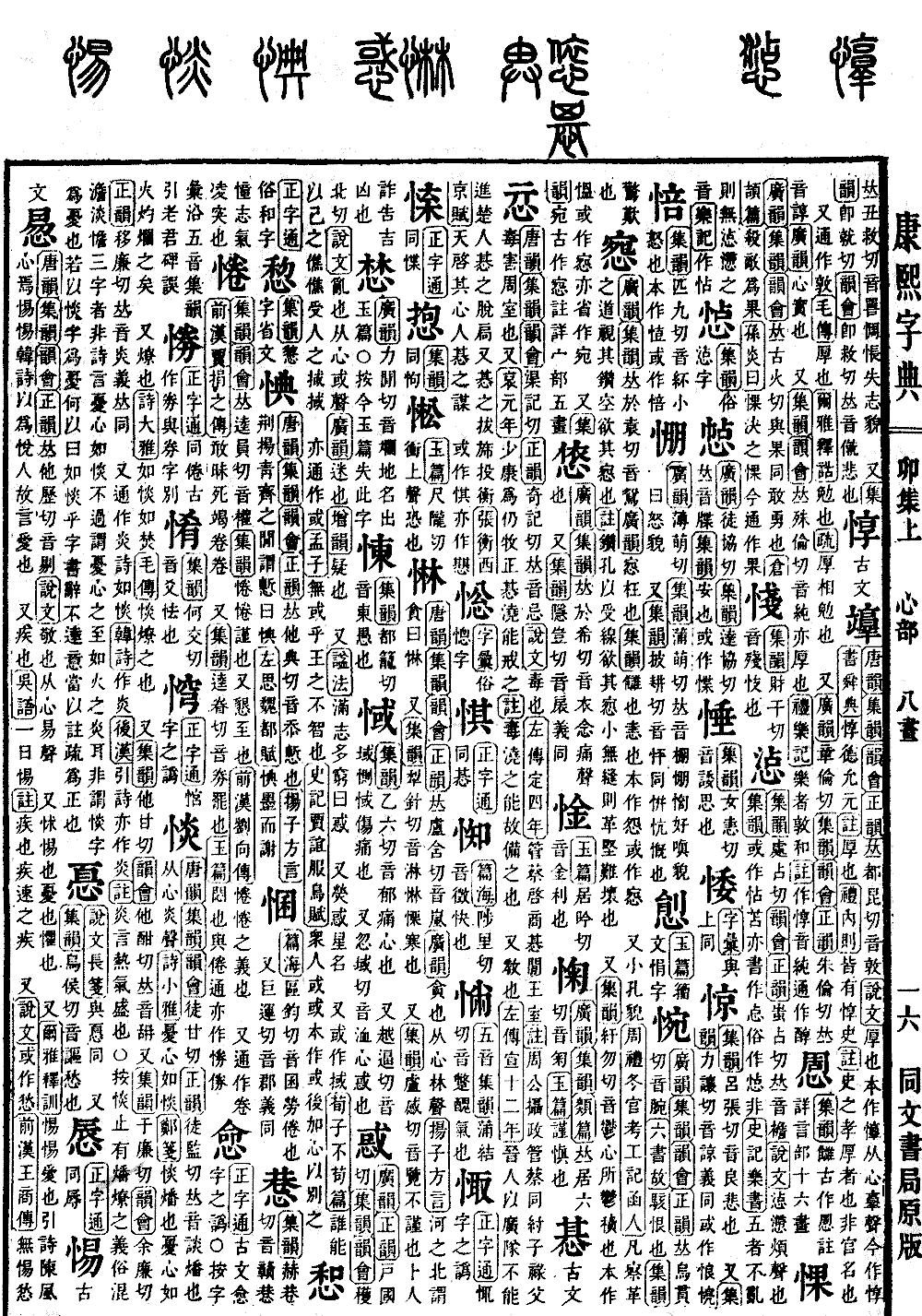
Mao Collection, Upper Volume
Radical: Heart (xīn)
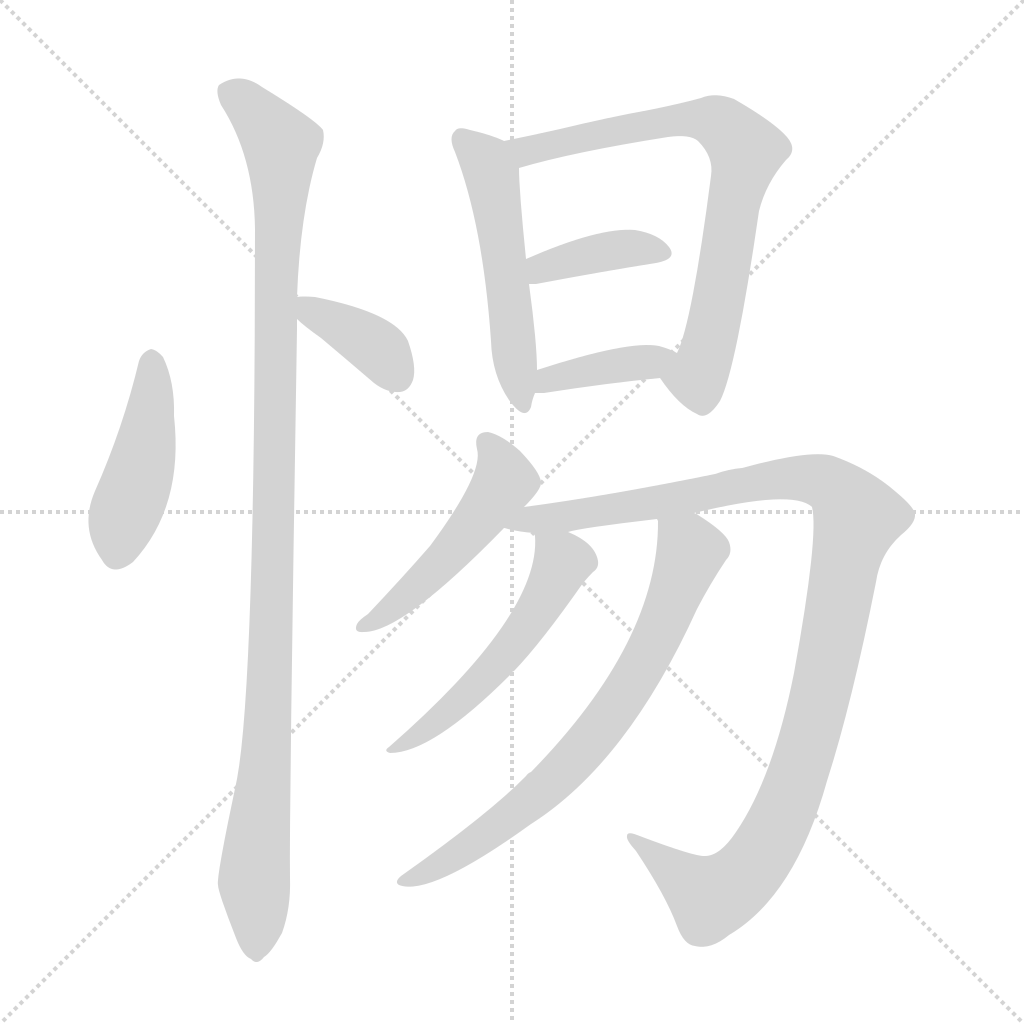
惕
Kangxi stroke count: 12
Page 390, Entry 48
Ancient form: 惖
Tang Rhyme (Tangyun), Collection Rhyme (Jiyun), Rhyme Compilation (Yunhui), Correct Rhymes (Zhengyun): Pronounced ti.
Shuowen Jiezi (Shuowen): Respect. Formed from the radical Heart and the phonetic element yi. Also, to be fearful or apprehensive. Worry, fear.
Also, from the Er-ya (Erya), Explanation of Teachings (Shixun): Titi means love. The Guo commentary cites the Book of Odes (Shijing), saying the heart is fearful (titi). The Han commentary interprets this as delighting in others, hence the meaning of love.
Also, rapid. In the Discourses of the States (Guoyu): One definition of ti is rapid. The commentary states: Rapid means swift speed.
Also, per the Shuowen: Sometimes written as the variant form ti (tì). In the History of the Former Han (Qianhan), Biography of Wang Shang: Without fear or worry. The Jiyun also uses this variant form.
Also, rhyme-merged to the pronunciation tuo. From Yang Xiong’s Great Mystery (Taijingshu): The heart is apprehensive, feet wear golden shoes, one does not set one's will on the gutter. (The character for shoe is pronounced xue.)
Textual research: In the Er-ya, Explanation of Teachings, the entry Titi means love cites the Chen Wind section of the Book of Odes, saying the heart is apprehensive (titi). The Han commentary interprets this as delighting in others, hence the meaning of love. Note: This commentary text was mistakenly included as scripture. I have amended the four characters citing the Chen Wind section of the Book of Odes to read as the Guo commentary.