Chen Collection, Middle Volume
Radical: Tree (mù)
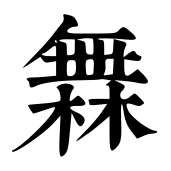
橆
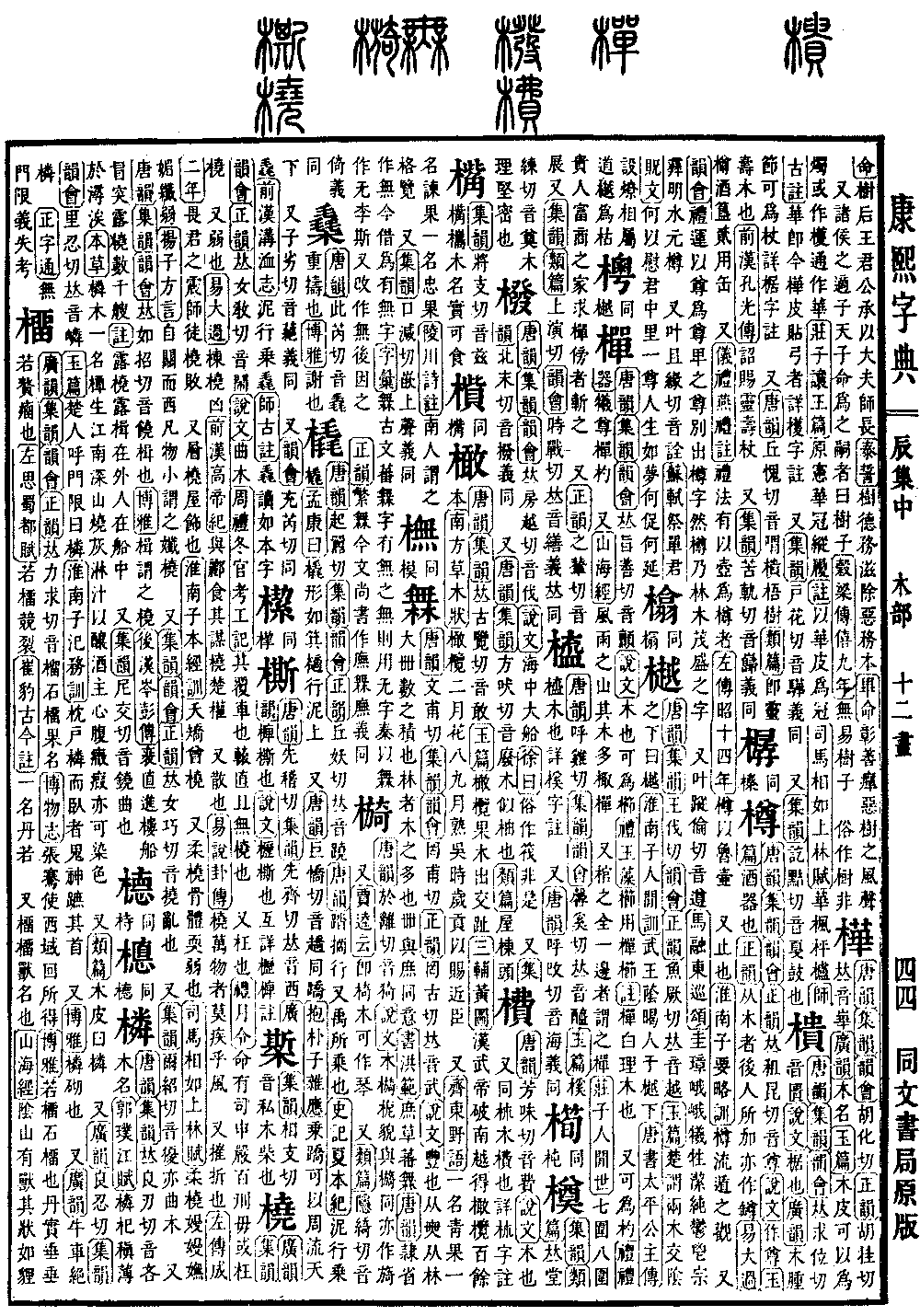
Kangxi Strokes: 16
Page 552, Entry 18
Pronounced wu (rising tone).
Shuowen Jiezi (Explanation of Simple and Compound Characters): Means abundant and flourishing. The character structure is composed of from and forest. Large signifies a great quantity. Forest signifies luxuriant trees. It is similar in meaning to the character shu (denoting numerous or common).
Book of Documents (Shangshu), section Great Plan (Hongfan): Various plants and trees growing in abundance.
Tangyun (Tang Rhymes): When simplified in clerical script, it was written as wu, and it is now borrowed to represent the wu in the sense of existence and non-existence.
Zihui (Collection of Characters): Wu is an ancient character denoting the luxuriant growth of plants and trees. For the wu meaning existence and non-existence, the character wu is used. During the Qin dynasty, wu was written as wu, and Li Si later changed it to wu, which was subsequently adopted.
Zhengyun (Standard Rhymes): The wu meaning flourishing is written as wu in the Modern Script Book of Documents (Jinwen Shangshu). Wu and wu share the same meaning.